

Share
As America celebrates 250 years of excellence this year, the nation’s story can be traced through moments of conflict, sacrifice, and leadership.
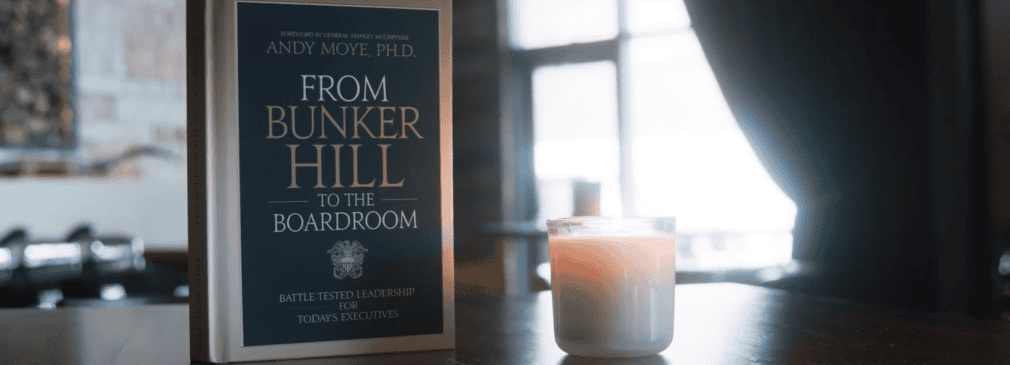
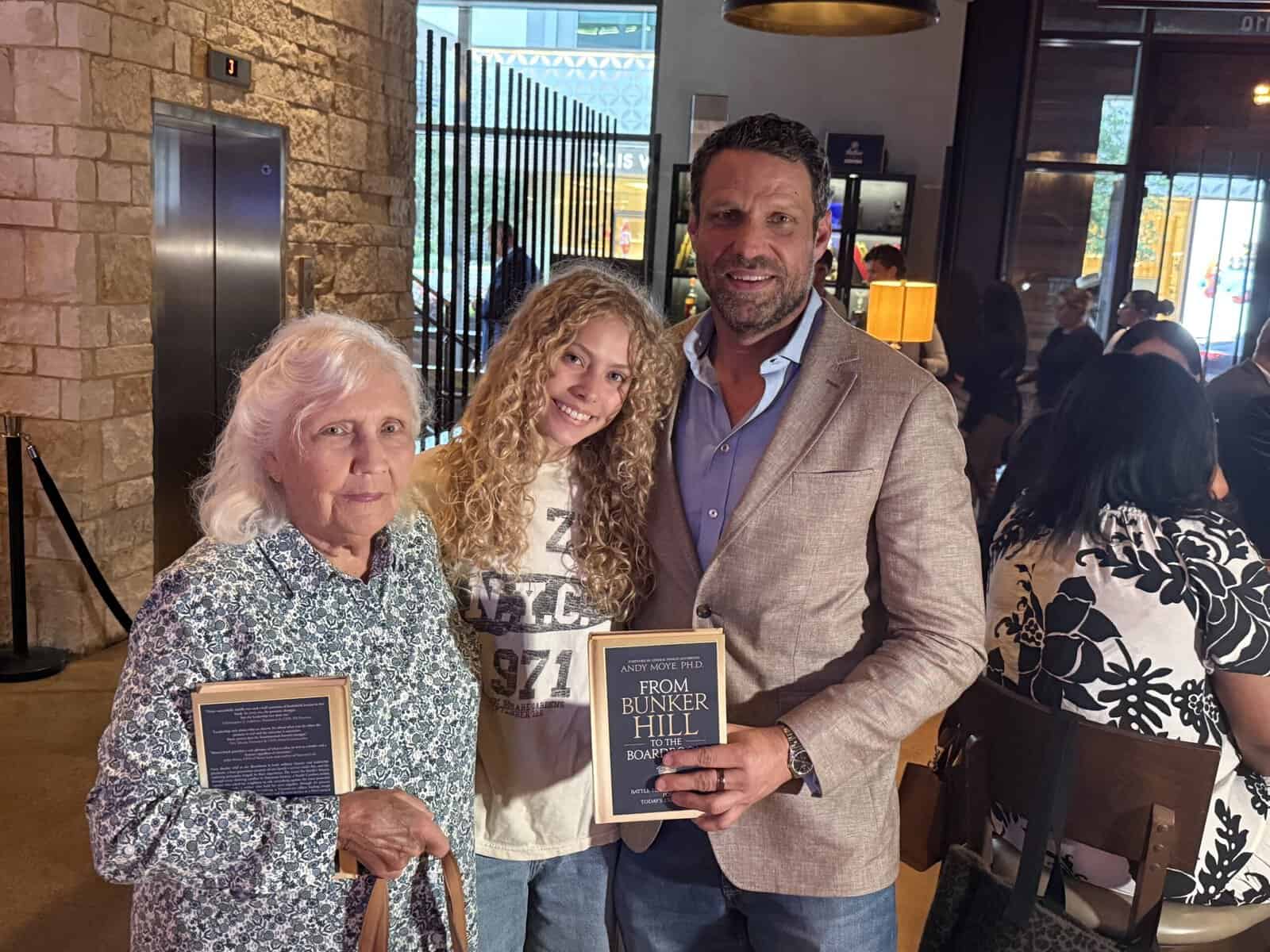
For Andy Moye, Ph.D., that history is personal. His family’s legacy stretches from the Revolutionary War and Civil War to Vietnam and his own service in Iraq, and provides the foundation for his new book, From Bunker Hill to the Boardroom. In it, Moye examines how lessons from America’s defining conflicts can inform the way leaders make decisions, empower teams, and act with purpose.
Recently, Andy sat down with Texas Lifestyle Magazine to discuss his family’s military history, what America’s past can teach us during its 250th year, and why strong, empathetic leadership matters now more than ever.

Can you tell us about yourself, your book, and what you’re hoping your readers will grasp from reading it?
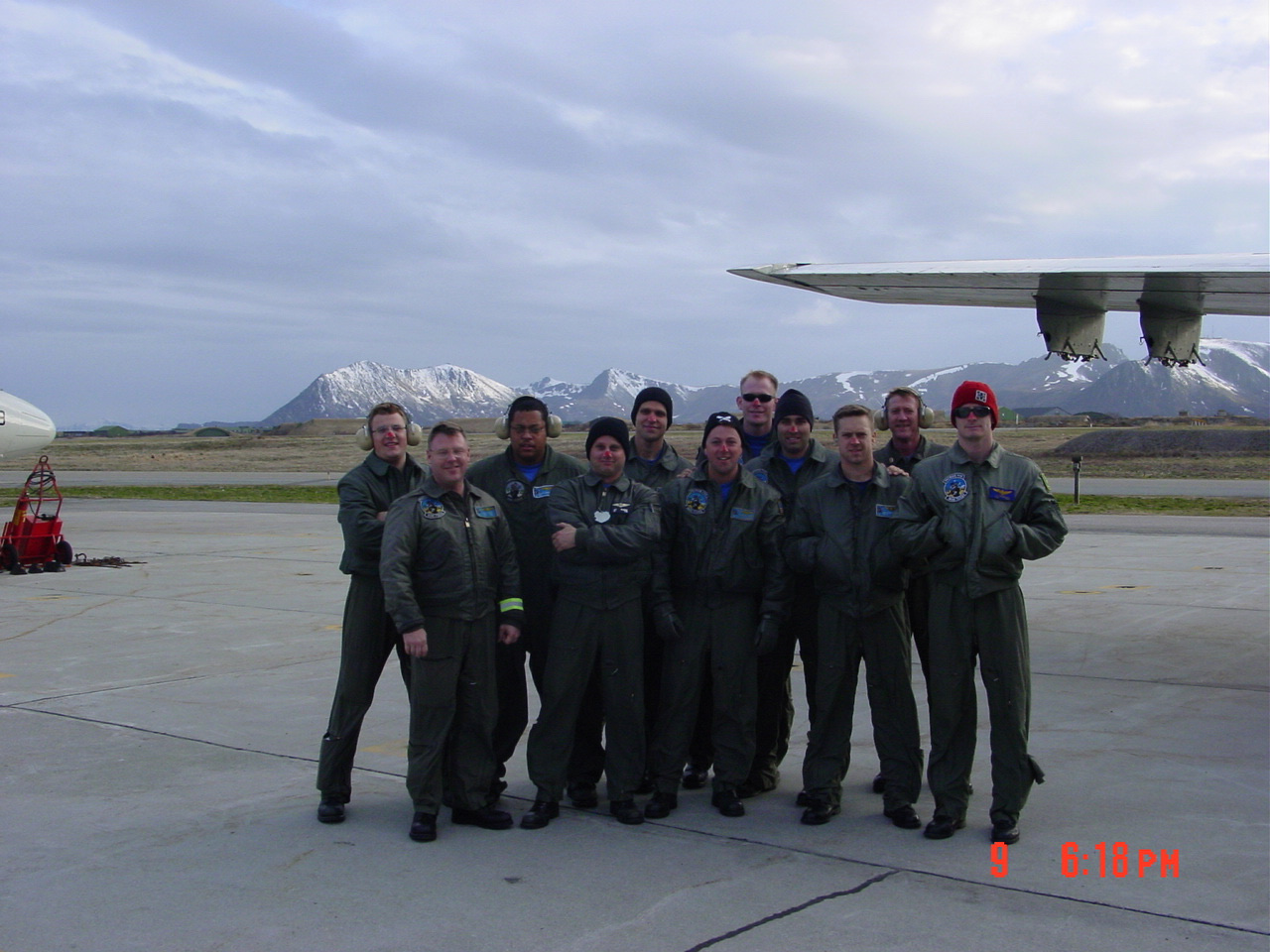
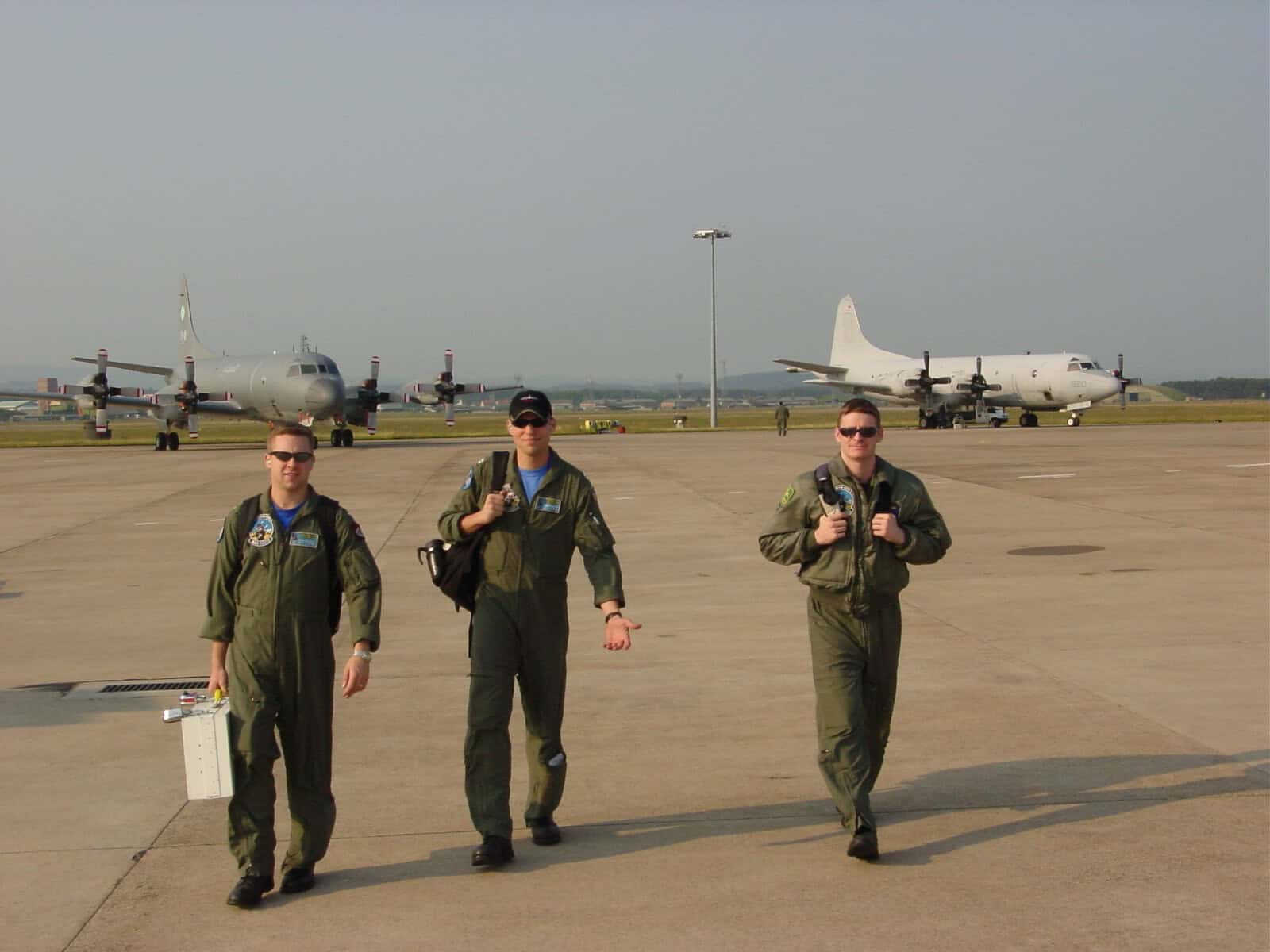
I’ve spent the last 30 years mostly in healthcare and in precision medicine and leading companies in AI, but for the first eight years of my professional life, I flew airplanes for the Navy. It was a pretty crazy time flying during 9/11 and into Iraq in 2003. I got into healthcare to continue a lifetime of service, which is what I got out of the Navy.

Over the past few years, I really started thinking about history. And as I learned more about my family history, I realized I have a family lineage that all goes all the way back to the Revolutionary War. Men on my dad’s side of the family fought in the Revolutionary War and the Civil War. My dad was in Vietnam. I was in Iraq. I started to think about lessons that we can take from those four very different eras in American history to help managers, leaders, or people today get the most out of the work they do. That’s how the book came together. It’s a leadership book told through the lens of my family’s military history.
There’s a lot of historical references in this book. How does your family’s lineage tie in with American History, and what examples helped write this book?
The Moye name comes from England in the 1600s. They settled in the South and North Carolina region for tobacco farming. It’s interesting, as I got into the history of all of this, to think about what it took for these men and women to put their lives on the line to form a new country. This is America’s 250th, after all.
There were a bunch of these tobacco farmers in North Carolina that signed a document called the Pit Association in 1775, a whole year before the Declaration of Independence. That document essentially said we want to govern ourselves and we’ll do what the Continental Congress wants us to do. We still like King George, but you’re out. By signing your name to this document, you’ve essentially signed a death warrant. If England had wiped out the Revolution, they were going to take receipts.
I think a lot about that — what it really takes to say, “I’m going to put my life, my livelihood, my six kids…everything on the line here to govern ourselves.” That’s what George Moye and then his son, George Moye the Third, did. They formed the militias. They trained. They did all the things that had to be done. One particular battle in North Carolina, called Guilford Courthouse, led to the surrender of Cornwallis.
A grandson of those guys moved to Georgia and fought in the Civil War. Obviously, on the wrong side. I talked about this in the book. It’s indefensible to say what the South was fighting for, but we take a lot of lessons from that to have any sort of resolve.
One lesson is the concept of micromanagement, which is a modern one. In the past, from the Civil War to the Vietnam War, if you sent troops out on a patrol, you didn’t know what they were doing. You gave them orders and hoped they did what they were supposed to do. You gave them the intent. You told them what the rules were, and they did the thing. It’s only a modern thing where leaders want to have complete control over all their people and all their decisions, but it’s really not the best way to operate. When you’re empowering your teams and giving them the authority they need to act responsibly, you’re actually creating a much better culture, a much better environment, and you’re actually accelerating. So those are the three big pillars we touch on in the book.
What are some defining moments of American history that truly display true leadership?
When I think about the sort of four eras highlighted in the book –- the Revolutionary War, the Civil War, the Vietnam War, and my time in Iraq –- I focus back on the Revolutionary War.
I learned a lot about Nathaniel Green. He’s sort of an unsung hero in American history. I feel like more books should be written about this guy. He was one of the generals under Washington early on. Washington said, “Hey, you know, we have all these problems with logistics. You need to figure out our supply chains.” And he did. I think the Revolution wouldn’t have made it without Nathaniel Green finding ways to feed the troops in Valley Forge through the winters.
The quick historical reference is that the worst defeat for the colonists in the entire American Revolution was at Charleston, South Carolina, where the British captured 5,000 Americans and treated them very badly. Washington never forgot that. He sent Nathaniel Greene to consolidate what was left in the South, which is where my ancestors in North Carolina became involved.
Greene did some innovative things in military leadership. At the time, warfare was largely about marching troops, standing them in formation, firing, and then charging. Greene took a different approach. He separated his forces, which horrified many people, and used smaller groups to harass the British armies and wear them down. It was an early form of guerrilla warfare, with figures like the Swamp Fox emerging from that period.
Nathaniel Greene is someone I think deserves more recognition as an American general, a patriot, and a leader who played a major role in the founding of the country.
What was the process like when writing this book? You go through so much history, but you also reference a lot of corporate history, too.
It was interesting to develop because I did not want to make this simply a history book. I wanted to provide enough historical context to set the scene for the reader. But once I did that, I wanted to connect those lessons to modern leadership. As we thought through the themes, we organized the book around three areas: purpose, adaptive intelligence, and empowered teams. From there, we looked for historical examples that would resonate with modern leaders.
We also get into some interesting company history. Most people do not realize that Instagram did not start off as Instagram, or that Airbnb almost did not make it. A lot of startups and companies have had to make major pivots. Kodak is another example. People forget how big Kodak was in the 1980s and before. They actually invented the digital camera, but instead of adopting it and changing, they allowed that technology to destroy their business. Each time, we tried to tell the story through a historical lens, research it as accurately as possible, and then relate it to something a modern business leader can think about.
The most gratifying feedback I have received from readers is that they learned something they can apply to managing their teams today—whether that is being more adaptive, empowering their teams, or thinking more strategically about when to pivot versus when to iterate. It has been encouraging to see that response because the book fits into several categories. It is a leadership book, but it also includes military history, American history, and family history. At the end of the day, the goal is to tell those leadership lessons in a way that people can use.
Given the current geopolitical atmosphere that we all live in, what concerns you most and why do we need strong leadership now more than ever?
It’s a great question. One leadership trait I think people often overlook is empathy.
To me, empathy is about understanding another person –- how they think, how they feel, and what motivates them. The best leaders understand all sides of what is happening. That idea goes back to Sun Tzu and The Art of War: know your enemy. In today’s geopolitical environment, we need leaders who understand why countries like Iran or North Korea want what they want, and who can think clearly about how to achieve our goals with less loss of human life and fewer resources spent.
We need leaders who can guide us tactically, understand the mood of the American people, and also understand our adversaries. I did not get too political in the book, but I do think we sometimes see leaders who take one point of view and do not care to understand another. That is not the way we should operate. We should try to understand each other, seek common ground, and use strong leadership to move people toward better outcomes.
The same idea applies to anyone who has ever negotiated a contract or worked through an agreement with another party. Empathy is a powerful tool because if you understand what the other party wants, you can get to a place where both sides can move forward. The best agreements are often not where one side gets everything it wants, but where both parties feel they are getting something valuable and can continue working together.
You are not always going to get exactly what you want, but that is where compromise matters. I do not think we are seeing enough of that on the geopolitical side right now.
You got nice commentary from General Stanley McChrystal. What was that like?
General McChrystal is someone I have a lot of respect for, and I see him as a real American hero. He spent his career serving this country, so having his commentary on the book meant a great deal to me.
I had met him briefly at a Veteran’s event a few years earlier, but we did not really know each other. When I reached out, I mentioned that he had served both with my dad earlier in his career and with me when he was leading special operations efforts in Iraq. I think he found it interesting that his career intersected with both my father’s service and mine.
He has written some remarkable books, including Team of Teams, which I think many business leaders should read. The McChrystal Group also does a lot of work around concepts that align with the book: becoming more intelligent as an organization, reducing centralized control, and allowing teams to act. When I sent him the manuscript, he was very generous. He read it, liked it, and offered to write the foreword. He has been helpful throughout the process, and it was gratifying to have someone with his background engage with the book in that way.
He is frequently on television discussing the current environment, so it was meaningful to hear him say he liked the book and the ideas in it. He is also a serious historian, so I think he connected with the military history as well.
I think a lot of corporate America is looking toward the Veteran community and recognizing how tightly knit that community is. What’s been your experience working in corporate America and leveraging your military background?
I work with a group of Veteran entrepreneurs and CEOs, including military spouses and people who have transitioned out of the military. What I have seen is that Veterans are trained to get things done. If you tell someone in the military to create a forward operating base in two days, build 20 huts, and have it ready by Tuesday, they figure out how to make it happen because they have to. That mindset carries into corporate America.
A lot of Veterans come out of the military unsure how to translate their skill sets, but I often describe it simply as GTD: get things done. When you need a project completed, veterans usually find a way to handle it. They do not need endless direction or micromanagement. They understand the mission, figure out what needs to happen, and move forward.
That can surprise corporate leaders who have not worked closely with Veterans before. In my own career, I was promoted quickly in part because people saw that I could simply get things done. Strong corporate leaders recognize that Veterans have a lot to offer. We should do more to support them, bring them into organizations, and give them the opportunity to be force multipliers
_______________________________________________________________________________________________________________
Cover Photo Courtesy Andy Moye, Ph. D.
Martin Ramirez is a brisket-eating, Shiner-loving, road-tripping enthusiast of all things Texas. This Dallas-born writer / adventurer is ready to take his ‘78 El Camino to find the best in food, fun, and fitness throughout the Lone Star State.