



Share
Three generations of boxers experience Mexico City’s storied boxing culture.
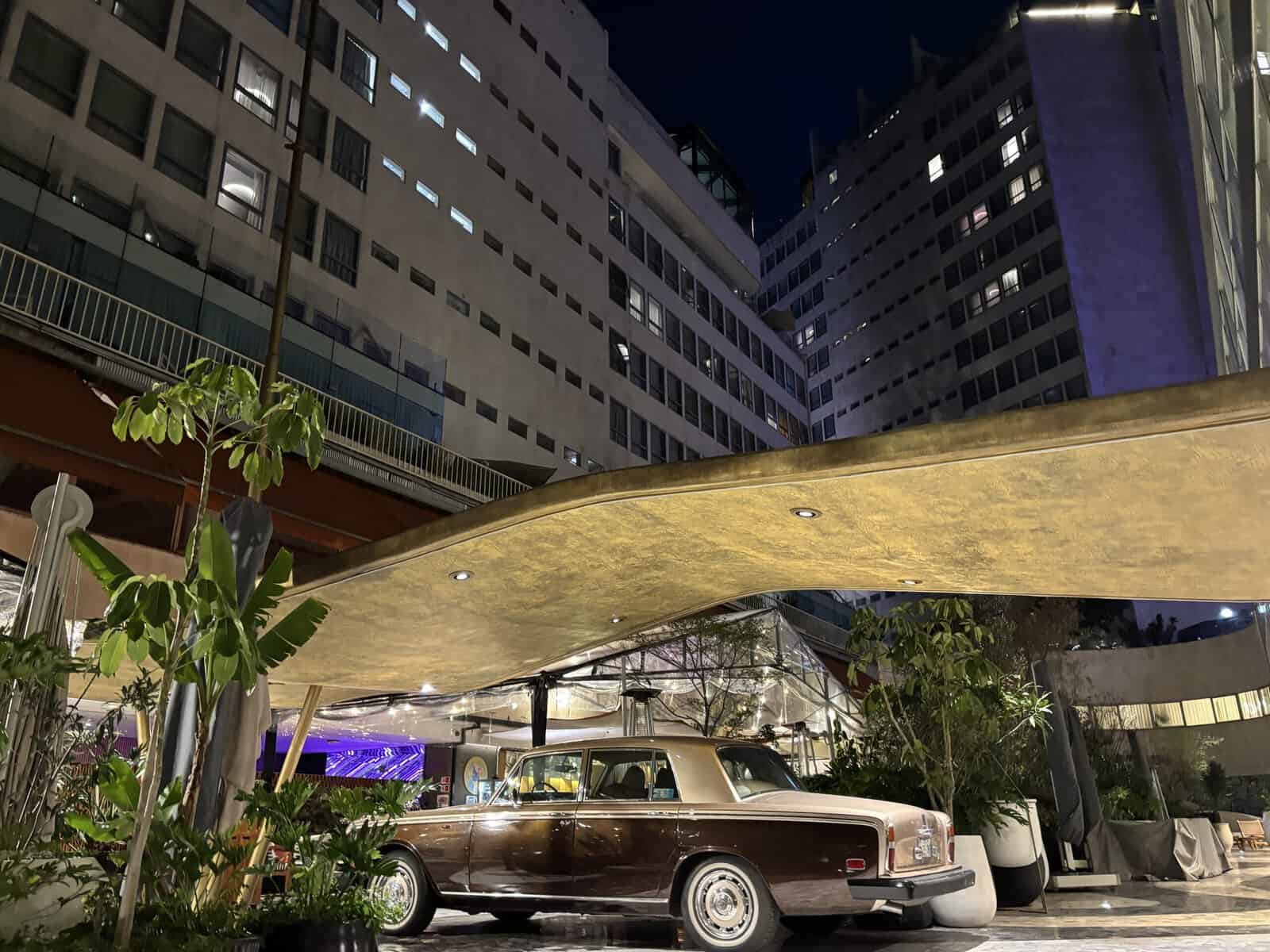
We stood as three generations of travelers anxiously waiting for an Uber in Mondrian Mexico City Condesa’s open-air lobby. There was a certain air of excitement throughout the space. The sun shimmered off the quartz and granite mosaic floors. The friendly staff around us reflected this warmth, effortlessly greeting and smiling at each guest and visitor as they passed into the hotel’s atrium. It was the kind of day anyone would have wished for; perfect for experiencing one of Mexico City’s most defining cultural phenomena and cross-generational traditions: boxing.
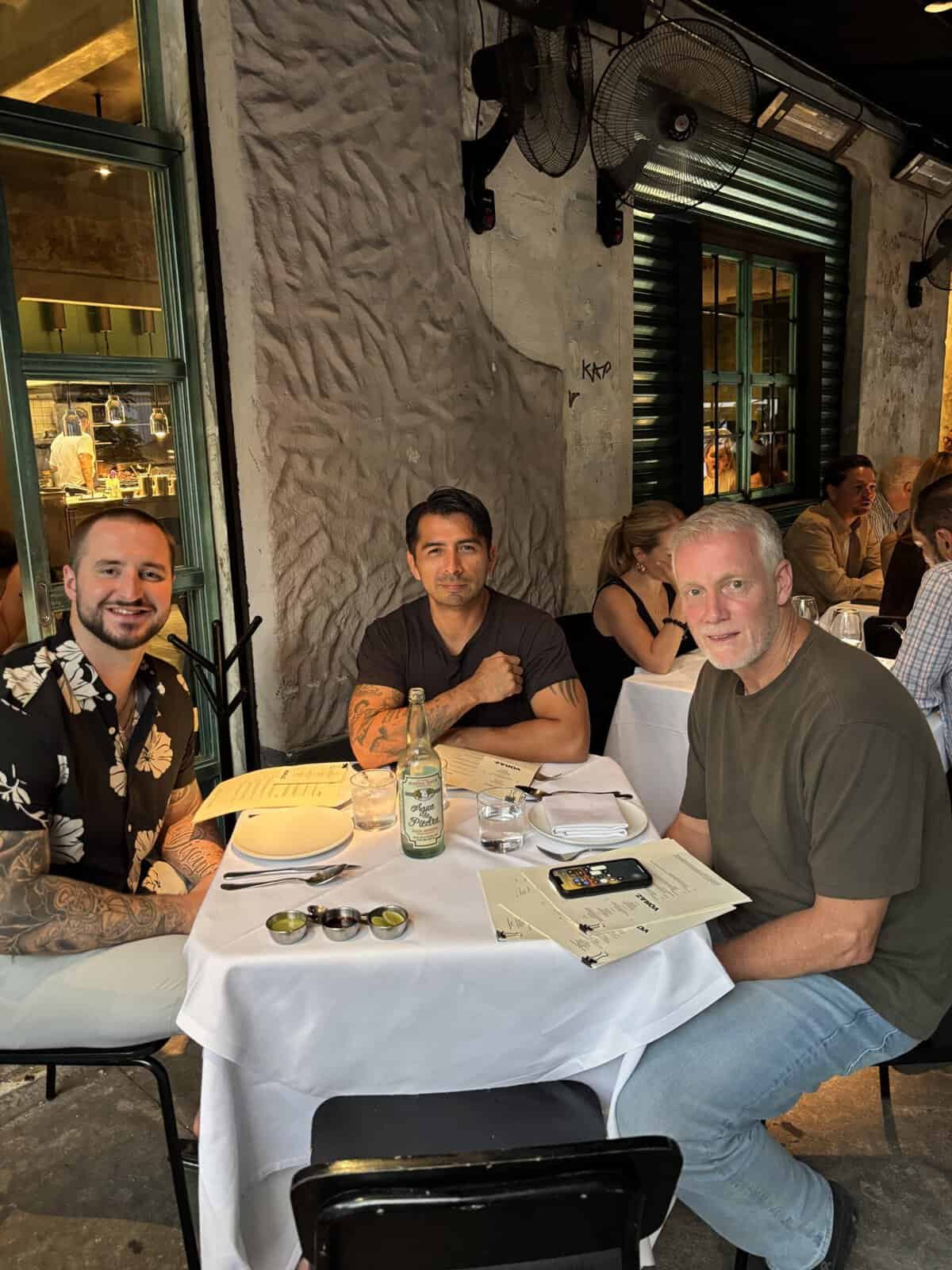
Separated by more than a decade of life between the three of us, we—Nick, a Gen Z’er; Kevin, Gen X; and me, a Millennial—made small talk as we waited for an Uber. The anticipation was settling in. All of us had been boxing for over four years and had become friends over that time. We came from different areas of the U.S. Different eras. Different experiences spanning from D1 athletics to Congo mission trips to deployments to Iraq and Afghanistan. We first came together by the shared love for boxing. From those bloody nose bouts, we grew closer.
We trained, bearing the heat and humidity of North Texas. But boxing in Mexico City was a new experience. And it brought an unexpected challenge: elevation. At 7,349 feet above sea level, which is just over a mile into the sky, Mexico City stands as one of the highest cities in the world, towering over Denver’s height of 5,280 feet. Consuming a morning mimosa and tequila sunrise and then two quesabirrias and a carajillo that afternoon, this overindulgence in combination with Mexico City’s elevation would soon take its toll on me.
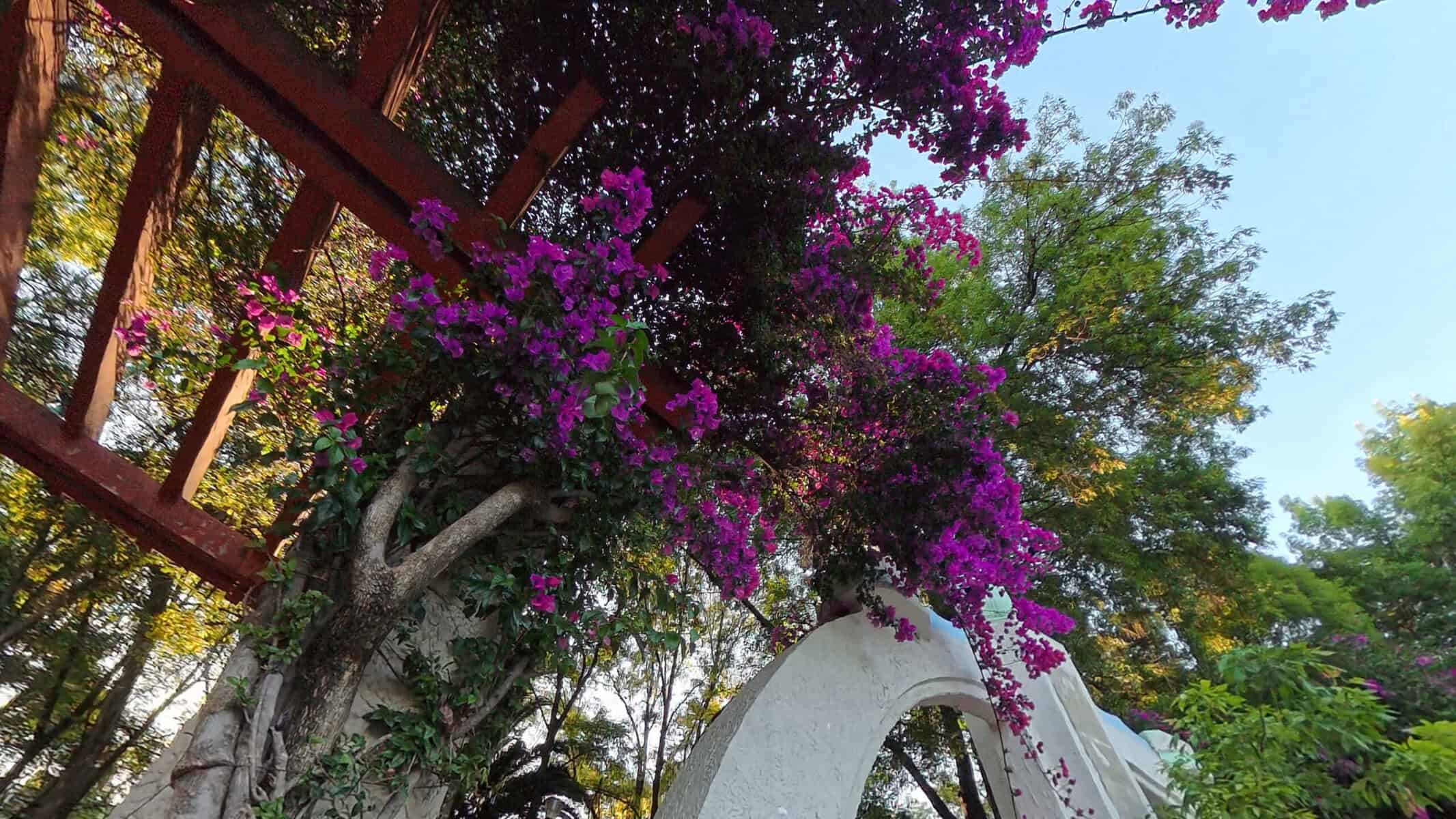
Connecting Through Combat in Parque Mexico
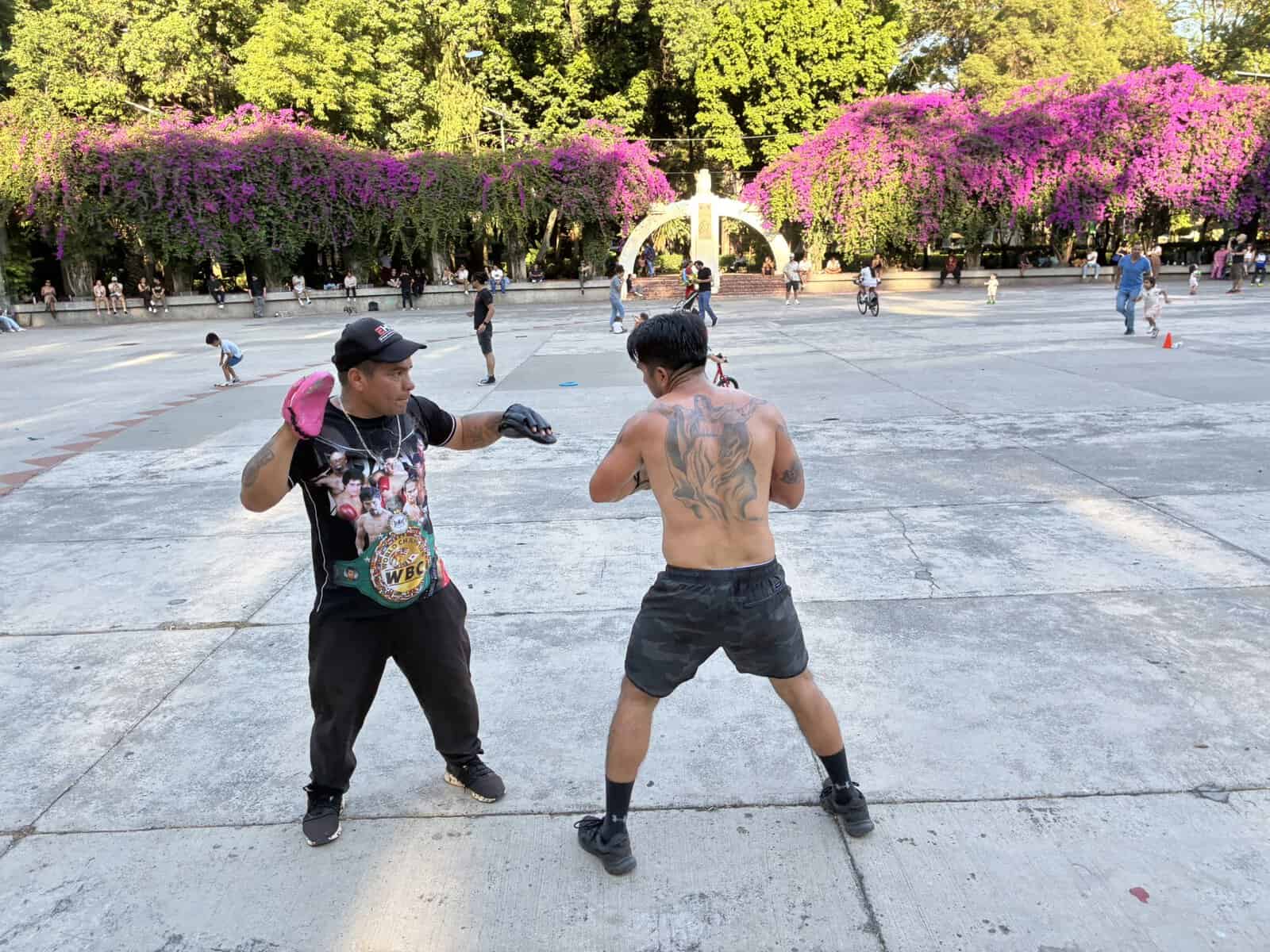
Within minutes of ordering, our Uber was in front of Mondrian and ready to take us to our first training session with Tony Vega. I found Tony Vega through reviews on TripAdvisor. Known for his outdoor workouts in the picturesque Parque Mexico, where residents and tourists alike strolled through the cool, wooded park or gathered on the concrete esplanade for light casual activities like frisbee, Tony tailored his sessions around skill level.
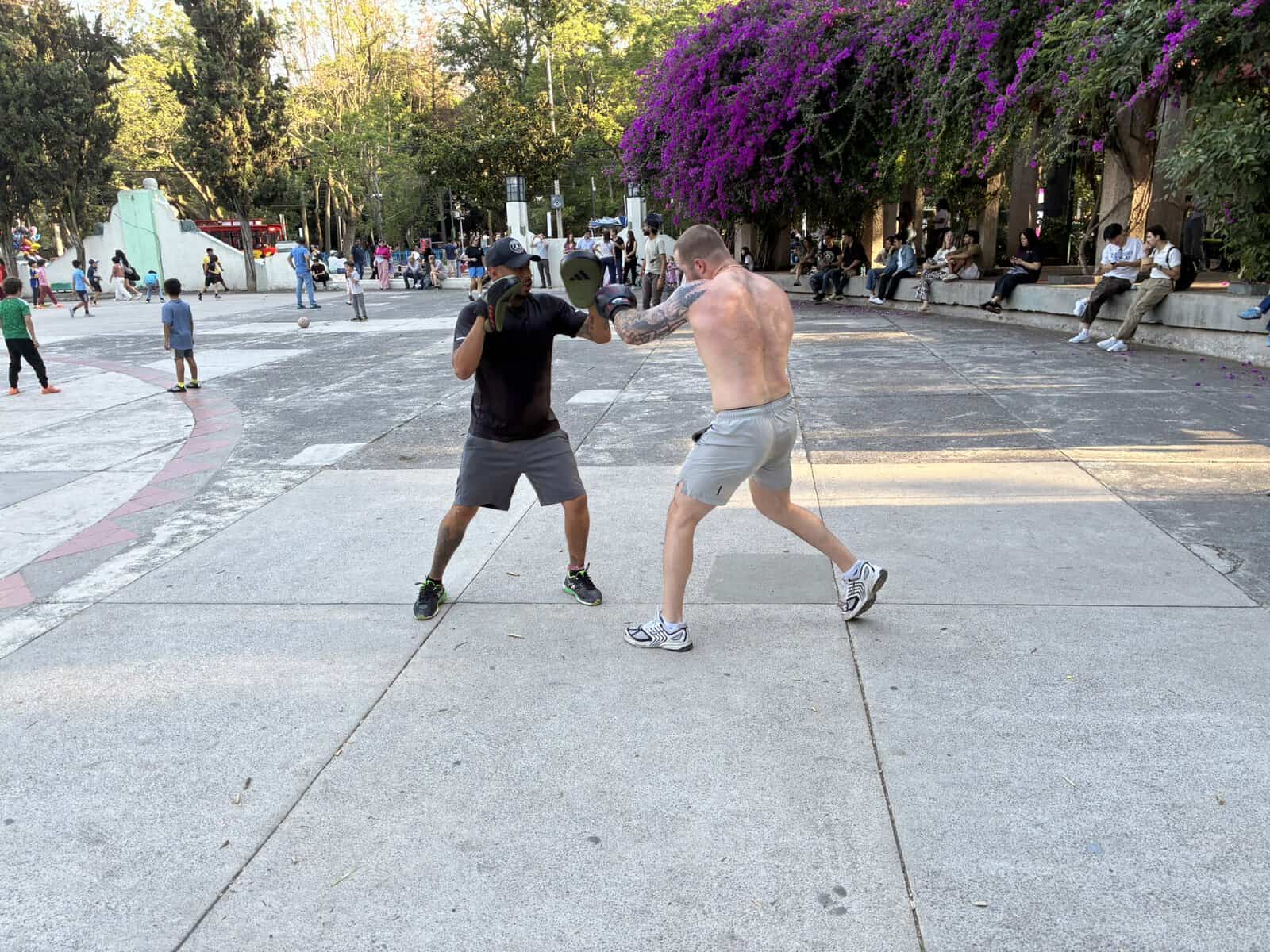
We made a strong case with our shadowboxing and footwork, so Tony and his associate delivered a session that made our muscles cramp. If we weren’t seen, we were heard. The loud pops of our mitts echoed through the concrete plaza; our grunts were heavy and hoarse. We circled in and out, pivoting on the lead foot as directed and rolling left and right to follow up with a cross or uppercut. Relief came from the sound of a bell from Tony’s phone, which gave us seconds to drink from the one 20-ounce Yeti among us. For the spectacle we were, we didn’t feel judged or mocked, but rather, accepted. We were among them, immersed in the beauty of the city and enjoying a time-honored tradition.
After 12 heavy-breathing rounds of mitt work followed by abs—which felt like my insides were about to burst out onto the concrete plaza—we concluded with smiles, fist bumps, and selfies. Beneath a canopy of jacaranda blossoms, their lavender flowers hanging just inches above our sweaty brows, we caught our breath and watched people basking in the evening glow. In that moment, we felt as if we were one with them.
Recovery and Overcoming
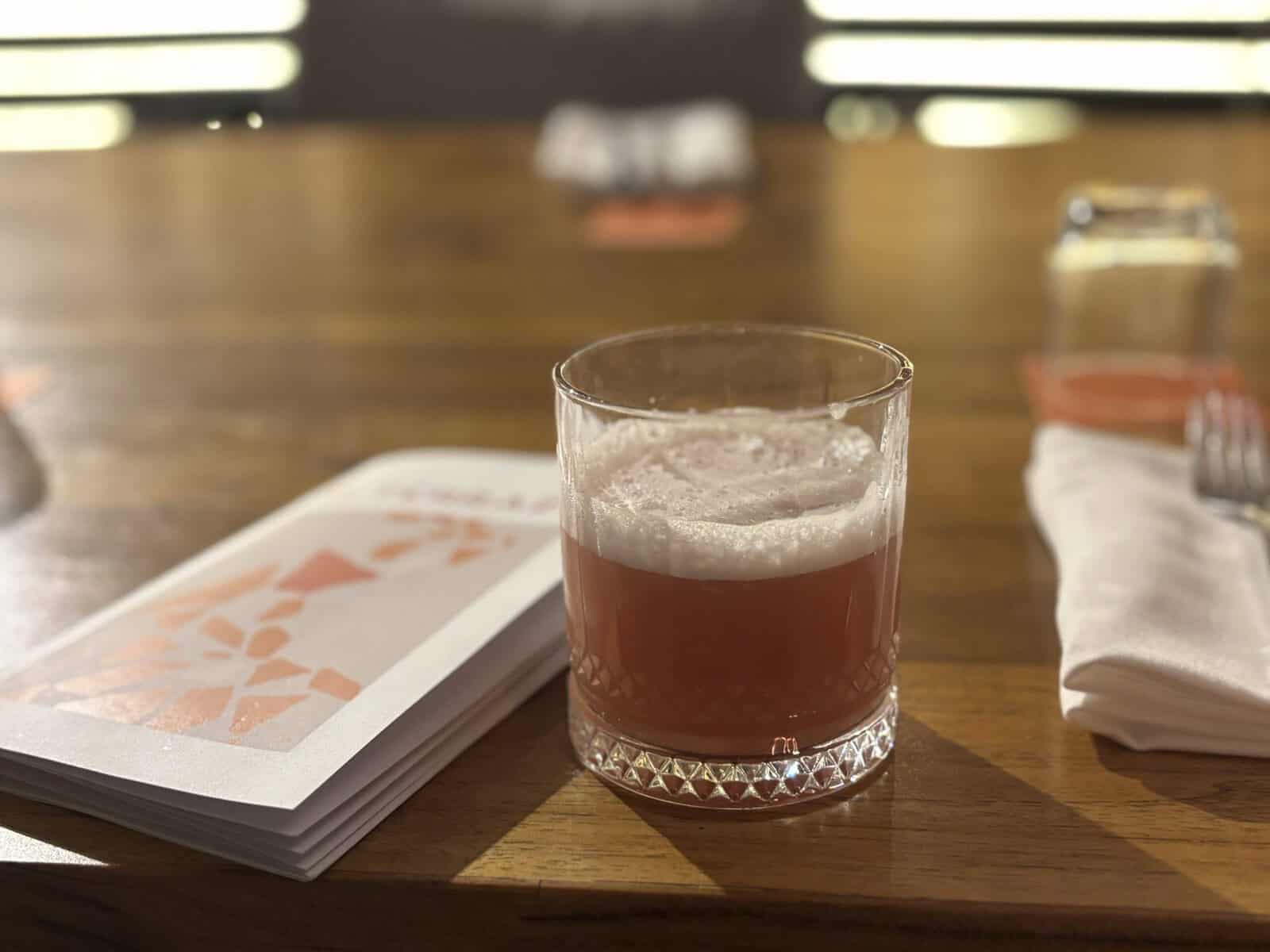
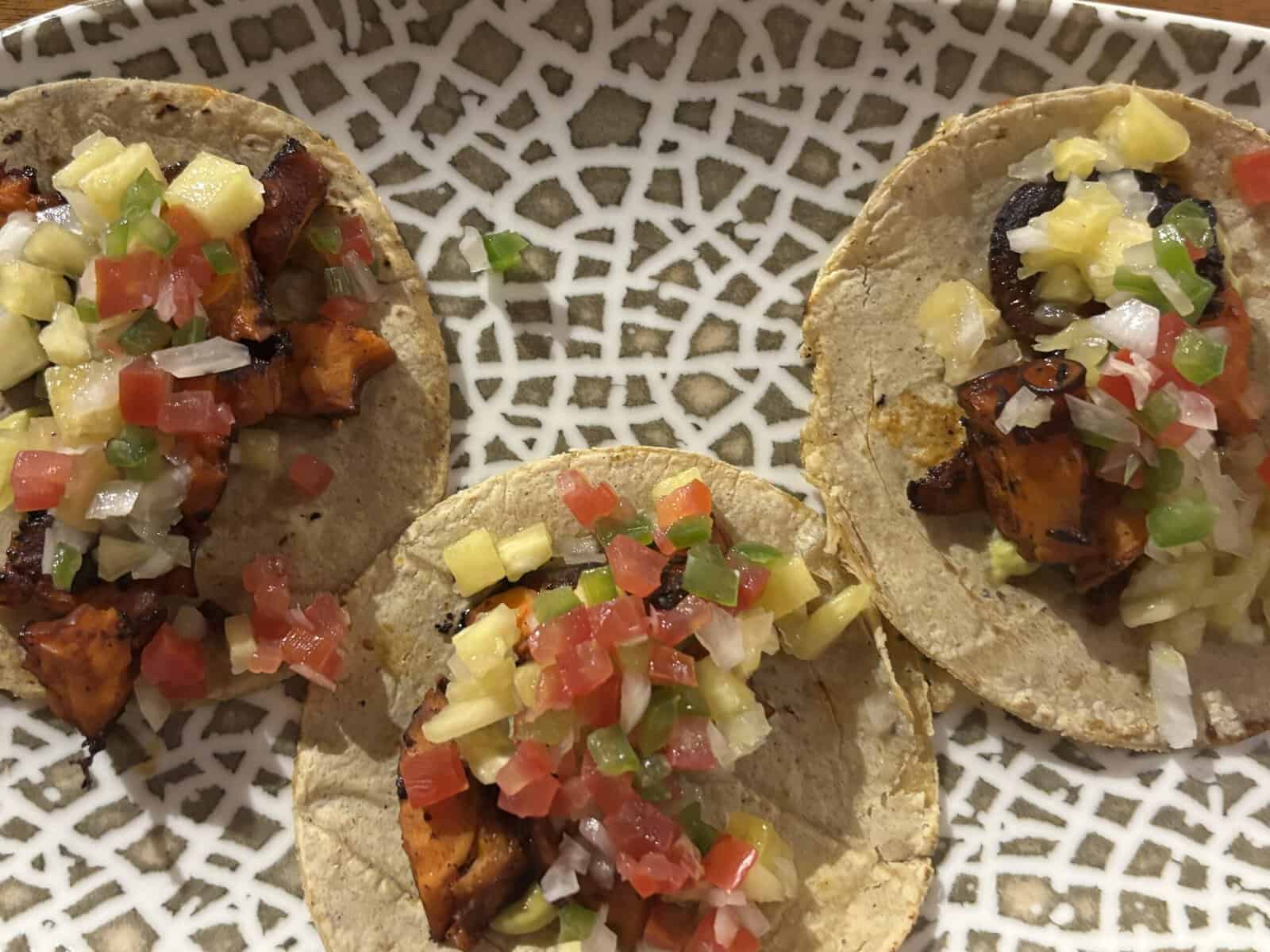
After a brisk 10–15 minute walk from Parque Mexico, we were back at Mondrian Mexico City Condesa. We kept our home tradition of tacos after training and ate at La Terraza. Back in Texas, we ate tacos al trompo at the gas station outside Mohler MMA Grapevine. Here, at La Terraza, the menu was elevated, featuring succulent tacos of al pastor octopus, pork belly carnitas, or New York Strip. We treated ourselves to a few drinks, a carajillo, a fresh margarita, and a Corazón De Maguey, a smoky and fruity cocktail featuring mezcal, orange juice, and cucumber kiwi syrup. Mondrian’s ambiance at night became calming with soft music and building lights dotting the rising tower overtaken by the nightly glow. From the tacos and handcrafted drinks to our bodies rapidly descending into post-workout recovery, we were subdued.
Surrounded by that calm, we reflected on the day and how we got here. It was a first time visit for Nick and Kevin, both of whom had traveled to Mexico before, but for leisure. Nick expressed how if it weren’t for the tacos after class back home, we wouldn’t be here. It was an accurate observation, as these bonds between our generations—each of us were over 15 years apart from the next—formed in the ring through drilling and sparring, and then deepened through the breaking of bread, or tortillas. It was a shared interest in a certain culture of combat and culinary arts, and there was no better place to be than where we were.

In our rooms, plush bedding and a spacious layout made it easy for our weary bodies to settle into sleep. I kept the shades open, and in the morning, I woke up to light pouring in and vibrant graffiti-like art above the headboard, which stirred excitement for a new day. Nick and Kevin, sharing a room, told me that they left the windows open, allowing cool air to seep in along with the soft hum and glow of the city. Mondrian gave us what we needed most: a night of rest that left us refreshed, reenergized, and ready for our next training session.
In the Ring with Jaguar
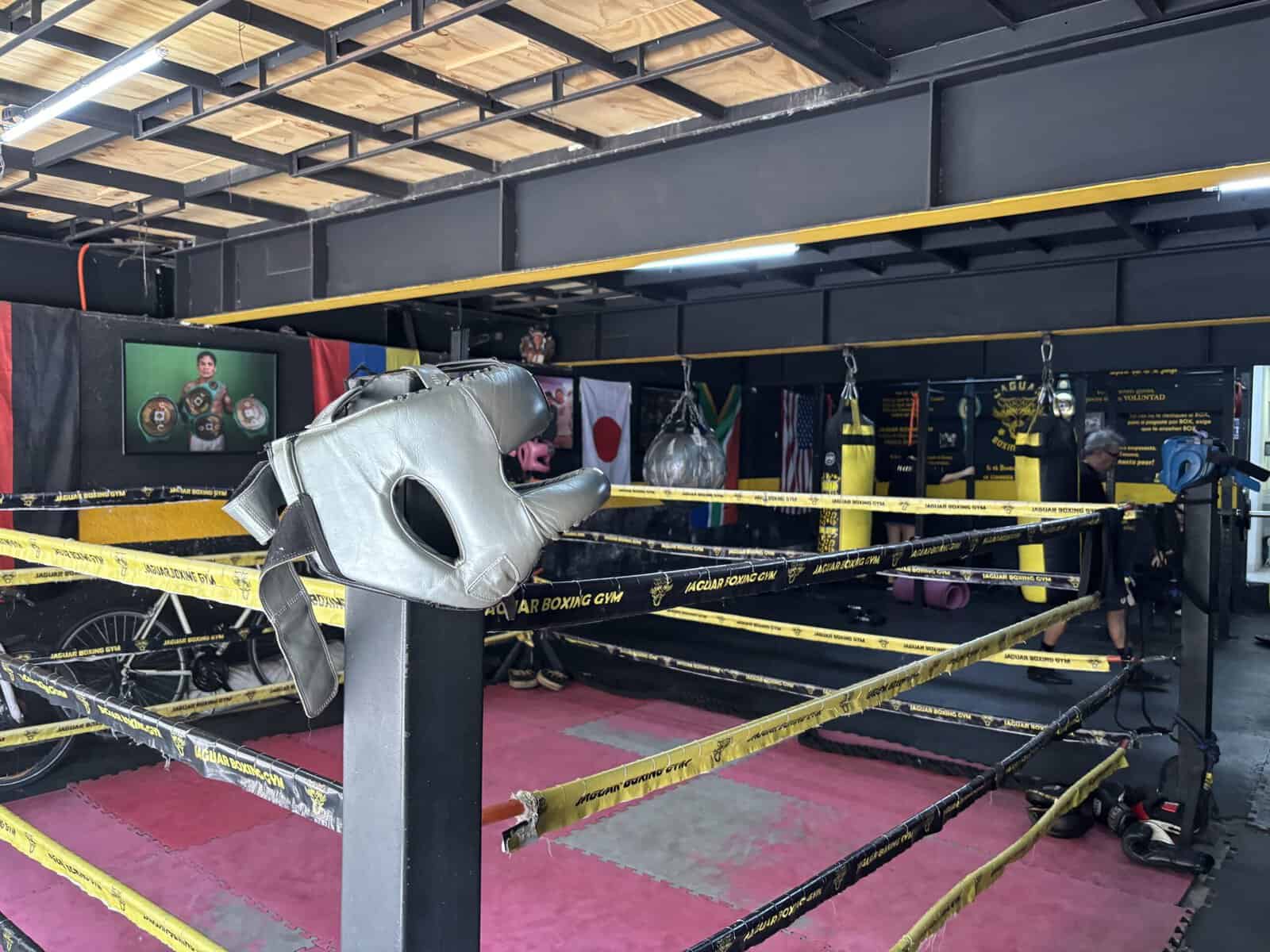
We took an Uber through the busy streets of Colonia Roma, where blocks of luxury retail lined the cosmopolitan neighborhood. Along the sidewalks were rows of street vendors beneath red tents and meats steaming with savory aromas. Before long, we arrived at Jaguar Boxing Gym, a small garage-like gym complete with a full ring. We joined a few others warming up, who could be seen from the street. Like our session in Parque Mexico, we would be exposed to the bustling sidewalk and street. Boxing, like performative art, is a spectator event, and a tradition CDMX boasted proudly and publicly.
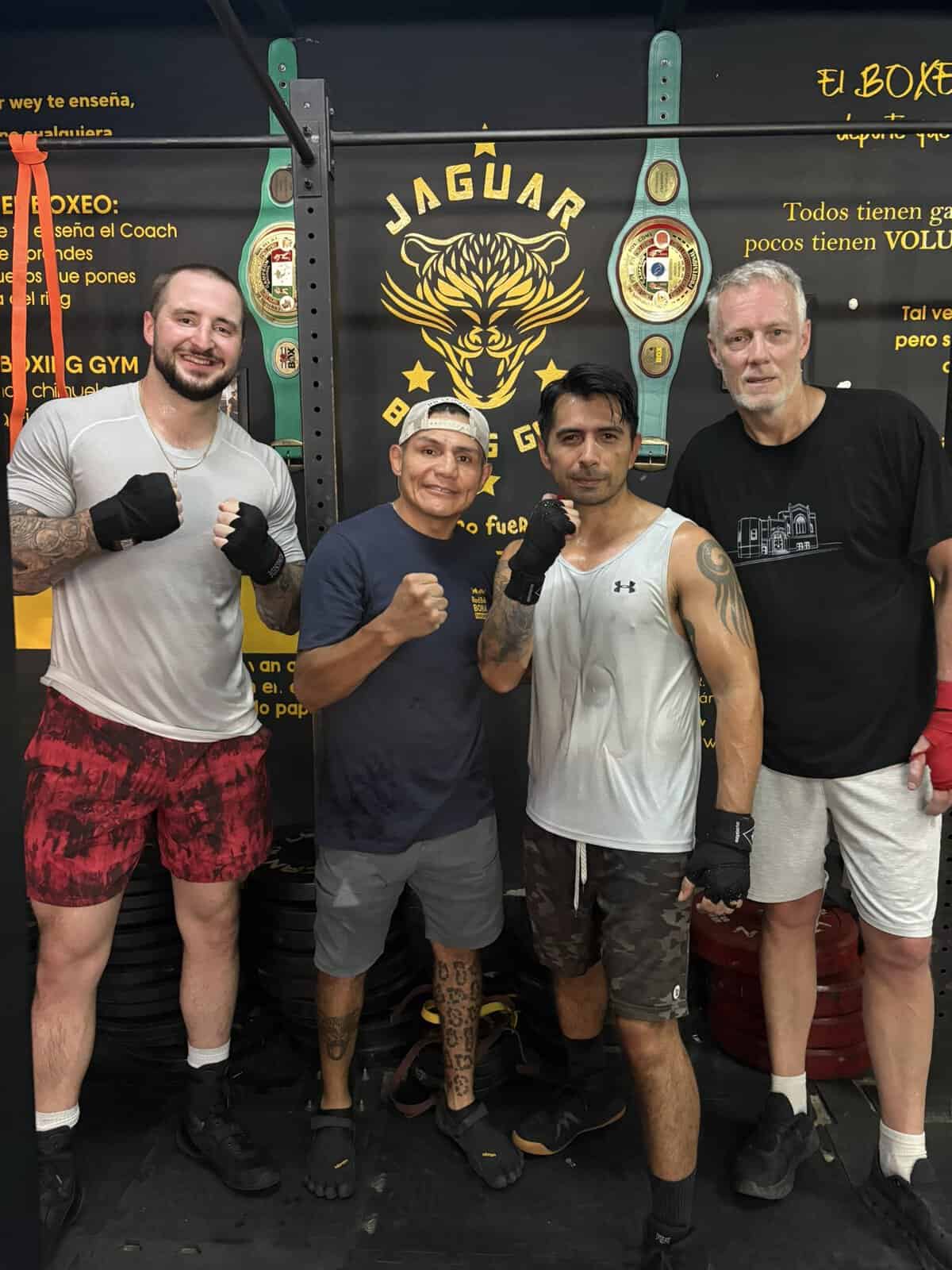
Coach Jaguar Mejia Ortiz ran the gym along with another in Colonia San Rafael. Before coaching, Jaguar had boxed well into his forties, earning four belts along the way. In his earlier years, he worked as a dishwasher in Texas, a place where he hoped to open a gym. He went professional quickly, earning a championship without a stint in the amateurs, a feat which he was one of the first to do.
Coach Jaguar teaching combinations. Video Martin Ramirez.
It was a surprise to us that he personally led our training session. He showed up on a Harley, pulling the rumbling bike into the gym from the sidewalk. We started off with shadowboxing, then the rope, and then another round of shadowboxing. After a restful night at Mondrian, we were performing better than our session in Parque Mexico. The cramps had subsided, our breathing less labored. We had acclimated, which was needed as Coach Jaguar laid out complex combinations involving ones and twos, and pivots and rolls while hitting the hook. He studied each one of us, finding areas where we could improve our form. For me, he noticed how my elbows lifted off my sides, exposing prime opportunities for my opponent to hit the liver shot. Such detailed observations and keen insight were valuable as it was better to learn this now rather than learning it folded over in the ring.
Combinations from Nick. Video Martin Ramirez.
The Consequential Art of Boxing
Meryl Streep once told a cheering Golden Globes audience that martial arts were not the arts. It was a privileged and uneducated stance, one that dismissed centuries of cultural significance around the world and undermined those who have used combat sports as a path out of poverty. Boxing, as Coach Mejia showed us, is art in motion. When we nailed the combination right, the mitt pops were loud and impressive. The body movement was smooth and fluid, showcasing the firm contour of muscles from the calf to the back for each strike. It’s a visual wonder for the spectator, as complex as ballet or any other form of dance. As is the case for all art, boxing is studied, practiced, and refined through repetition until exhaustion, then pushed beyond those limits. It’s creative, as chaotic as jazz, and calculated, like crafting the right prose. For the boxer, the art transcends sight and sound, reverberating deep within the body, taking its toll as does any art form.
Combinations with Jaguar Mejia. Video Martin Ramirez.
Boxing, then, like all other martial arts, is the most consequential art. Repercussions are immediate. Slip wrong, cross feet, or fall into a trap of patterns, the opponent will exploit it. And then outside of the ring, if you don’t condition or overconsume, you’ve lost the battle before throwing the first punch. As an art, this discipline carries over into life and inspires movement and change. Look no further than Coach Jaguar, who in his previous life was overweight, living paycheck to paycheck. After discovering boxing and losing 100 pounds, Jaguar dedicated his life to The Sweet Science and has inspired many along the way.
Siempre Progresando
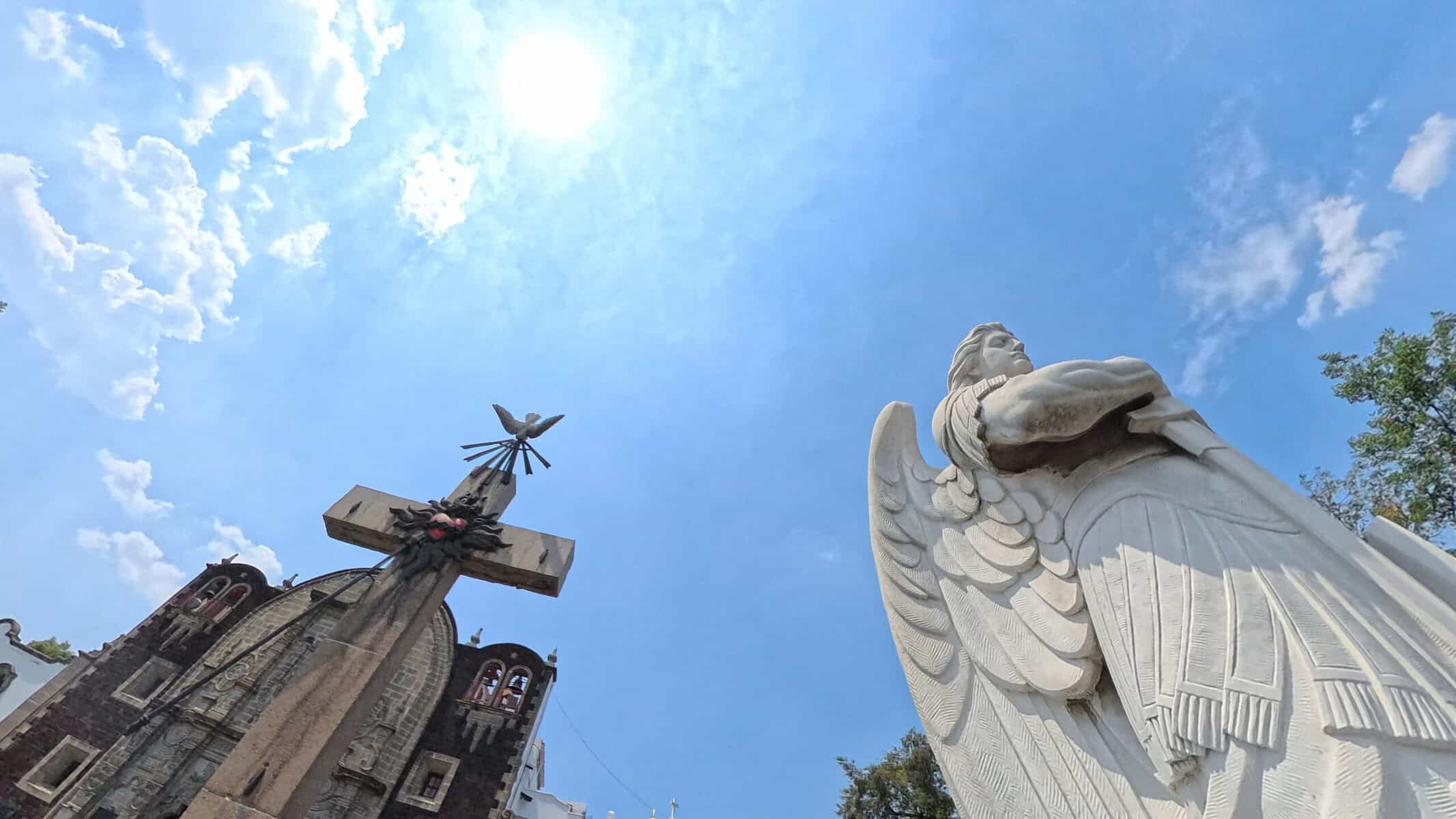
After our training sessions, we explored the city. With a certain air of confidence, we set out first for The Basilica of Our Lady of Guadalupe, a sprawling campus of colonial-era churches like the Old Basilica de Guadalupe, and the new, modern Basilica de Guadalupe. Along these slick marble floors, which liken it to the hallowed grounds of the Athenian Parthenon, millions venture in mass annual pilgrimages. We passed through respectfully, and quietly, never rushing a moment in the halls of mass and devotions and spent time reflecting at each art display or historical artifact. We then scaled the steps to the Capilla del Cerrito, where a statue of the Archangel Michael, who is often depicted protecting the Virgin Mary and in other portraits, banishing the devil, stands guard at the top of the hill overlooking all the basilica. Even in religious art and in the most sacred of texts, combat has its place.
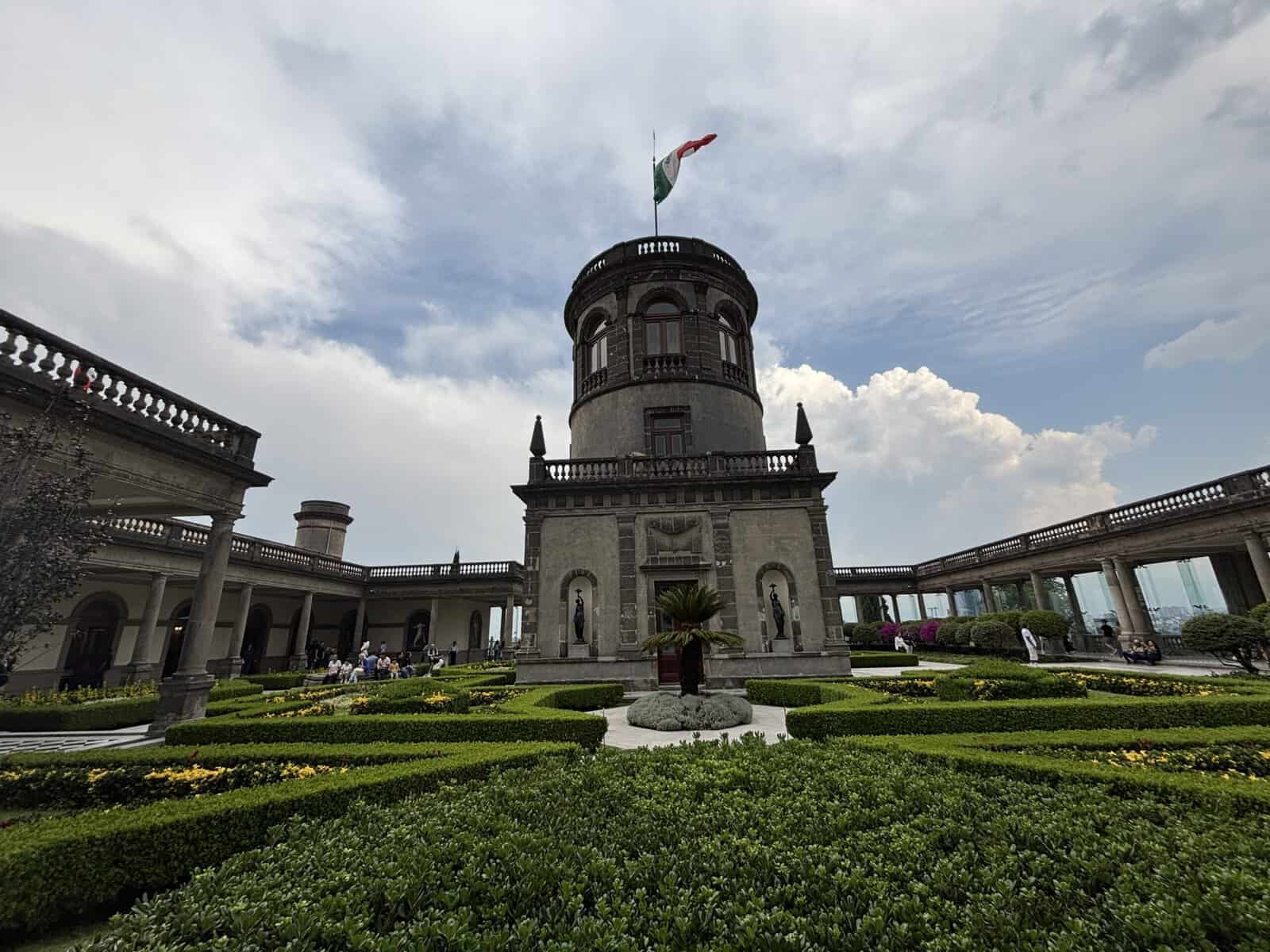
We took a thrilling taxi ride through the streets—and along the sidewalk to bypass traffic—to Chapultepec Castle. As a Marine, I was well familiar with The Battle of Chapultepec. Known as one of the bloodiest battles in American history, what the Marine’s scarlet “blood stripe” pays homage to, Chapultepec is a significant site for both Mexico and the U.S. It’s also the site where a cadre of boy soldiers, known as the Niños Héroes, gave their last breath standing their ground. For better or worse, Mexico City’s history is marked by centuries of combat. However, CDMX has endured. Today, a culture of combat has enabled CDMX to progress forward in all forms of art, from culinary and architectural design to folklorico and street murals to all sorts of martial arts, including boxing, jiu jitsu, and others. The Mexican style of boxing reflects this history and culture. It’s aggressively forward, weathering the storm of strikes and setbacks to get in close to land one victorious shot.
Reminders of Home
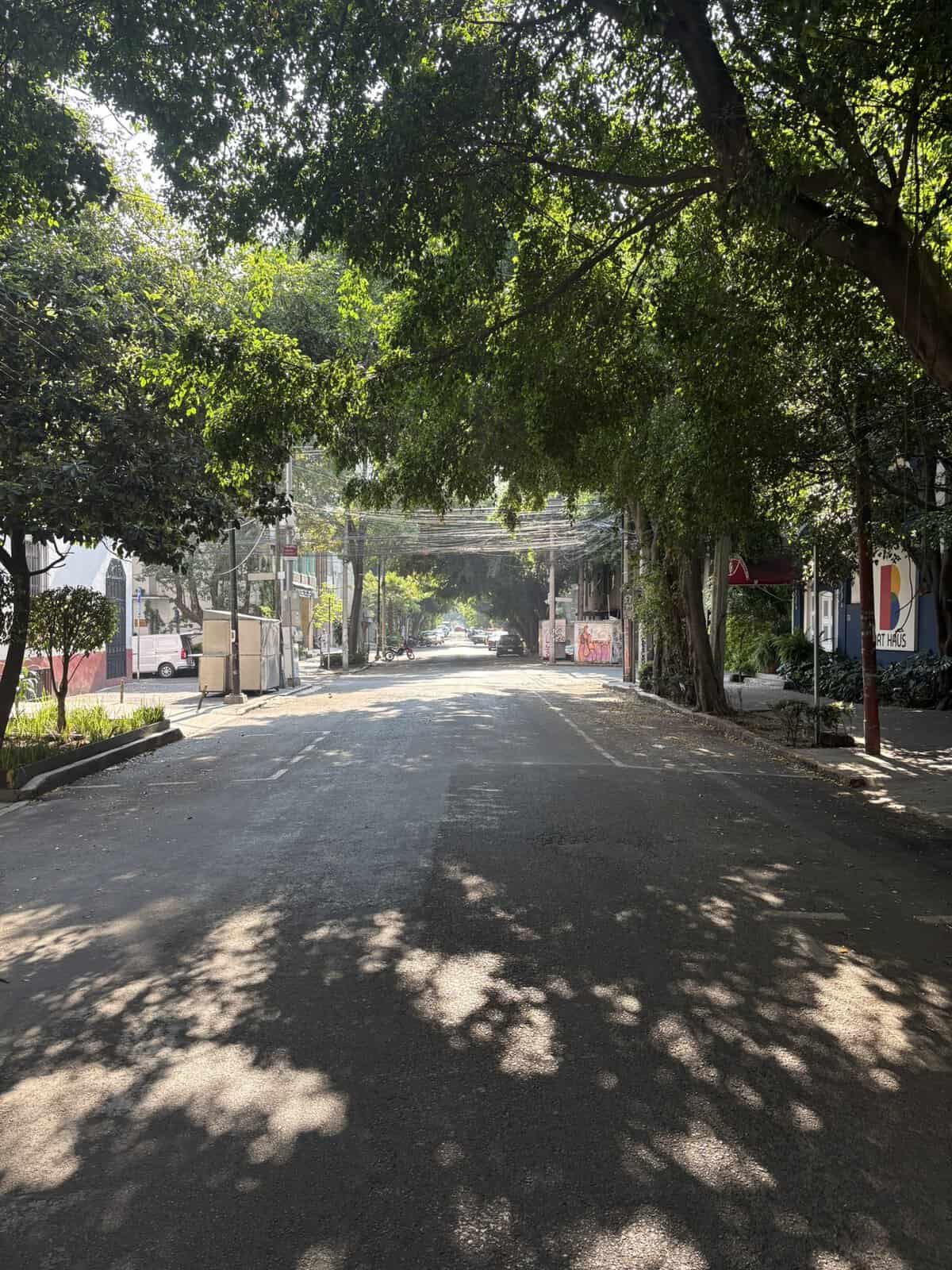
Of all the places I’ve traveled, none feels more like home than Mexico City. Growing up near Little Mexico, a small, predominantly Mexican suburb wedged between prominent neighborhoods in central Dallas, I find many things that remind me of home whenever I’m in CDMX.
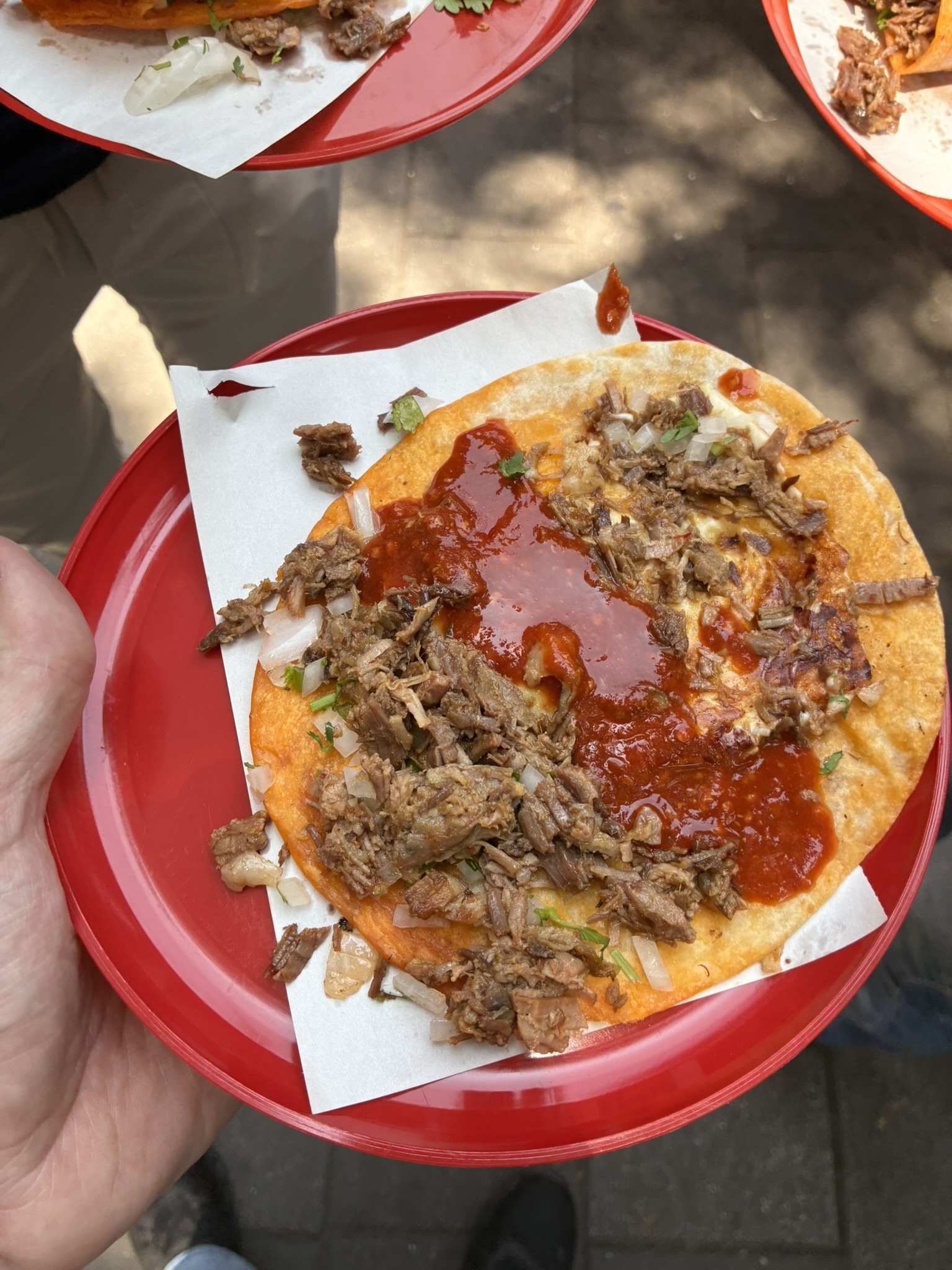
The surrounding city skyline invokes the same awe and wonders as the Dallas skyline. Urban high rises and splashes of corporate modern art tease with promises of a life beyond the poverty line. And of course, there’s the food. From Michelin awarded and recommended fine dining like Voraz—a place I’ll always hold in my heart as I ate a spicy, smoky, and subtly sweet delicacy of mole while listening to Deftones on the streetside patio—to the rows of street vendors found right outside on the corners, along the roads, and under a canopy of trees or white or red umbrellas and makeshift tarps, each enough to fuel a fighter’s appetite with full-bodied flavors.
And beneath it all, on the single-person cellular level of a grand city like CDMX or Dallas — where graffiti-covered walls, broken roads, and dense neighborhoods pulse with the nonstop hustle of work — it’s a city of promise and opportunity. That is, if you’re ready to pull up your boots, step into the ring, face the consequences, and always move forward.
____________________________________________________________________________________________________________
Cover photo Martin Ramirez.
Martin Ramirez is a brisket-eating, Shiner-loving, road-tripping enthusiast of all things Texas. This Dallas-born writer / adventurer is ready to take his ‘78 El Camino to find the best in food, fun, and fitness throughout the Lone Star State.