

Share
Becoming an equine veterinarian was not the career path anyone expected for Dr. Matt Evans, least of all himself. So he wrote a book about it.
Evans didn’t grow up around horses. He didn’t even grow up on a farm. When his love for James Herriot books sparked an interest in caring for the creatures, it prompted him to pursue veterinary medicine at Texas A&M University. He quickly realized that many of his peers had an advantage because they had grown up around horses or other farm animals—so, as an Austin native, he knew he’d have to work twice as hard.
Dr. Matt Evans’ book, “Chomping at the Bit: How I Became a Horse Vet (Against All Common Sense),” is an earnest yet comedic memoir about his hard-fought journey to become an equine veterinarian. The lessons learned, while undoubtedly helpful for vet students, translate to life advice even for those of us who aren’t dealing with colicky horses. The book’s self-deprecating and candid humor also showcases Evans’ versatility in his other passion: stand-up comedy.
You didn’t grow up around horses, yet somehow decided you wanted to become an equine veterinarian. Why horses?
I didn’t get exposed to horses until I was in veterinary school. In your first year, they expose you to everything—horses, pigs, guanocos. Ok, not everything—but almost.
I was drawn to horses from the get-go. They either grab you or they don’t. Me and horses just clicked.
How different was the reality of veterinary medicine from the version you imagined growing up?
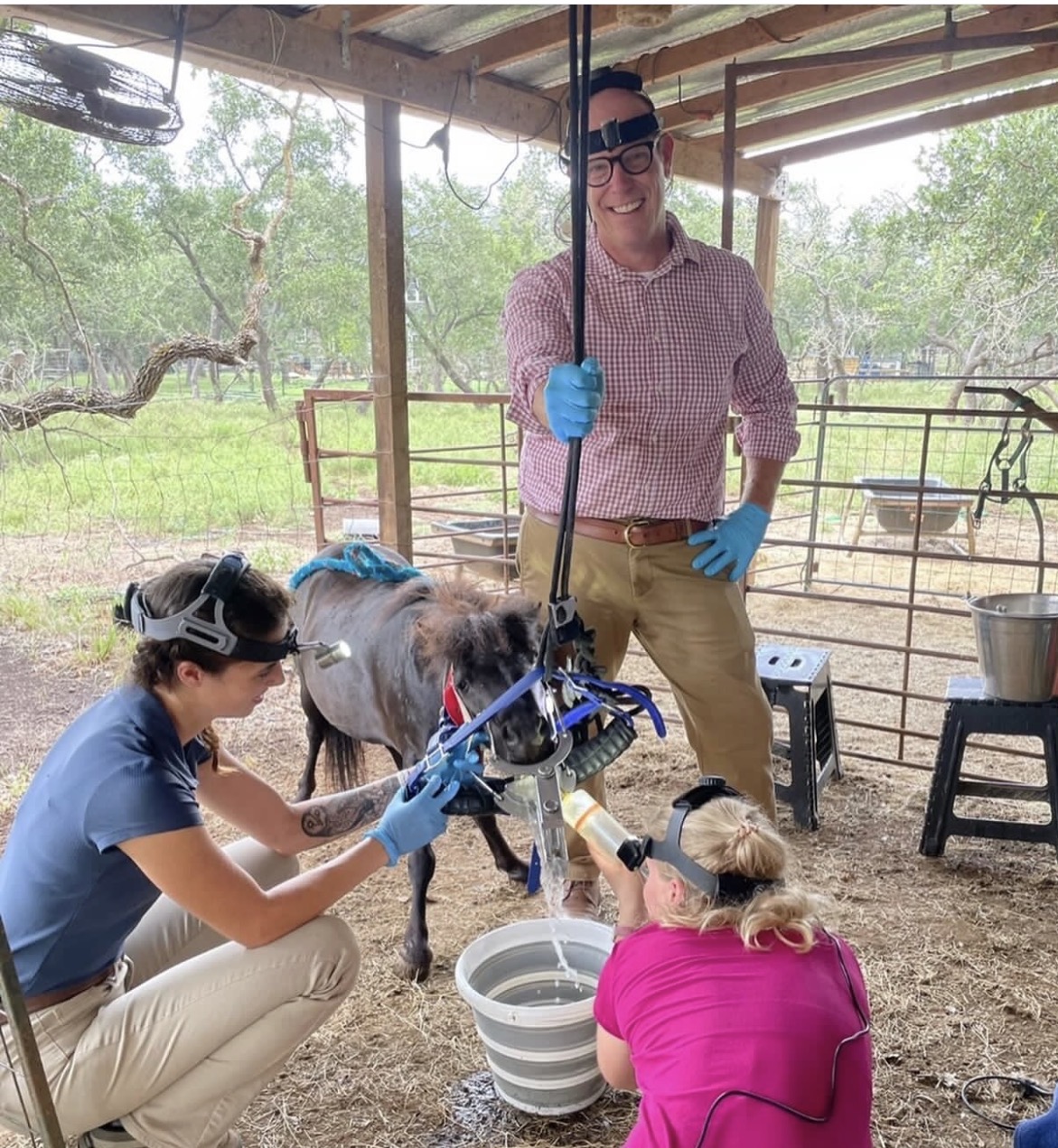
Only in every way possible, ha!
I dreamt I would be James Herriot, but I didn’t live in England or work in a quaint village. The challenges and failures that made his books so good were actually happening to me, in real life. Now I was the main character and had to work my way through each case and situation, all without a guarantee of success.
When you arrived at Texas A&M and began veterinary training, did you ever doubt your decision and think you had made a mistake?
It wasn’t until I started looking for a job, and during my first job, that I thought, “Oh no, this just might not work out.”
In school, I suffered from the delusion of the young, a gift to all beginners—the belief that I was going to be “the best horse vet ever.” Then, as a fourth-year student in school and for my first five years on the job (the average amount of time it takes to feel like you are good at any difficult job), I changed my goal to “the most adequate horse vet ever.”
What’s something veterinary school prepared you exceptionally well for, and what’s something no classroom could possibly have prepared you for?
I knew my science, I understood how horses work, and, as far as possible, the best way to treat them. But in real life, all the extra variables cloud the presentation of each case, not the least of which is the human factor—you, the client, and your ability to communicate. You can learn only so much of that by watching; the rest you must, as they call it, “practice.”
During your early days in practice, did you ever have a case when you suddenly realized, “I’m the veterinarian. Everyone is looking at me to know what to do”?
Yes, Mondays at 12:00 a.m. to Sundays at 11:59 p.m. only, though.
That is a great question to describe what makes being a new graduate in anything so hard. “Where are my mentors? Who is going to help?” Well, you can call someone later, but right now—no one. It’s you. You wanted to be a doctor. You’re a doctor. So start doctoring.
What role did mentors play in helping you become the veterinarian you are today? Was there one piece of advice—or one person—you still think about?
A couple of very horse specific ones stand out:
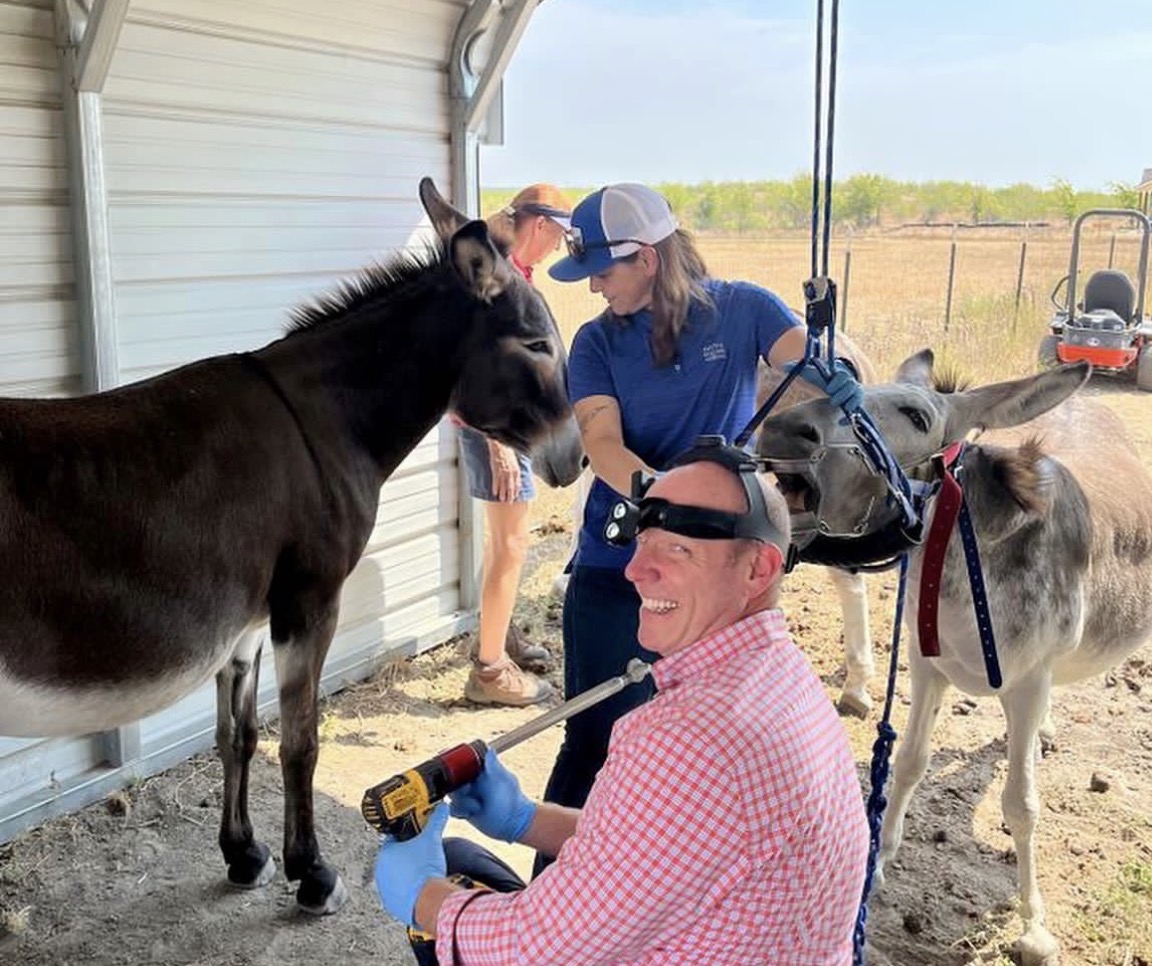
- “Everyone wants to be a famous horse sports medicine vet. Fine. But if you can float a set of teeth (routine dentistry), breed a mare and tube (treat) a colic, then you’ll always be able to make a living.” — from a famous racehorse vet in Kentucky with a really cool handlebar mustache (which gave him instant credibility, obviously).
- “If it even crosses your mind that a wound needs a drain, it’s too late—you now have to place a drain.” — a vet on one of my clinical externships at a private practice.
This last one may seem like nonsense to the non-medical, so I’ll translate—“We’re all, by our nature, lazy. So if it even so much as occurs to you that you need to take an extra step, do the more involved treatment, then it is no longer a debate—your decision is made. Do the right thing, even if it is more work.”
Tell me about one horse or client from those early years that you still remember vividly—and why they’ve stayed with you.
I had a client tell me that I always seemed like I was in a hurry—and I was. She said that it was apparent I didn’t want to be on her farm. And that was right, too.
It’s not that I didn’t want to work, but that I had three more farms to visit, it was 4 p.m., I was on call that night, and I was never going to see my wife again unless I hustled and was efficient.
That is fine to feel. Fine to act on. But not fine to show to a client in any way. You are taking care of their animal. That demands your complete, unhurried attention. That critique was a real gift.
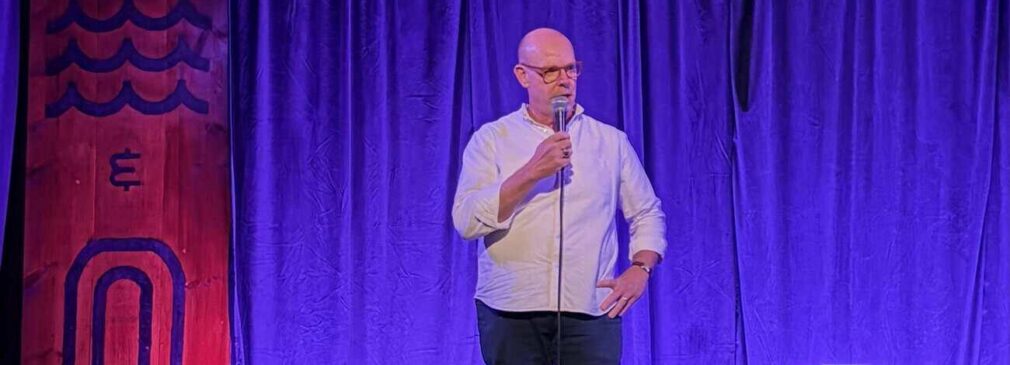
You’re also a stand-up comedian. Which came first: learning to find the humor in veterinary medicine or realizing those experiences could actually become comedy?
I found humor in veterinary medicine long before I ever dreamed about trying stand-up. Funny thing is, I was doing “stand-up” without knowing it, years before I got on stage.
I’d have a funny story from work or life and I’d share it, over and over, throughout my day with clients. I’d keep the laughs and cut the dull sections and tighten it up until it was a good, funny story that most people would like. I didn’t know, but I was workshopping it.
Some of those old stories are still in my act to this day. My Honduras joke is an example of this. (No, I won’t tell it here. Buy a ticket.)
What’s a story from the book that was awful when it happened but that you can laugh about now?
All of them? That’s comedy—tragedy plus time. You can speed that clock up if you’re funny, but pain is pain.
How has growing up in Austin and building your career in Central Texas shaped you as a veterinarian, comedian, and writer?
I am a lucky, lucky dog. Places shape people. And Austin has certainly changed me.
On the comedy front, Austin has always been a good comedy town but, since I got into it, Austin has become a great comedy town. The producers who gave me my break to get on good, paid shows (Can’t Even Comedy) came to Austin from L.A. in 2021 because of the comedy boom.
And on the writing front, Austin is a literary town. Great bookstores, educated people, and the arts are valued. If being in Austin doesn’t make you want to write, I don’t know what would. If I wasn’t tone deaf, I’d put it all to music. That’s Austin.
As an equine veterinarian, Austin was perfect, too. My partner started Austin Equine in 2004 and I joined him in 2005 – right when Austin hit the critical mass of population and wealth to support a new equine practice on its west side. Right guys, right place at the right time.
Also, a lot of the Austin horse world is English sport horses. Let’s just say it’s a clientele that is more understanding of a vet who, in his spare time, does not rope cattle or raise foals, but rather paints, writes, tells jokes to drunk and stoned 25-year-olds in dark rooms on the seedy side of town for up to two free drinks per show. (Sorry if I made the stand-up sound too glamorous there. In real life, it is much, much worse. Ha!)
___________________________________________________________________________________________________________
Cover Photo Courtesy PR by the Book
Julia Helsel is an editorial intern for Texas Lifestyle Magazine, a recent graduate of Texas A&M University and a lifelong resident of the Lone Star State. When she’s not traveling, she can be found reading, writing, or playing guitar.