

Share
From the Grand Canyon to Sedona and Scottsdale, discover the best Arizona trail runs, ultramarathon destinations, and recovery-friendly hotels for active travelers.
Trail running has experienced nearly a 10% increase over the past year. Arizona hosts some of the world’s most prestigious trail races (the Javelina Jundred 100-miler, Cocodona 250-miler, and the 100K Black Canyon Ultramarathon, to name a few). Curious to explore desert singletrack and high elevation mountain terrain, we packed our gear and left home in Austin, TX to trek Arizona by trail.
Well-Being Lodging
Look left and right in Arizona and you’ll find high-end resorts. Drive a little further and you’ll find RV Parks and campgrounds. Neither of these fit our lodging preferences for a trail running trip. We intended to spend dusk til dawn with our glutes to the grindstone.

Capping the night off at a luxurious spa resort would be extravagant and excessive. It’s what I call “kindergarten wellness.” It calms the nervous system in the short term without lasting tranquility. A mental health toolkit entails daily practices, like feeling our feelings, moving, and maintaining strong social connections. Facials and sound baths cannot do that. There’s nothing wrong with five-star resorts, as long as you can afford them and you’re turning to them to compliment your life, not to escape your problems.
The other end of the spectrum is camping. Sleeping on the hard ground with lamppost lights, wildlife sounds, and the threat of something with four legs and an appetite rattling our tent at night is a r-u-n spelled backward. It’s a nur for me.
We rested at resorts that were comfortable, approachable, and conducive for a good night’s recovery in order to trail run the next day. Sleep wellness is essential on an active trip. As a life coach, wellness guide, exercise physiologist and personal trainer, I know a lot of things you can do to improve your health. But if I were forced to pick just one, it’s sleep. To run faster, think clearer, eat wiser, be nicer, and have a more positive outlook on life, get a great night’s sleep.
Travel should invoke curiosity and wonder. When it becomes elitist, this Selina Gomez lyric comes to my travel-writing mind: “I mean I could, but why would I want to?” I am leveled with consternation when someone in my hotel room accidentally drinks the $6 bottle of water. If you generally feel the same, this itinerary will suit you. The lodging we curated here is for healthy folks, wanting quality sleep without the B.S. (bears or spas)
Run One: Morristown, Arizona
Dam Good Run
Aravaipa Running hosts the most notorious trail races in Arizona. Dam Good Run appealed to us, because it takes place in North Phoenix’s stunning Lake Pleasant Regional Park. It’s the closest thing you’ll find to oceanfront property in Arizona. This race caters to all levels and offers distances from 2 miles to 40K.
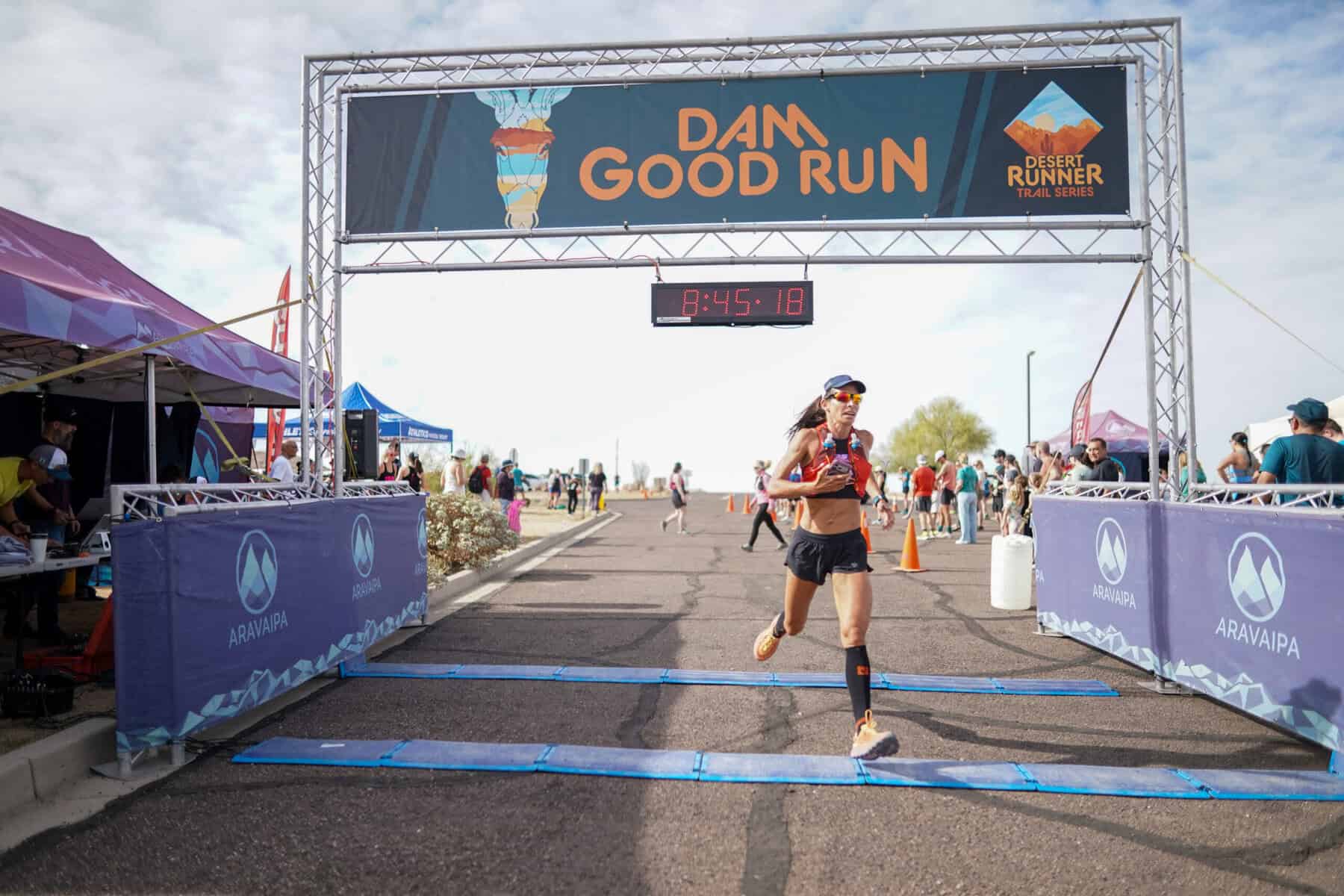
We chose to run the 13K race. Our souls rejoiced as we ran 8.2 miles through high hills and steep valleys. Most of the run was single-track trails, but there was a mile stretch of gravel over the dam, which allowed the crowd to thin out. (Those open areas are nice for fast runners, needing to get around, and slower runners who spend the rest of the race nagged by the words “ON YOUR LEFT!”) The views of Saguaro cacti and curious wild burros along the course are worth the price of admission. 75 minutes after gun time, we crossed the finish line, looked at each other, peered out at the vast lake, and agreed: that was a Dam Good Run.
If a longer, harder run is something you would be willing to train for, consider the 40K. (Aravaipa coins this a “Dam Insane” course.) It features breathtaking lake views from Yavapai Point and a quick, guided raft ride across a cove.
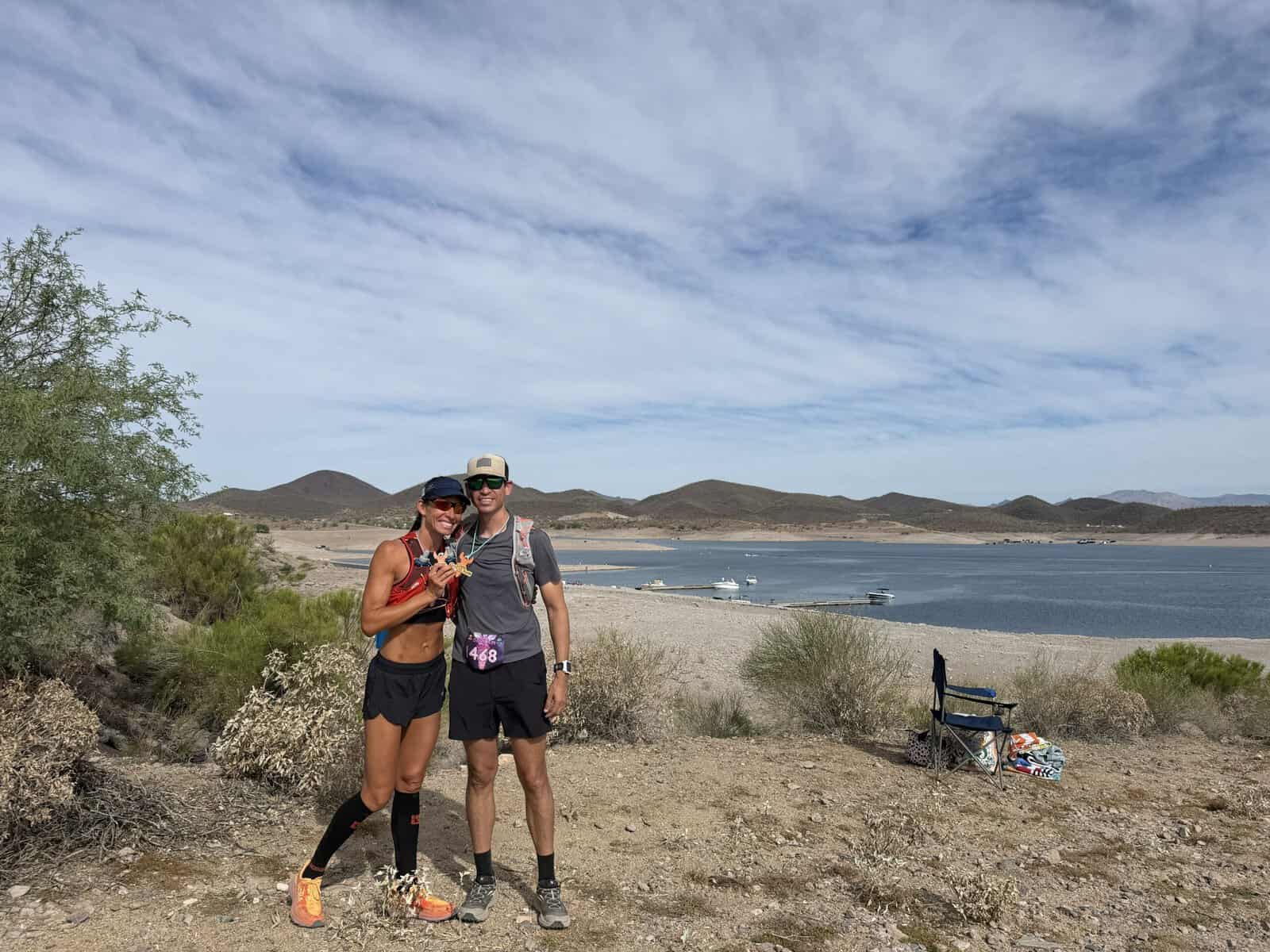
I’m a sucker for a water adventure. After our 13K, I put on a swimsuit, blew up an inflatable buoy, and took a swim in the lake. In 2027, I may have to return for that 40K for the beckon of the raft ride. Maybe you’ll join me. (My husband said no.)
Rest One: The Wigwam
Litchfield Park, AZ
300 East Wigwam Boulevard, Litchfield Park, AZ 85340
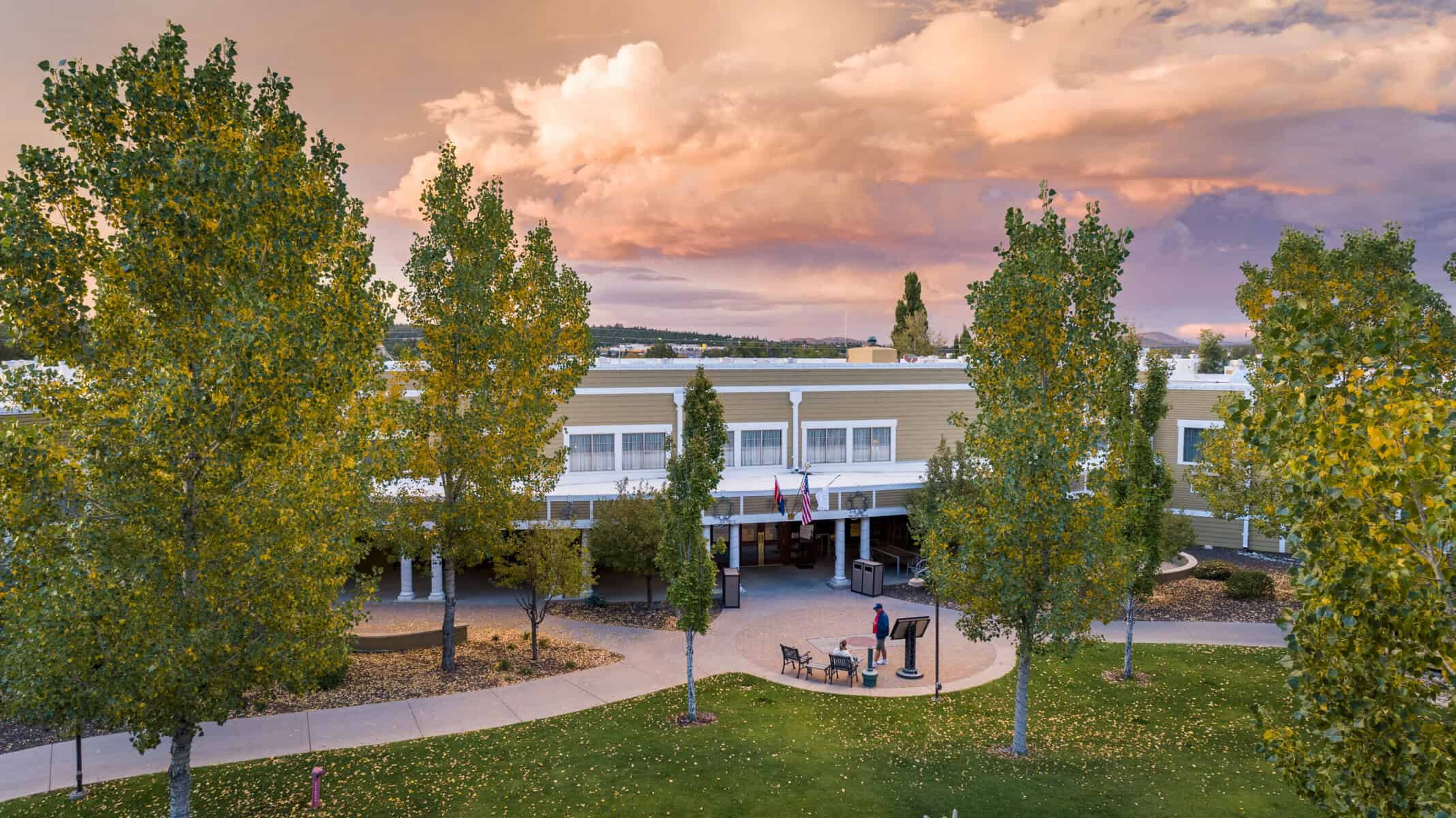
There’s not a lot around Lake Pleasant Regional Park. We explored the closest resort option to the race that satisfied our needs of comfortable accommodations and on-site dining. The Wigwam is a spacious historical resort that we called home. It was a 40-minute drive to the race on the morning of Dam Good Run.
The Wigwam is located in Phoenix’s West Valley. This historical property is a hybrid of casual elegance and classic Southwestern charm. Situated on 440 acres of desert grounds, the resort offers 331 Southwestern accommodations, including casitas.
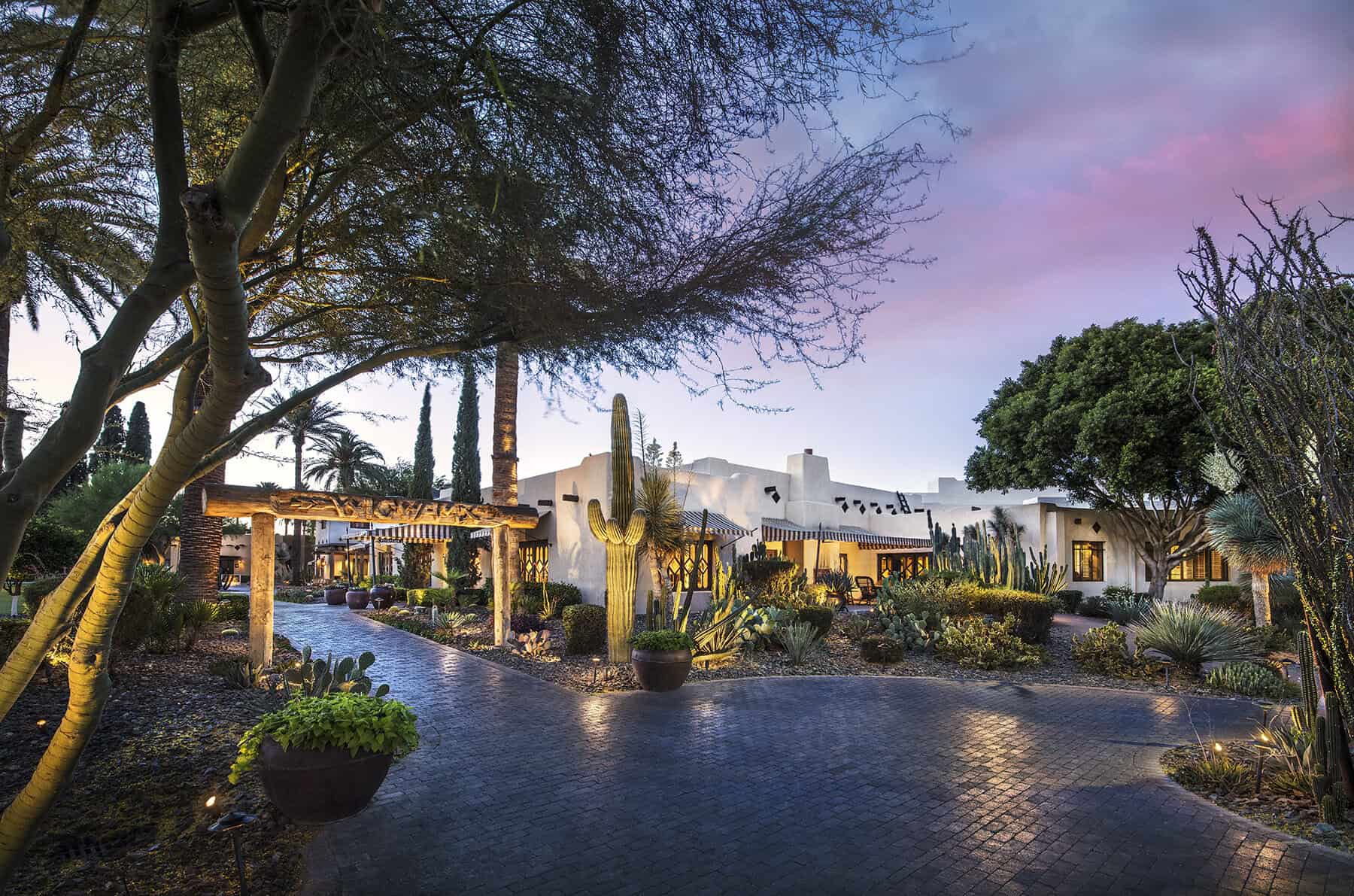
The property recently underwent a comprehensive, multi-million-dollar renovation to breathe new life into its grounds while focusing on preserving its storied past. Amenities include swimming pools, sprawling tennis courts, three championship golf courses, and approachable dining. We grabbed a hummus and veggie appetizer, Caesar’s salad with double protein, and a sizzling cast iron skillet of chicken fajitas at Red Allen’s.
Run Two: Flagstaff, Arizona
Buffalo Park
The dry, thin air at 7,000 feet elevation will take some getting used to. Plan on a low key arrival before hitting the trail on day two. Athletes who travel to Flagstaff to train in high altitude may spend an entire month acclimating and running. Training at high altitude forces the body to adapt to lower oxygen levels (hypoxia). That should help to increase endurance, boost VO2 max, delay lactic acid buildup, increase production of red blood cells and hemoglobin. Runners return back to sea level with about 2% performance gains.
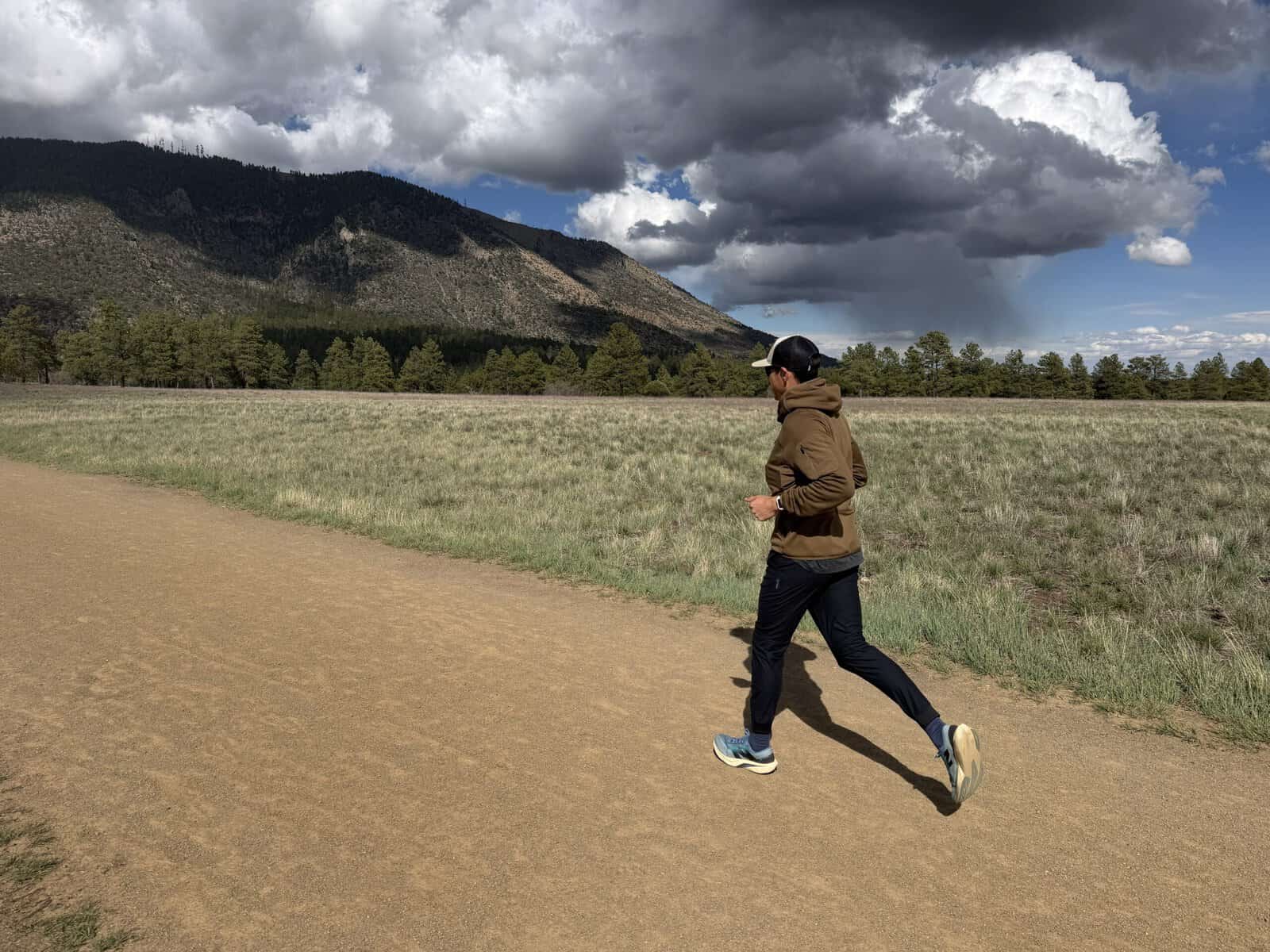
We sat down with a local celebrity, author Matt Fitzgerald. He has written several running books, most notably “80/20 Running: Run Smarter and Race Faster by Training Slower.” Matt’s success with developing the 80/20 method for runners (the gist: endurance runners should spend 80% of their time in Zone 2, low intensity, and 20% in mid-to-high intensities) inspired 80/20 coaching and the 80/20 Foundation.
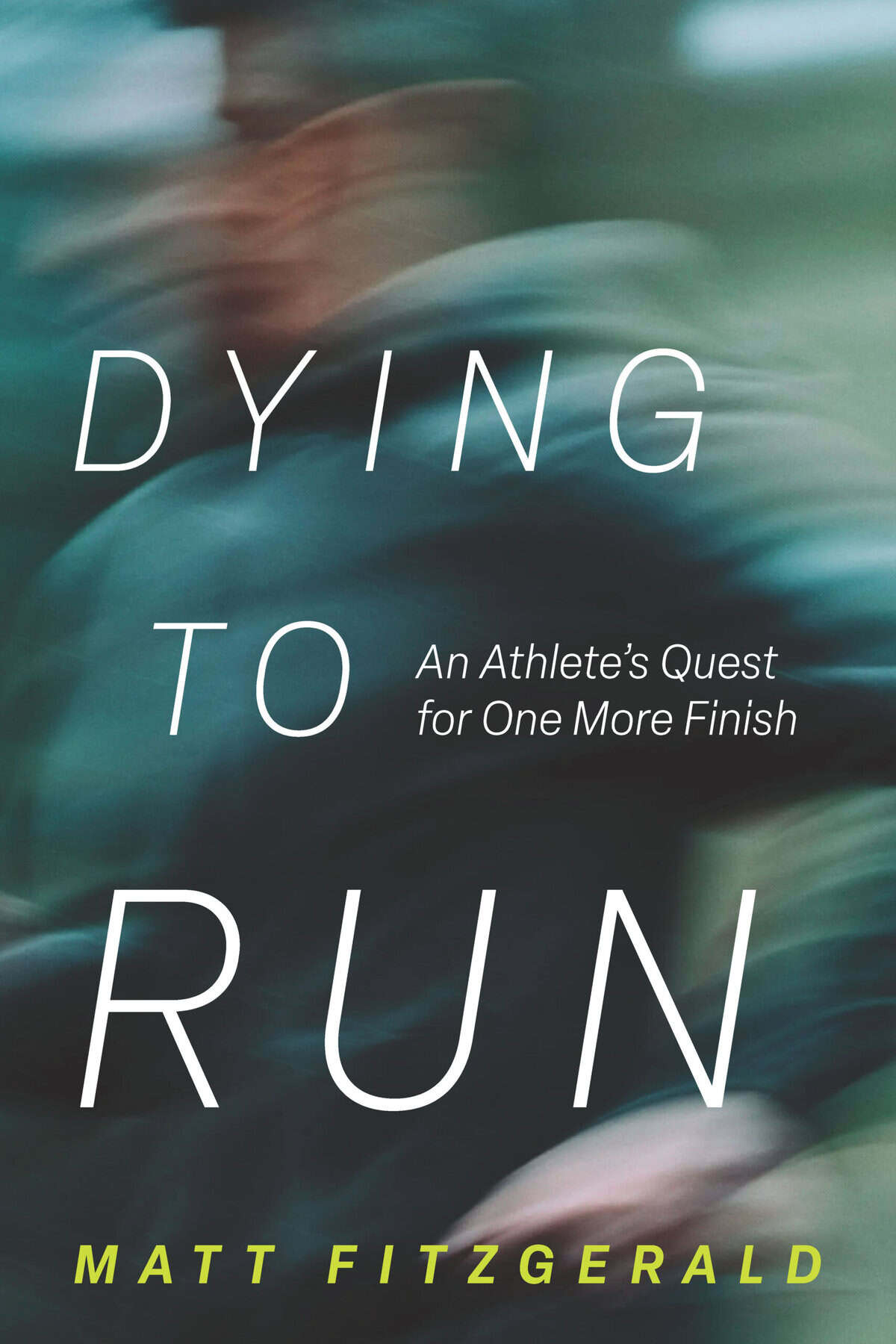
The most fascinating thing about Flagstaff’s Matt Fitzgerald isn’t his books, running, or coaching. It’s his resilience. After enduring three years of Long COVID, physically unable to run or walk, he signed up for the Javelina 100K Trail Race (roughly a year out). He crossed the finish line in that race as the first male in his age group. Unbeknownst to him, Fitzgerald had been DQ’d (disqualified) before the race even started. He signed up to return in 2025 to compete in the (34-mile longer) Javelina 100-mile race. Three weeks before the event, he fractured his tibia. On Halloween 2026, Fitzgerald will return to Fountain Hills, AZ to compete in the Javelina Jundred, 100-mile race. He believes it will be the final endurance running race of his legacy. Fitzgerald’s memoir, “Dying to Run” will be published in September 2026. The book is an edge-of-your-seat page-turner that journeys the 48-hours building up to and finishing his 2024 Javelina 100K. Fitzgerald seamlessly breaks away from the real time of the race to challenges he endured earlier in life. (The literary genius it takes to pull this off without confusing the reader is NYU MFA-level artistry.) We all face challenges in the ultramarathon of the human experience. Matt Fitzgerald’s relatable memoir may plant a desire in your heart to train in high altitude at his training headquarters, Dream Run Camp. It will reopen in Flagstaff, AZ in May 2027.
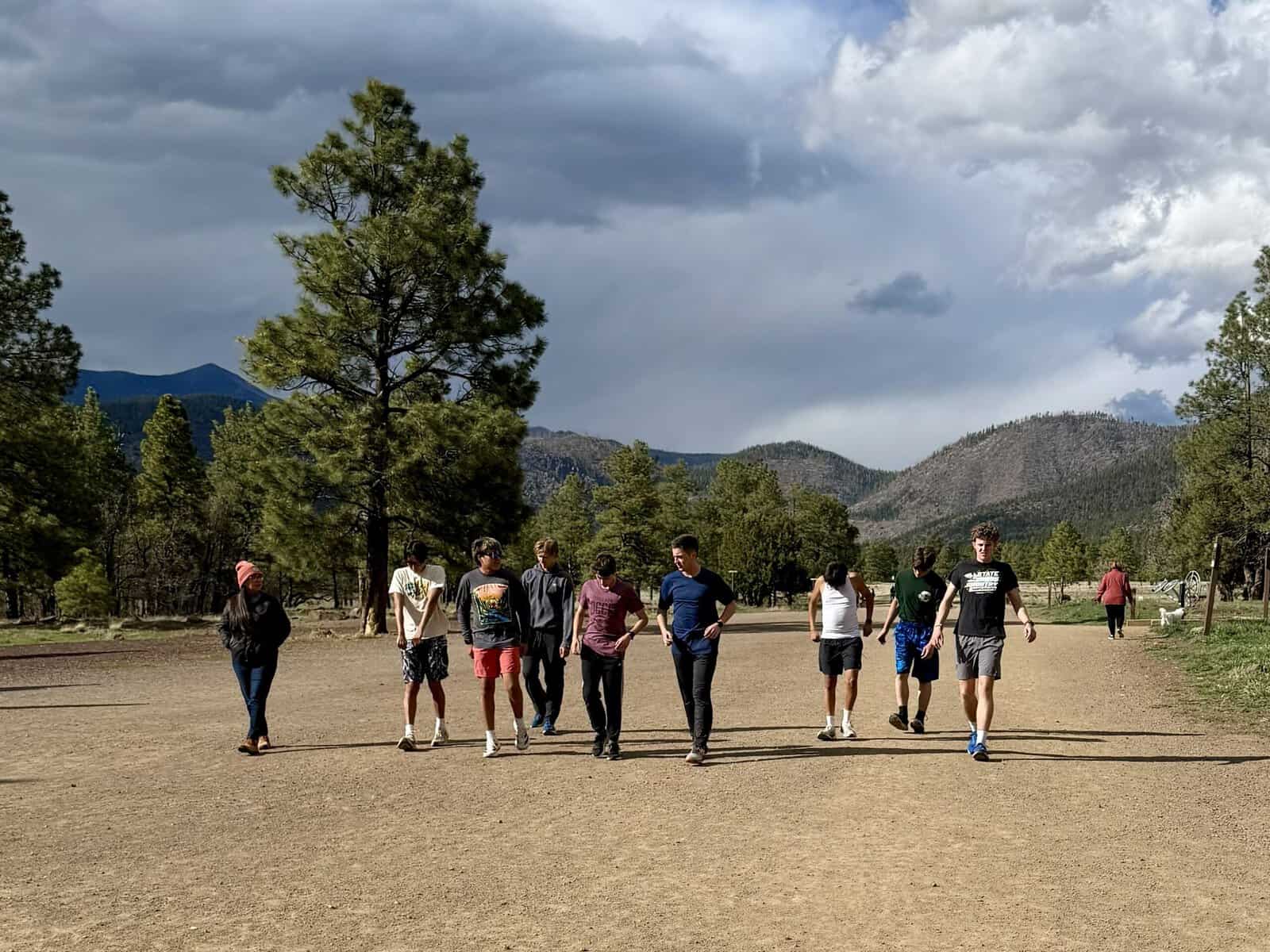
Fitzgerald’s top running recommendations for Flagstaff are Buffalo Park, which is a 2-mile crushed gravel loop (or you could continue on a leg that attaches to the loop, which goes all the way to Utah!) or Lake Mary Road, which is paved and continuous for as long as you’d like to run. We opted for Buffalo Park. We were committed to only trail running on this trip. If you prefer a fast, paved road, start the intersection of Lake Mary Road and Crimson Road.
Rest Two: Bespoke Inn Flagstaff
Flagstaff, AZ
410 North Leroux Street, Flagstaff, AZ 86001
Bespoke Inn Flagstaff is a fully renovated 1894 property that combines historic charm and modern amenities. We particularly enjoyed their house-blend Bespoke Inn coffee with in-room pourover. The location of the Inn is central to all the sights in Flagstaff.
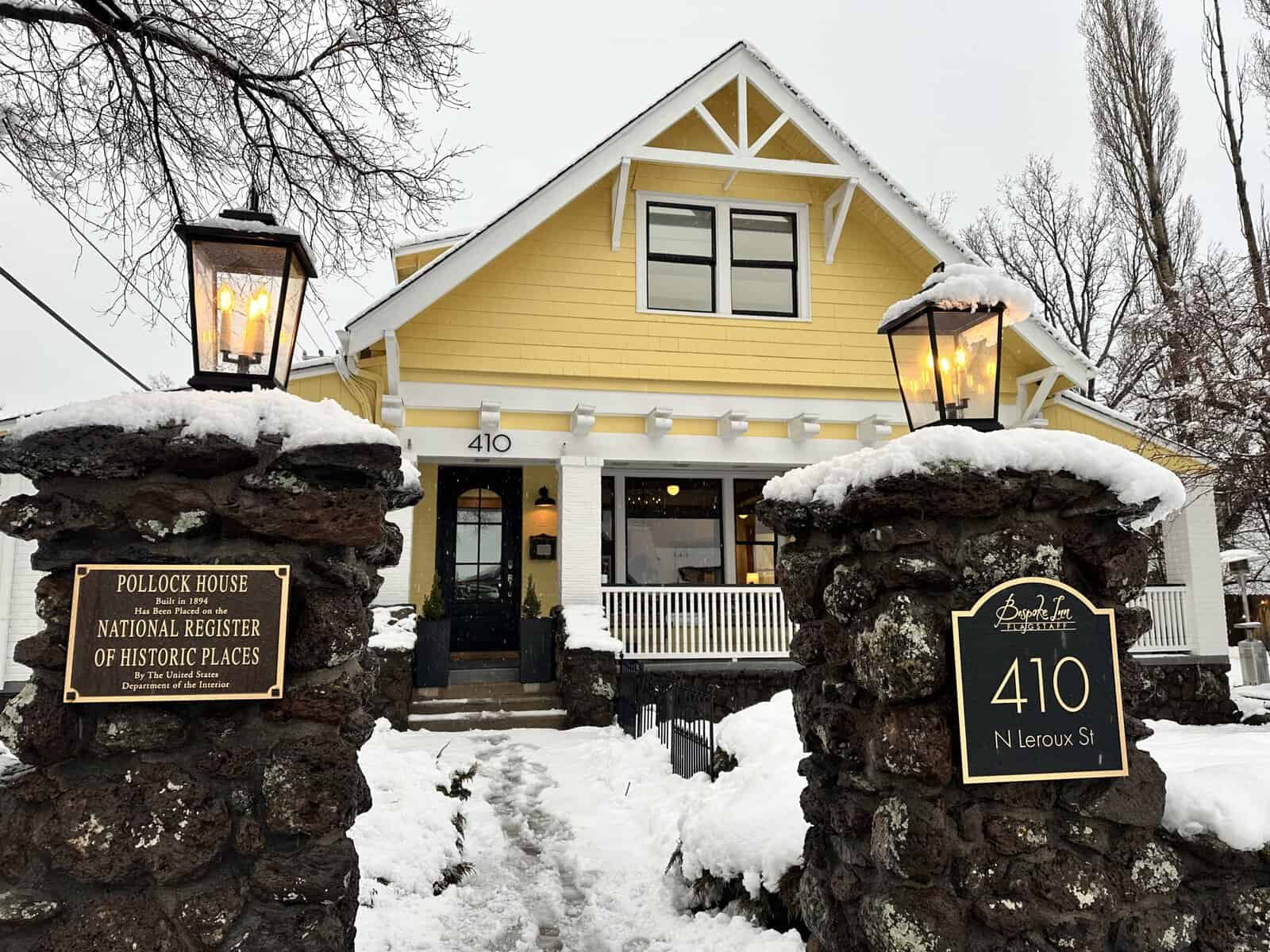
A two-minute walk from Bespoke Inn Flagstaff will get you to Route 66, five-minute walk to James Beard-nominated Shift Kitchen and Bar, and eight-minute drive to Lowell Observatory. Flagstaff is the world’s first international dark-sky city and Lowell Observatory was named the best science museum in the U.S. by Newsweek in 2025, and one of the 100 greatest places by Time magazine.
This mountain town is home to Northern Arizona University. Where there’s college, there’s food. There are no shortages of independently-owned quirky, hip restaurants in Flagstaff. Our favorite was Karma Sushi.
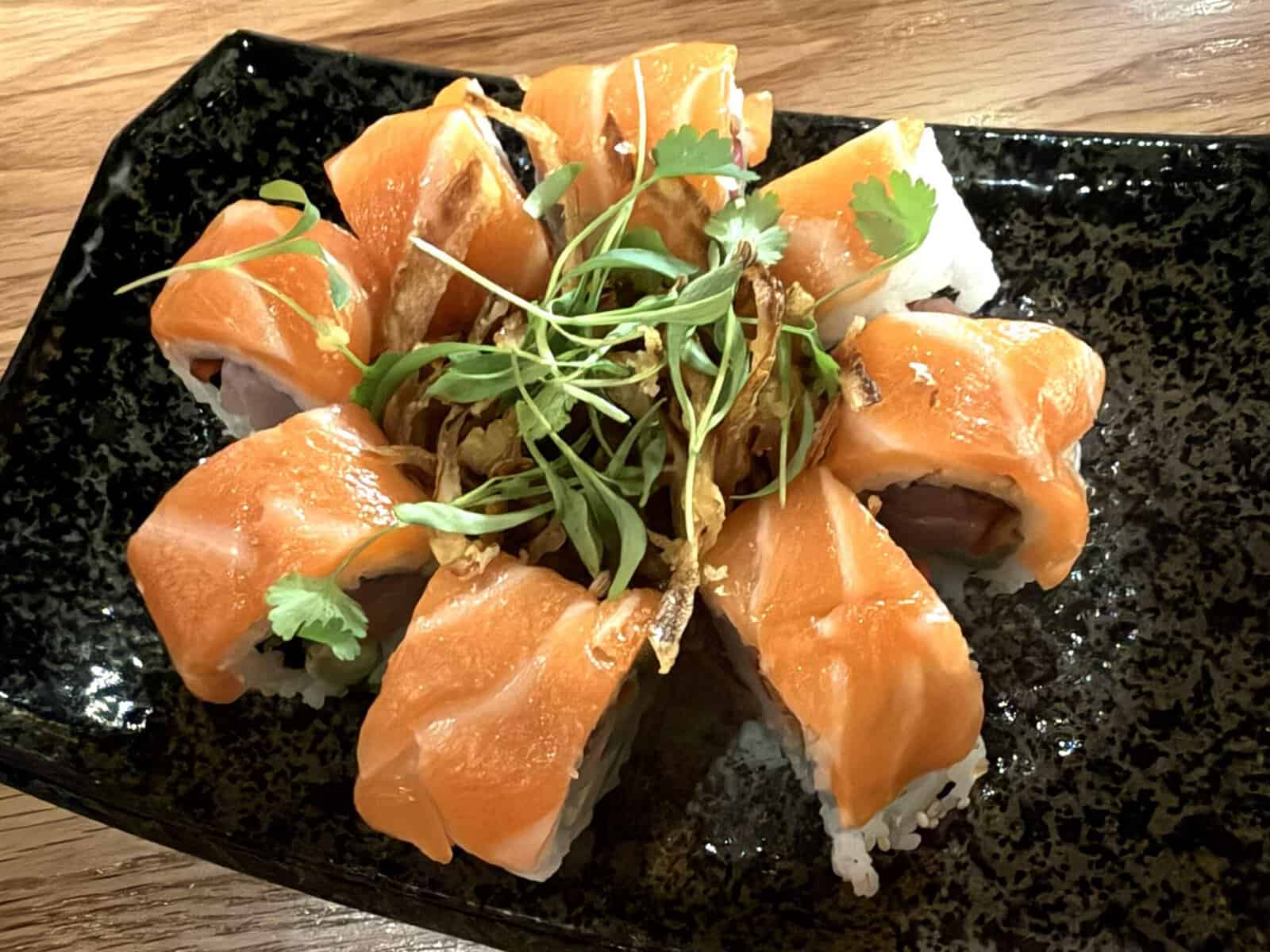
Landlocked all around, anyone would have their doubts of whether or not sushi was a wise decision. It was brilliant. Karma Sushi has occupied the same space in Flagstaff for 20 years. The fish is flown in daily. I’d rank the tuna sashimi with spicy mango chutney right up there with the best sushi I’ve had in Hawaii. Karma Sushi Bar and Grill is conveniently located in the heart of the city on Route 66. It is consistently voted Flagstaff’s “Best Sushi, Japanese and Seafood” by readers of the Arizona Daily Sun.
Run Three: The Grand Canyon
Bright Angel Trail to Tonto Trail to South Kaibab to Phantom Ranch
We stopped at The Station Cafe on the outskirts of Flagstaff on our 90-minute drive to the Grand Canyon. I ordered a panini to-go, which easily slid in my Camelbak. This would be the fuel that I’d later consume on the Colorado River at the lowest point of descent on the Grand Canyon. A panini packs carbohydrates (the number one source of fuel you’ll use if you’re running the trail), fat, and protein. It contained the right macronutrient balance for replenishing my energy needs on this run. If you were just to hike (not run) the Grand Canyon, you may need less carbohydrates and more fat, as your body utilizes greater energy needs from fat at lower intensities. The to-go order I’d recommend for hikers would be The Station Cafe’s homemade energy balls, packed with nut butter, nuts, and seeds.
Running the Grand Canyon may seem like a daredevil stunt reserved for professional athletes, like Molly Seidel. (silver medalist marathoner in the 2020 Olympic Games, first overall finisher in her trail ultramarathon debut, the 2026 Bandera 50K) Molly does, in fact, train on The Grand Canyon often. But you don’t have to be a pro or even a very gifted trail runner to run down the Grand Canyon. Up is another story.
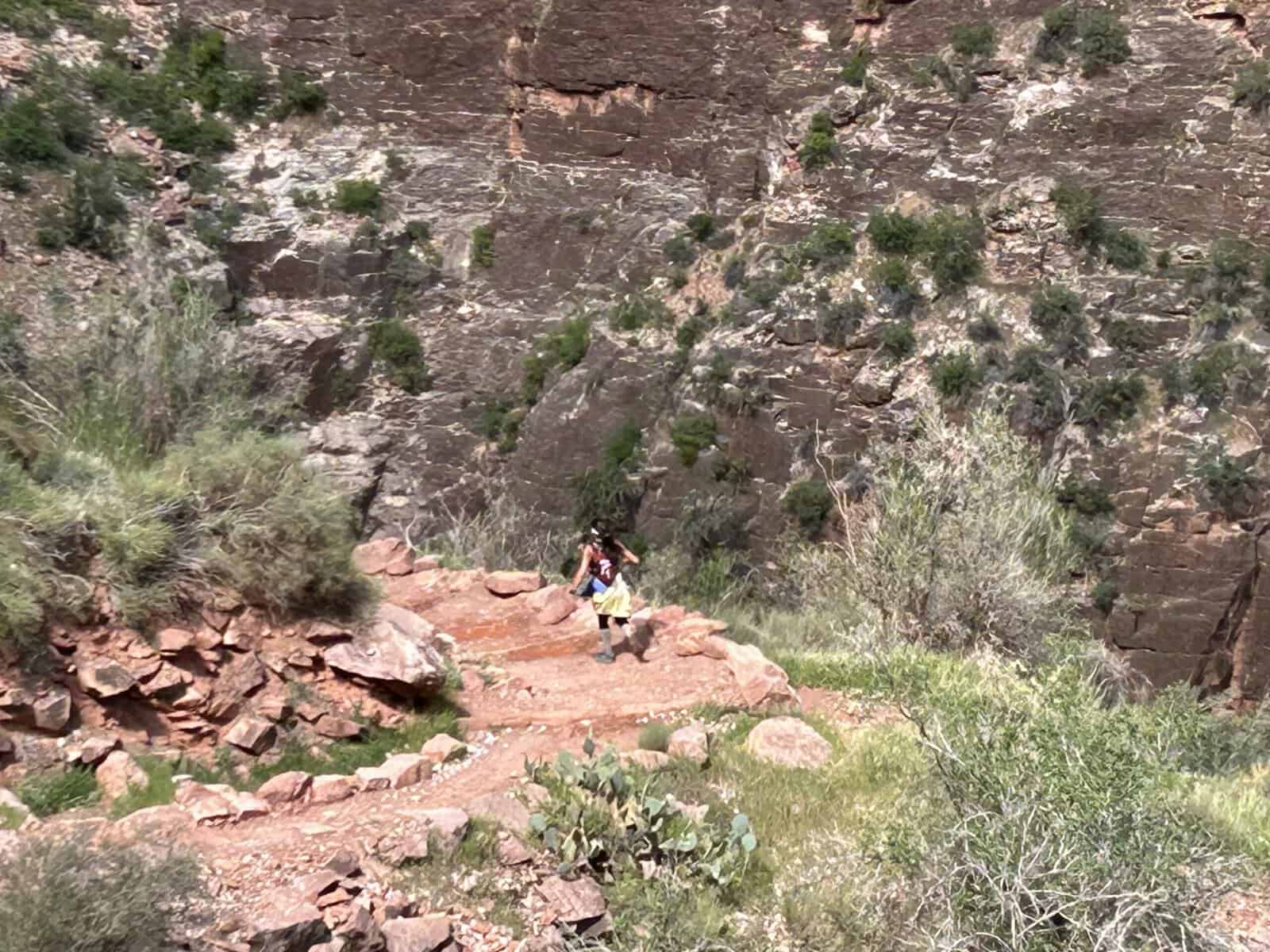
We started at Bright Angel Trail, on the southwest side of the Grand Canyon. It’s a prominent trailhead, near the restaurants and shops on the south rim. It had snowed the night before our run, so the initial descent was scattered with potholes filled with melted snow. Running was safe, as the width of the trail was the size of a driveway and the terrain was red dirt. The bigger concern was stepping in a wet pothole and having to spend the rest of the day in wet shoes and socks. In the grand scheme of things, there are worse woes. Most trail runners are used to roots and rocks. You don’t have much of that on Bright Angel Trail. You just have a wide dirt aisle. If, by chance, you were to slip, there’s room for any-sized person to take a fall without risk of falling off the cliff. The people who stand toward the edge, then hold their arm out to take a selfie– those are the ones engaging in risky business.
About five and a half miles in, Bright Angel Trail crosses Tonto Trail. That’s where the elevation levels off and the course becomes single-track. This comes as a treat to experienced trail runners. Tonto Trail entails four miles of rocky and, at times, technical terrain, connecting Bright Angel Trail to the further east trail, South Kaibab.
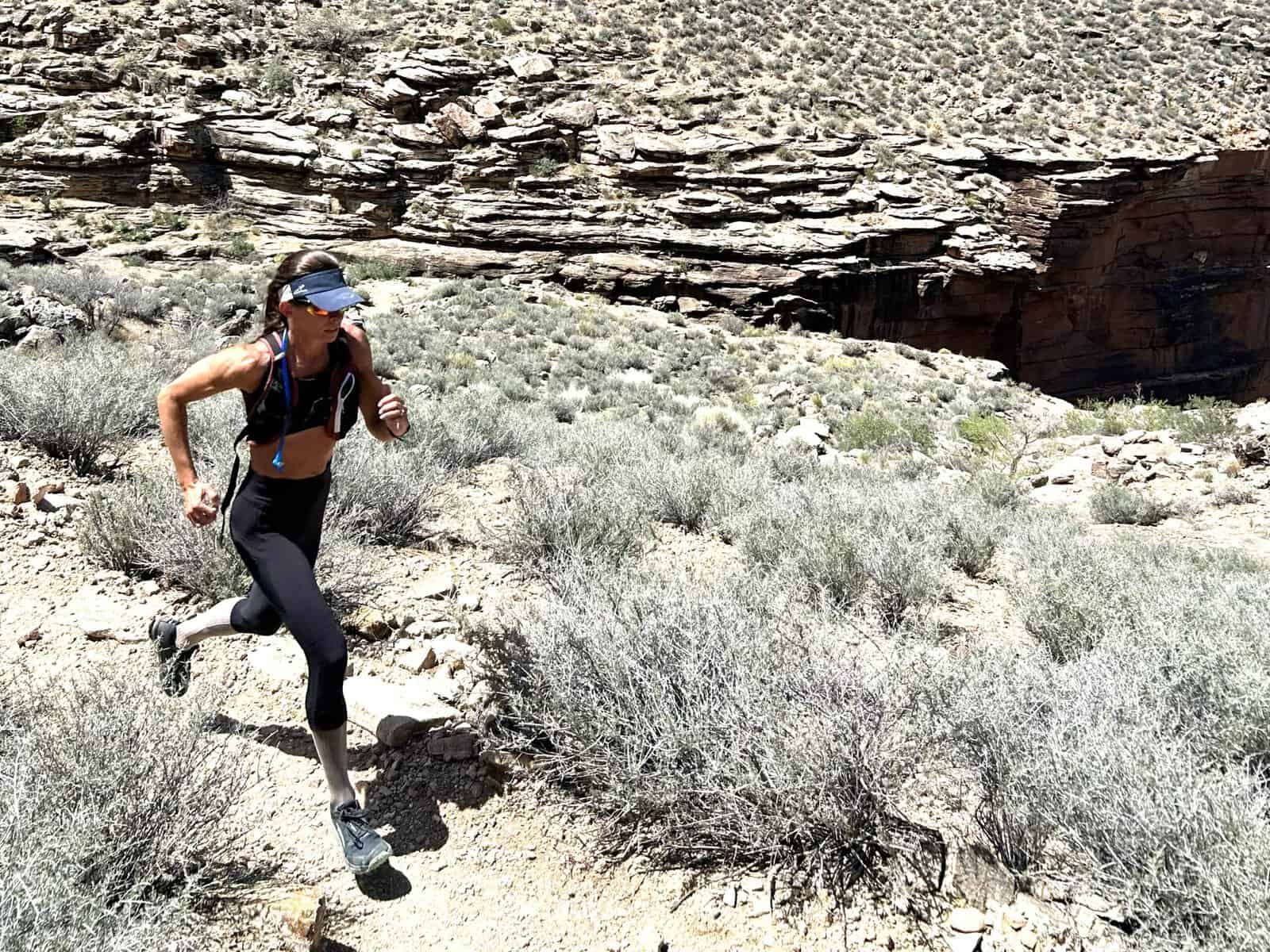
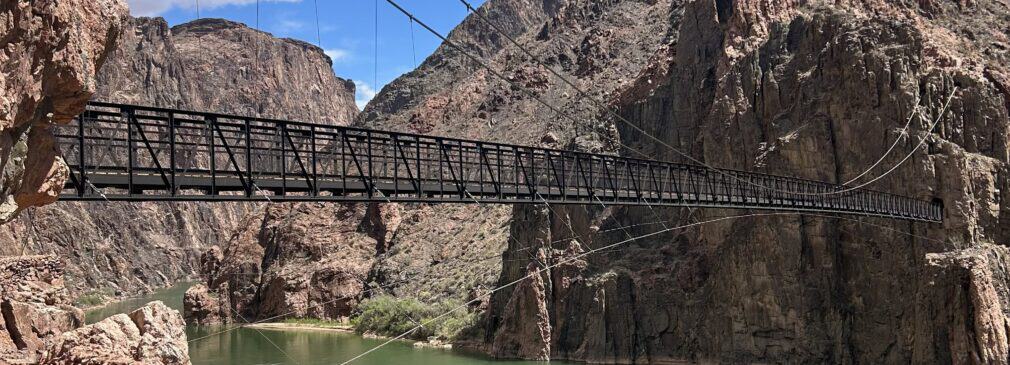
South Kaibab will take you all the way down to the bottom of the Grand Canyon, where the Colorado River flows for 277 miles. Your run down South Kaibab trail will be mostly dirt and wood steps, but with greater depth than the steps experienced at the top of Bright Angel Trail. Most trail runners can pick up the pace a bit here because the trail is, once again, wide and the dirt is packed. You’ll have to keep an eye out for mule droppings, but no potholes.
When you reach the Colorado River at Phantom Ranch, you will have run 12 miles. This is where I kicked off my shoes, soaked my feet in the river, and ate a nourishing panini.
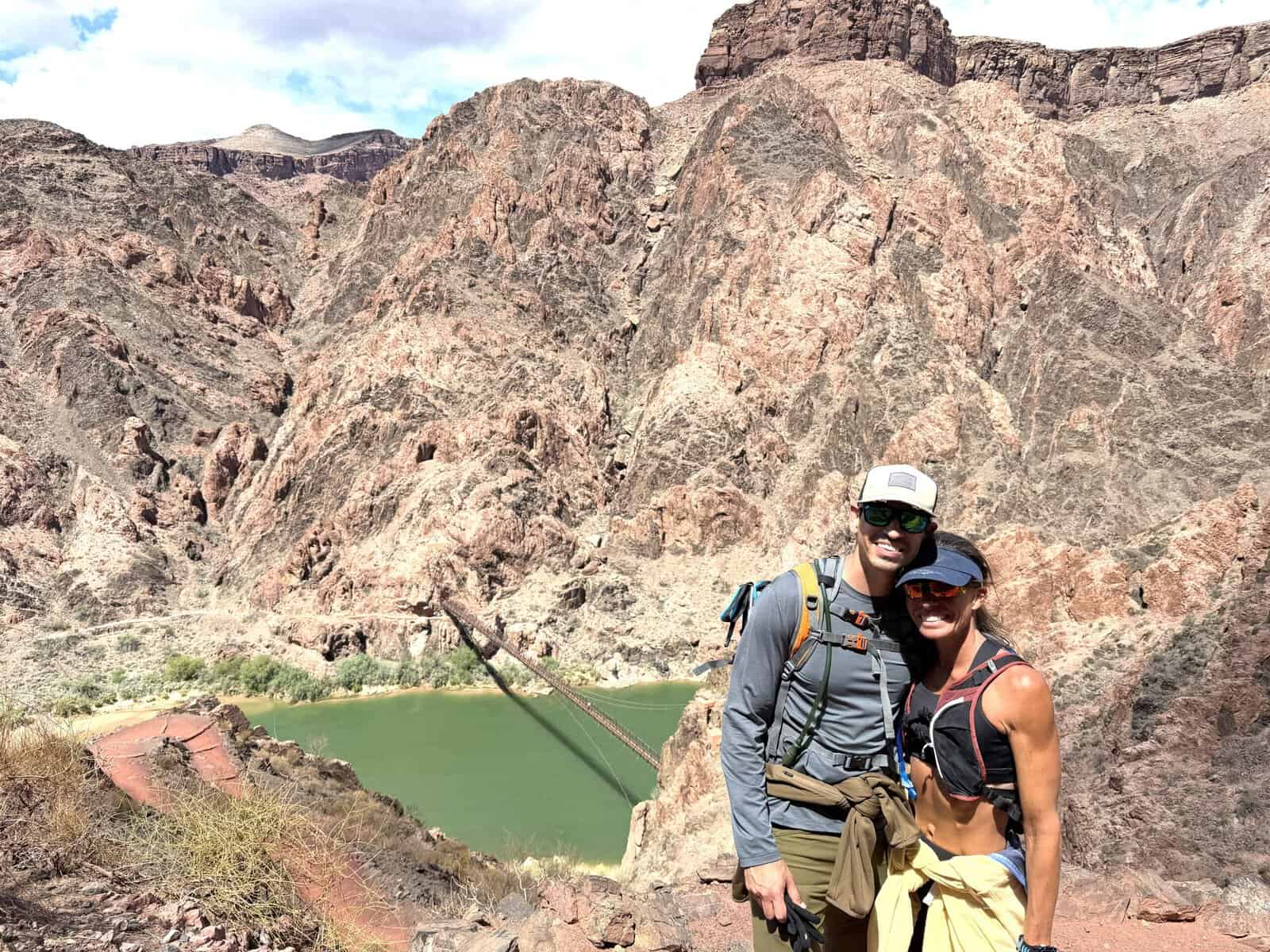
Instead of running back up the Grand Canyon, I opted to hike with my husband. We averaged merely 2.2 miles per hour for the 7.25 miles, from the bottom of South Kaibab Trail to the South Kaibab trailhead. The ascent was steeper than our trek down (Bright Angel to Tonto to South Kaibab to Phantom Ranch), but the direct route, staying on South Kaibab Trail the entire time shaved 4.75 miles off of our return trip. If you’re committed to running down to the river and back up the canyon in one day, we think you’ll find the shorter but steeper return up to be the lesser of two evils. Should you want to attempt a running return, it is doable. We witnessed a woman running it. She may have been Molly Seidel.
Rest Three: Bright Angel Lodge & Cabins
Grand Canyon, AZ
9 Village Loop Drive, Grand Canyon Village, AZ 86023
The Grand Canyon provides free shuttle bus service at the South Rim, connecting the Visitor Center, lodging, and viewpoints with buses running every 15 minutes from sunrise to sunset. If you followed the route we chose to run down into the canyon, the Bright Angel Trail trailhead is only steps away from Bright Angel Lodge & Cabins. It’s the easy and obvious choice for rest and early rise to start the run early. The early start will be especially important if you travel during the late spring or summer months when the temperatures soar well into triple-digits. If you take the South Kaibab Trail all the way up, you’ll just jump on the orange bus to the blue bus to freely make your way back to Bright Angel Lodge & Cabins. (Or, you could tack 4.25 miles onto your trip and walk or run the rim back to the property from South Kaibab trailhead.)
Run Four and Recovery Day: Grand Canyon Railway
Grand Canyon, AZ
We chose short runs on our second day at The Grand Canyon. My husband stayed on the rim and jogged a few miles on pavement, taking in the panoramic views and passing by people of all abilities and several dogs. (The rim of the Grand Canyon is Fido-friendly.) I ran the South Kaibab trailhead to Cedar Ridge, a flat, shady rest stop 1.5 miles down the trail. This made for a 3-mile trail run, doable within an hour. Afterward, we caught the 3:30pm daily departure of the historic Grand Canyon Railway, bound for Williams, Arizona.
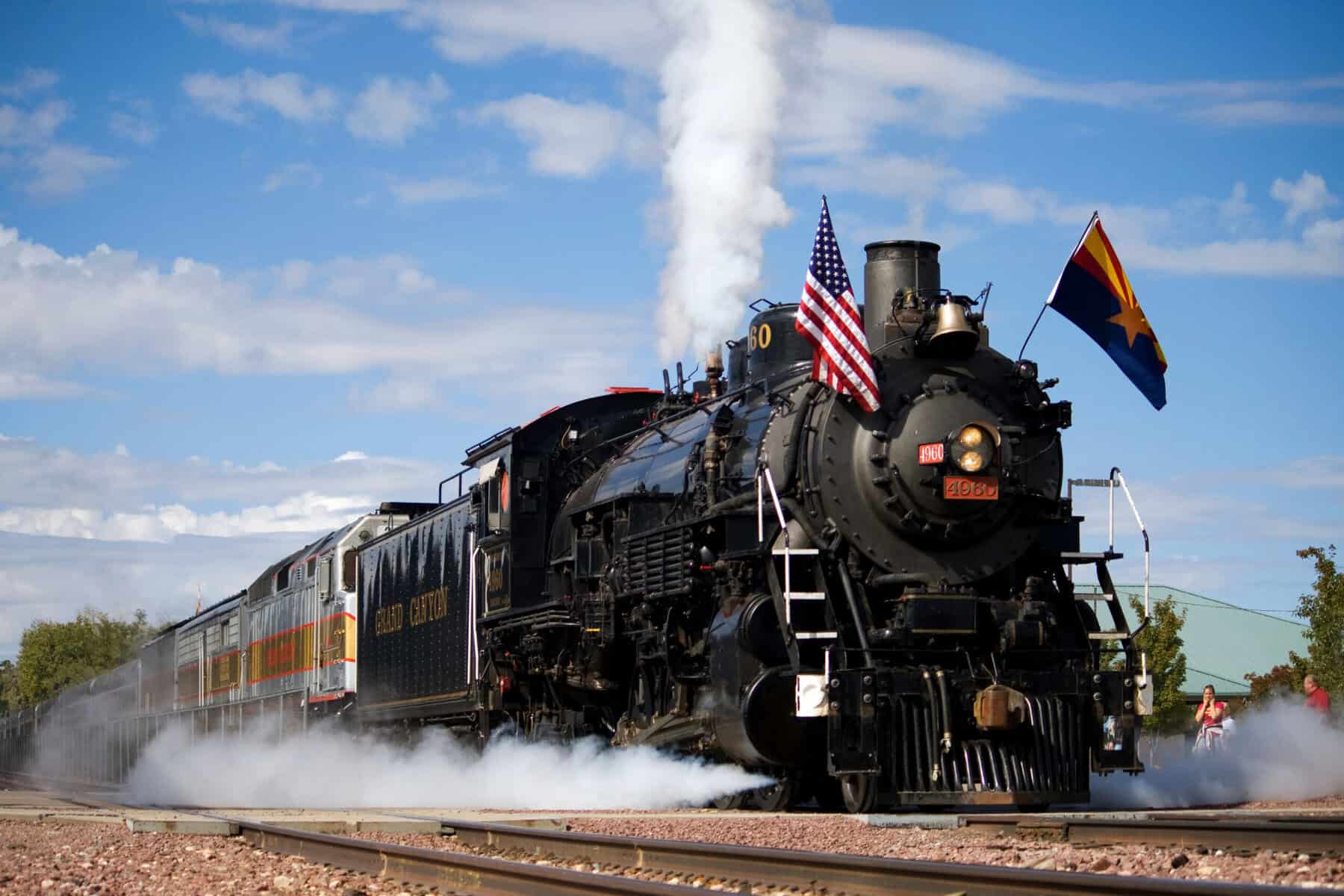
The Grand Canyon was a rural legend, scantly viewed by the human eye until Grand Canyon Railway began service to its majesty from Williams, AZ (Williams Depot <-> Grand Canyon Depot) on September 17, 1901. Notable passengers included President Theodore Roosevelt, President William Taft, and President Franklin Delano Roosevelt. Over the years, the train became less traveled (thanks, in part, to the invention of the automobile). The steam train took its last trip on June 30, 1968, with just three people aboard. The tracks were abandoned for nearly 20 years.
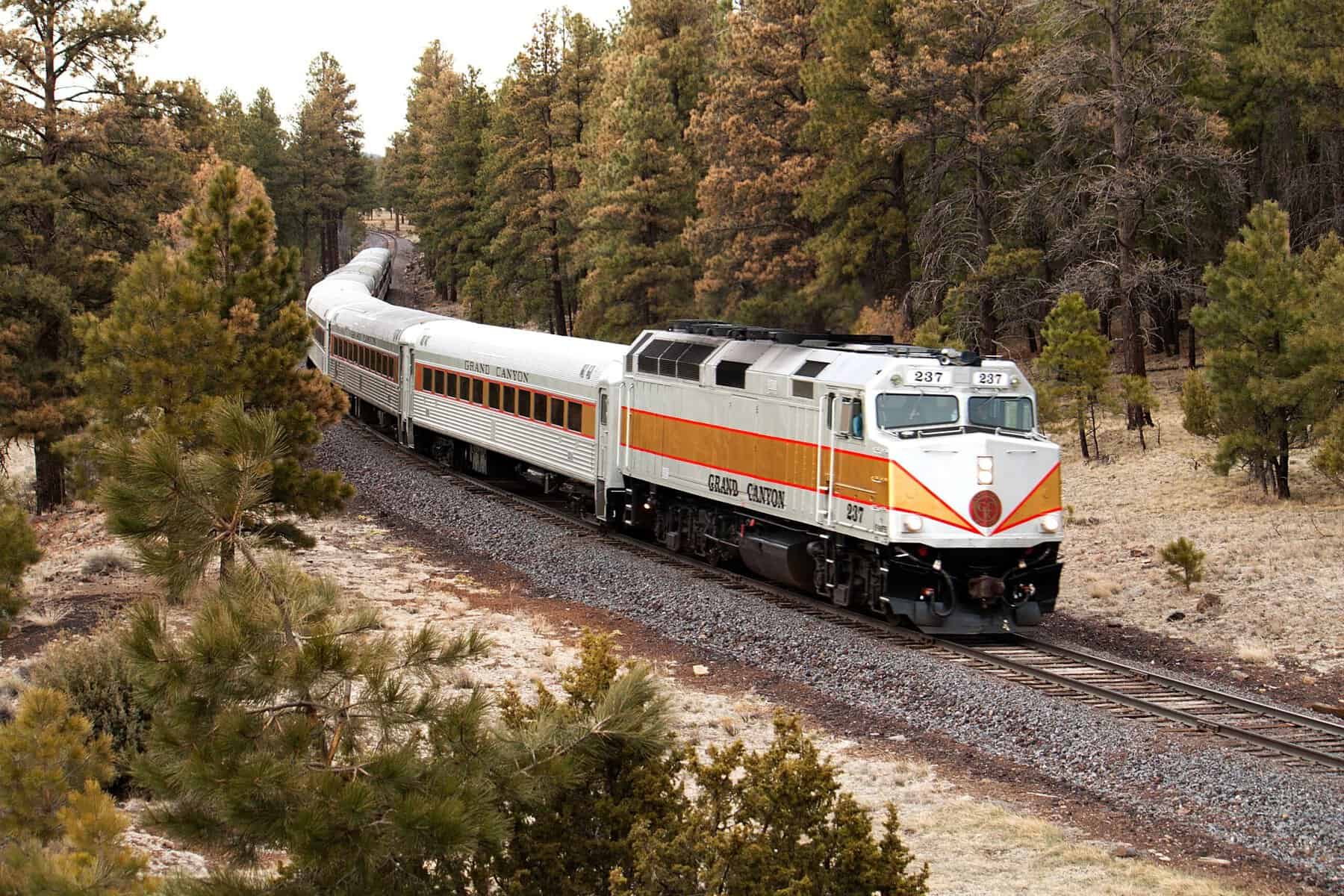
Williams Depot was spared from demolition only because it was more expensive to demolish than it was to pay taxes on the property. On January 10, 1989, Max and Thelma Biegert announced plans for a redevelopment. The train and tracks were rebuilt or refurbished. Passengers returned to Williams Depot on September 17, 1989. More than 10,000 enthusiasts came to Williams Depot to watch the train depart for the Grand Canyon with more gathered to greet the passengers arriving at the Grand Canyon Depot.
Now, more than 225,000 passengers ride Grand Canyon Railway each year. Williams Depot is the oldest poured-concrete structure in Arizona. This is more than an alternative mode of transportation. It’s 125 years of history (now with zero-emission, thanks to a $3.4 million grant). Its grandeur warranted we take a running recovery day to climb aboard and experience the 65-mile ride.
The splendor of Grand Canyon Railway goes far beyond the novelty of a train ride. You could experience that on Amtrak. The heart, vision, detail, and execution that go into the Grand Canyon Railway are “10”s all around. When aboard, you’ll feel you’re part of something special.
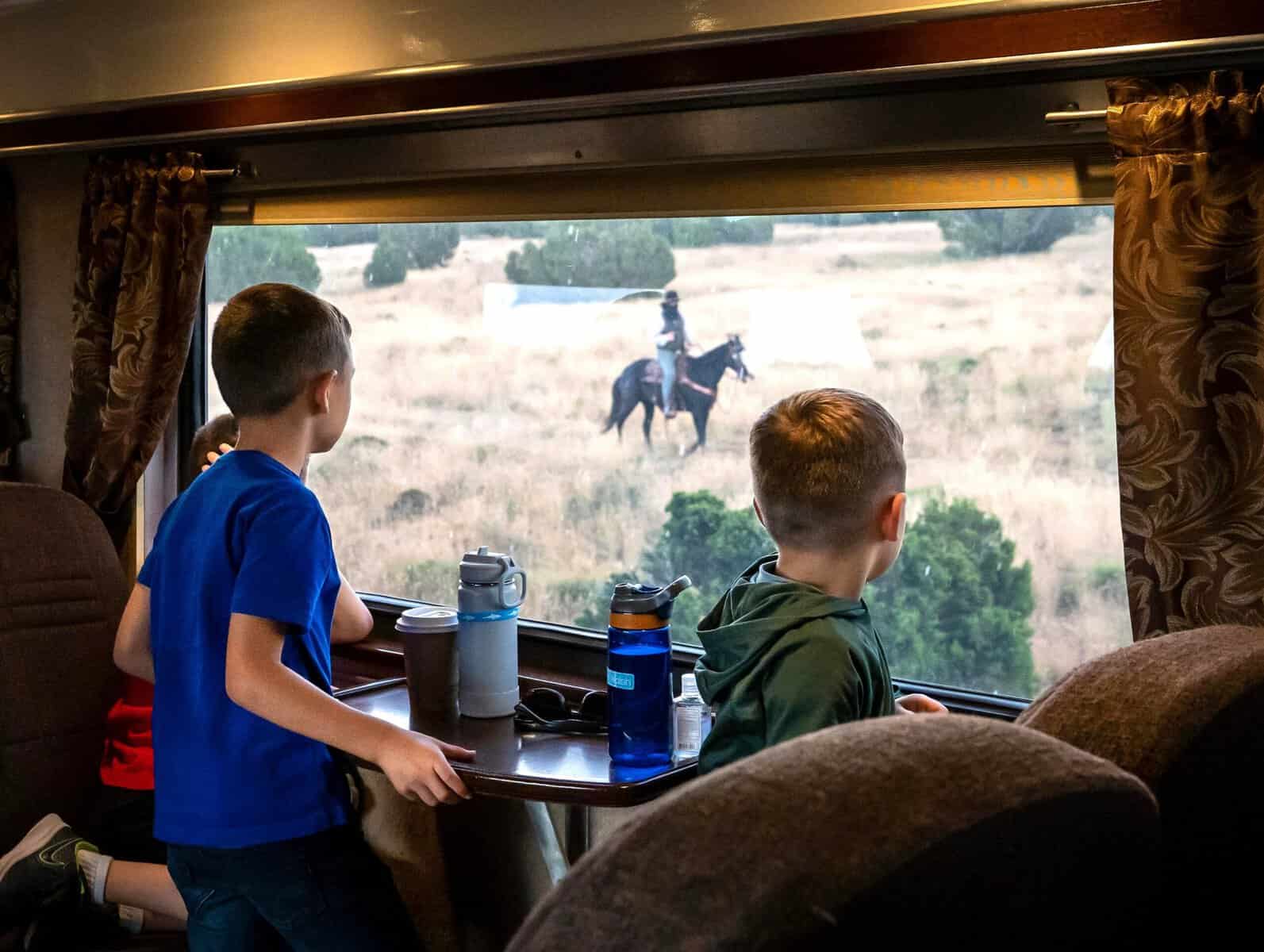
The two-hour commute in a First Class car began with charcuterie and beverages. (Book a Luxury Parlor car and you will enjoy a full meal.) We rode in the Grand View car with a Passenger Service Attendant, Mia Arizona. Mia said she spent her entire life living in Williams, AZ and that her dream, since she was a little girl, was to one day work on the train. She told stories, made drinks, and referred us to all the “best-of” in Williams, including the best coffee in Northern Arizona (it’s her dad’s). A singer decked in a cowboy hat and boots visited our car with an acoustic guitar and put on a Johnny Cash-like performance. Later, the train slowed as a bandit on horseback rode past our car with her sharp shooter pointed toward the sky. The train stopped as burglars took over the train to rob passengers. (A staged, jovial skit.) The robbers roamed the aisles, collecting loose bills we conspicuously tucked in our shirt sleeves and seat cushions. Predictably, the sheriff caught the criminals and all was well. The train rolled into Williams Depot roughly two-hours after leaving Grand Canyon Depot. Mia Arizona, a classically-trained singer, bid us adieu with the sweetest acapella performance of “Red River Valley.”
Rest Four: Grand Canyon Railway Hotel
Williams, AZ
235 North Grand Canyon Boulevard, Williams, AZ 86046
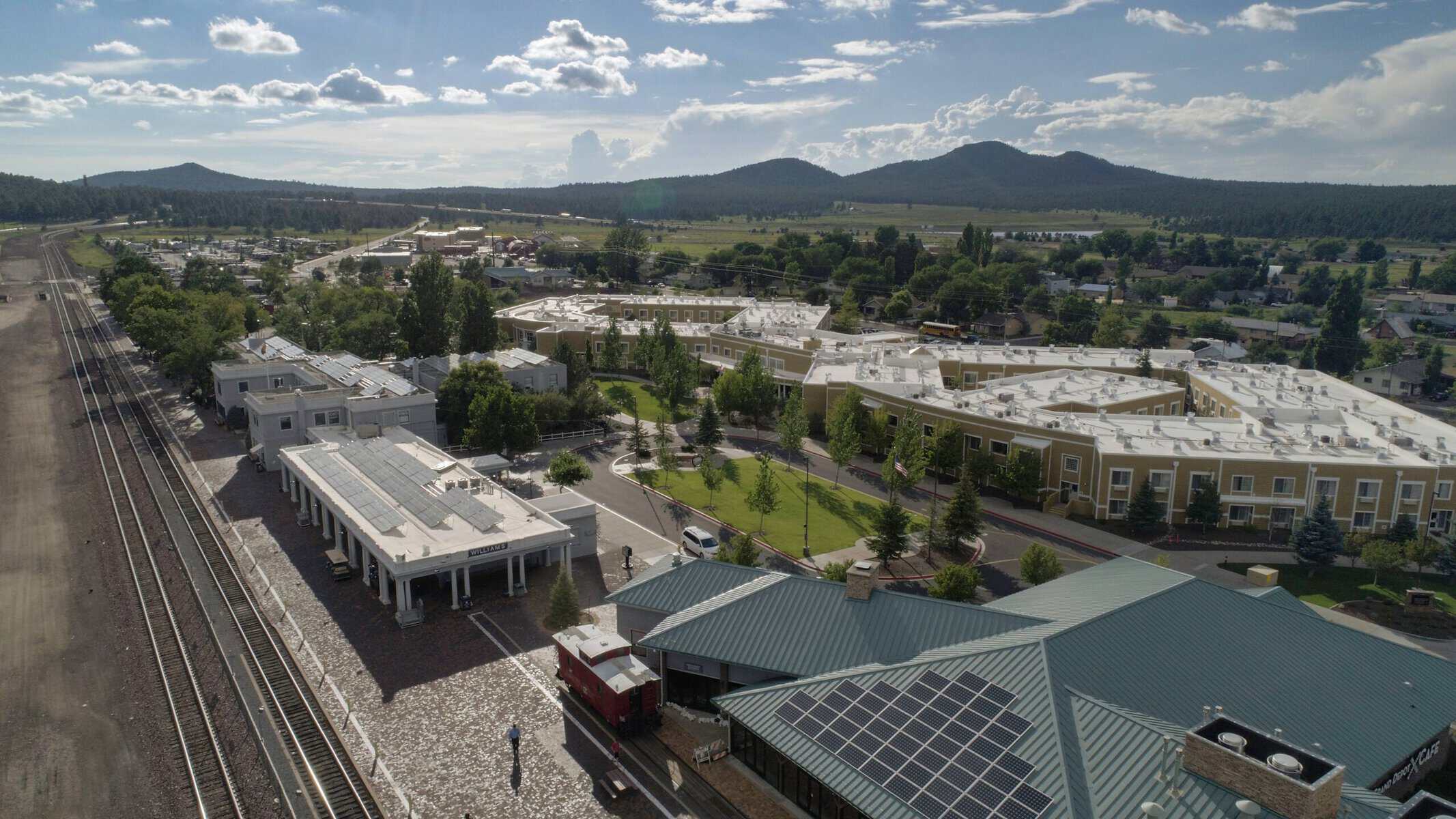
Xanterra Travel Collection, the largest park management company in the nation, operates the Grand Canyon Railway & Hotel. The hotel is on the same property as Williams Depot. After the splendid train ride, it was nice to walk right into our hotel lobby, just about 50 feet away. Country music from yesteryear played outside of the Depot and into the lobby- everything from Loretta Lynn’s “Don’t Come Home a Drinkin’” to Brooks and Dunn’s “My Maria.” The modern Grand Canyon Railway Hotel was designed to resemble the historic Fray Marcos Hotel. Rooms are understated, just as train guests prefer. Expect comfortable beds and simply enough amenities to want for nothing.
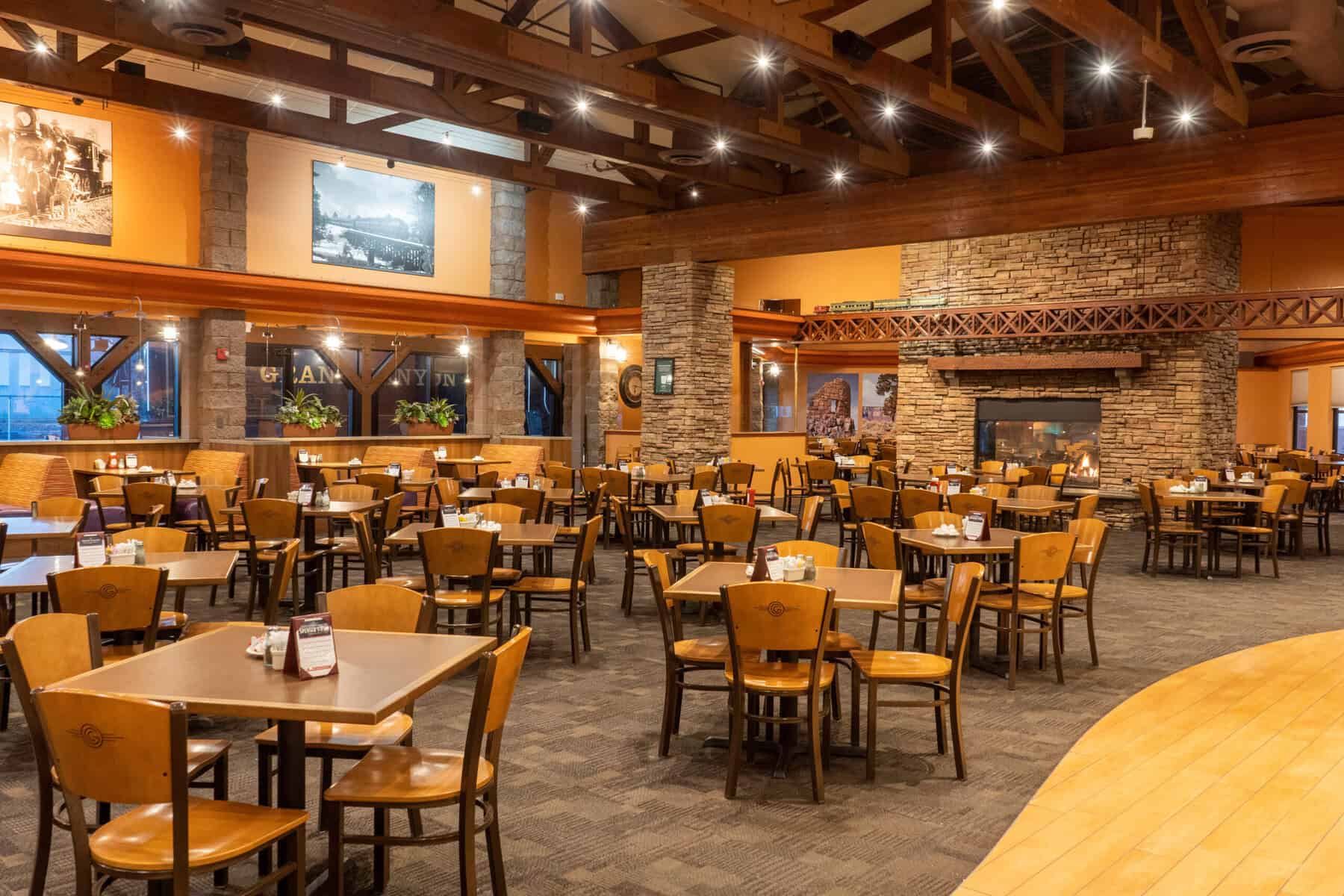
A breakfast buffet at Fred Harvey’s at Grand Canyon Railway Hotel is a must-do. The waitresses are as friendly as Harvey Girls from the original Harvey House. We each got black coffee and my husband enjoyed an American breakfast of bacon, eggs and toast. I visited the omelet station for an oil-free egg white omelet with spinach, mushrooms, peppers, green chilis and jalapenos topped with a scoop of homemade salsa and a side of cottage cheese. The cook complimented my meat-free lifestyle, noting that she, too, has been vegan for fifteen years and what a difference it made for her health. I smiled and congratulated her. I am not vegan. I just prioritize a plant-forward diet. My meal at Fred Harvey’s was similar to what I would have eaten at home. The service at both the restaurant and hotel made my husband and me feel right at home.
Run Five: Doe Mountain
Sedona, AZ
As we drove down from Northern Arizona, we made a point to stop in Sedona. Plenty of tourists plan their entire AZ trip around seeing Sedona. It’s known for its red rock formations and spiritual energy. We find it a hip place to visit, but not our vibration for an overnight.
Lodging is everything the opening of this article said we’re not about: frou-frou spas and four-digit-a-night resorts. We came to run, see cool things, sleep like rocks, then get on to the next adventure. My tip to fellow squirrely types is: dip your toes in Buddha Beach, grab a picnic lunch from Sosta in Flagstaff, do this run, bask in the views, then skip town.
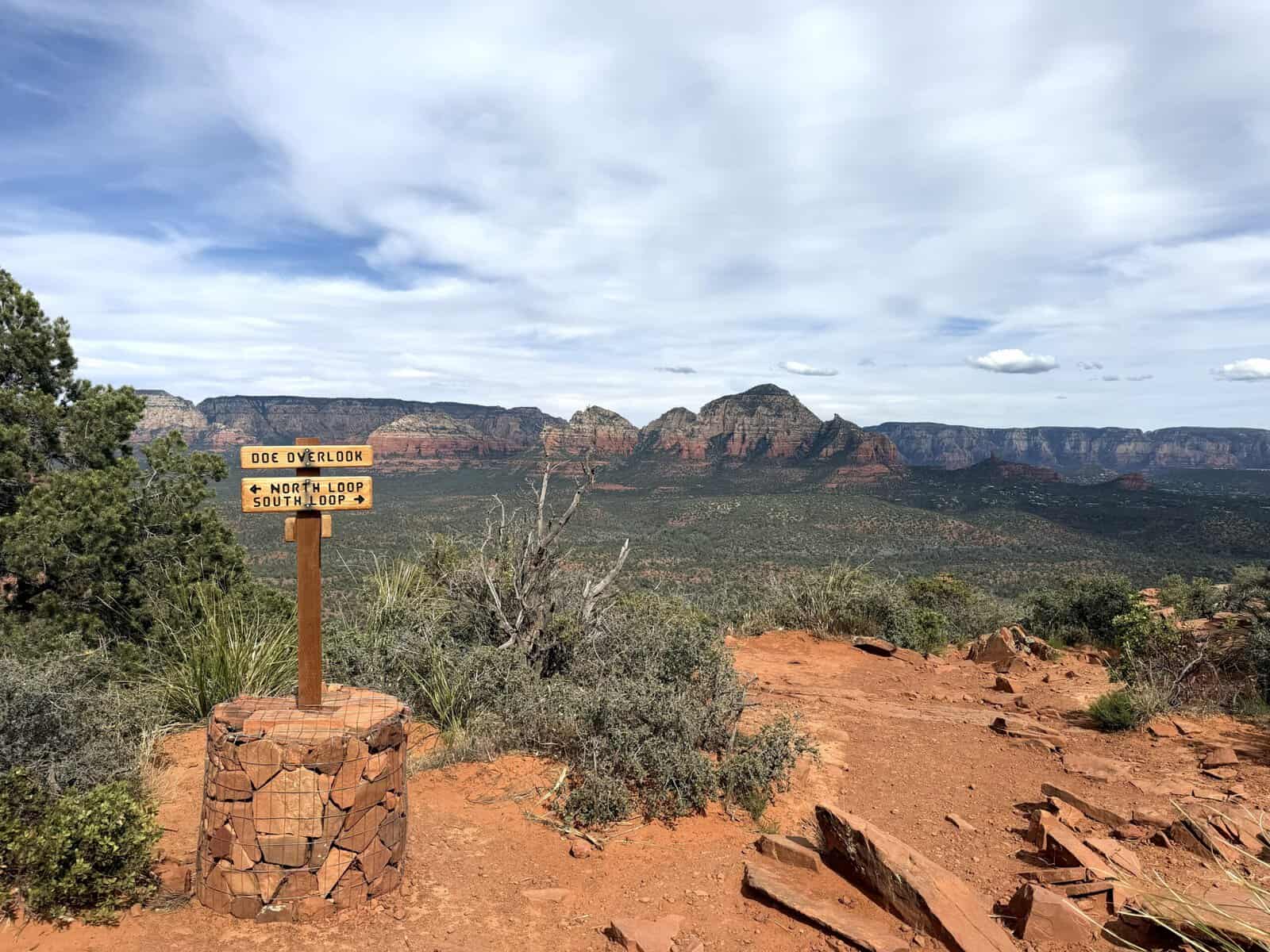
We like Doe Mountain, because it’s a quick 0.8 mile hike to the overlook. The views of red rocks from this vantage point will take your breath away. It’s a great spot to lay down a picnic blanket and eat your lunch. Leave no trace. With everything you brought on your back, set out on a trail run from Doe Overlook around South Loop. It’s a one-mile moderate-intensity red dirt trail that gives you just enough rocky technical challenges to keep you alert and shake out those legs before continuing on to Scottsdale.
Run Six: Camelback Mountain
Scottsdale, AZ
Camelback Mountain is runnable. Sort of. Jim Walmsley, four-time winner of Western States 100-mile ultramarathon, holds the record for Echo Canyon Summit Climb (1.2 miles with over 1,250 feet of elevation gain) at 15:58. On my best day, it took 35 minutes. It takes most people two and a half hours to go up and down Echo Canyon. Most people aren’t like you and me: they’re not trail runners- yet.
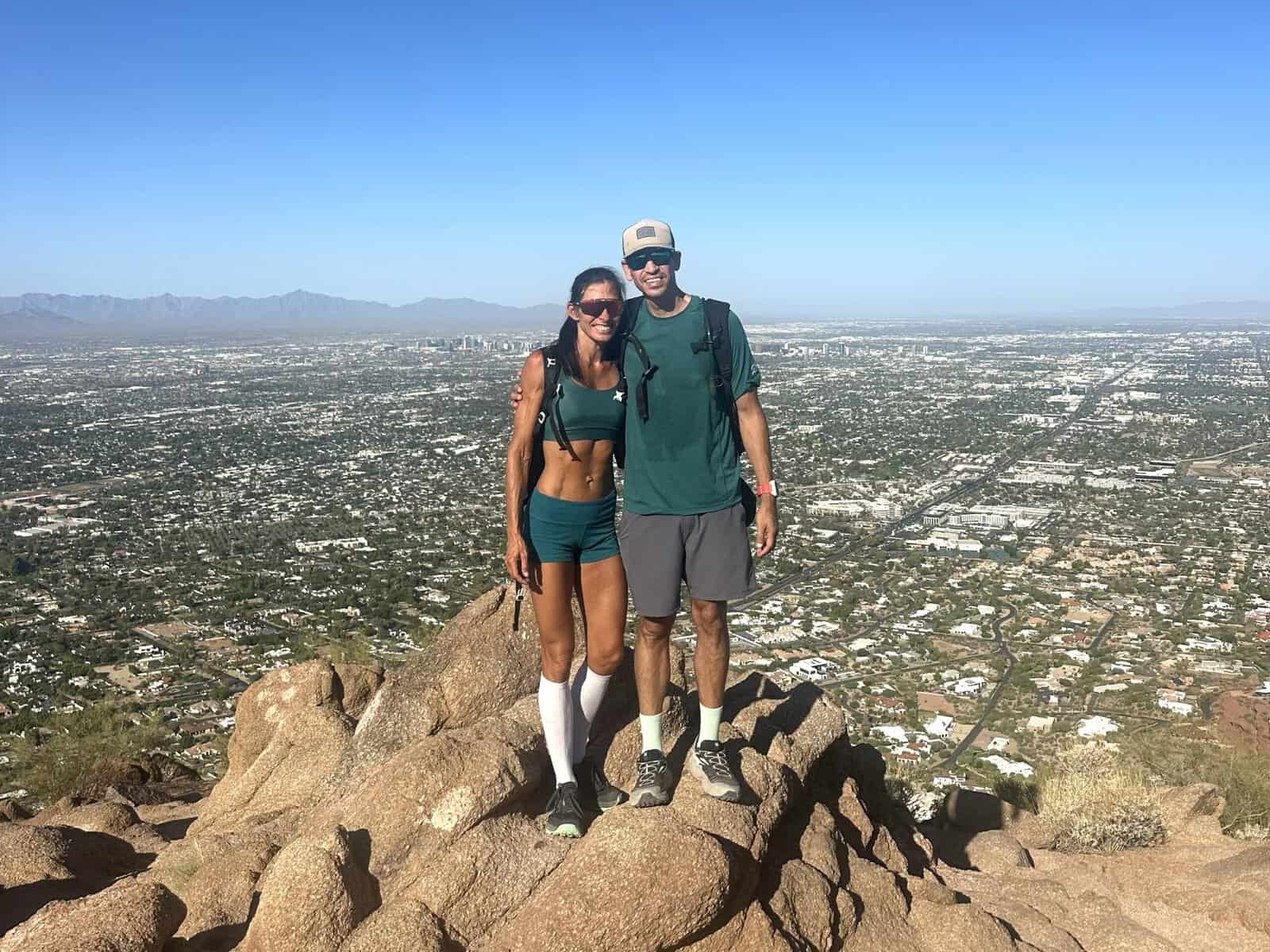
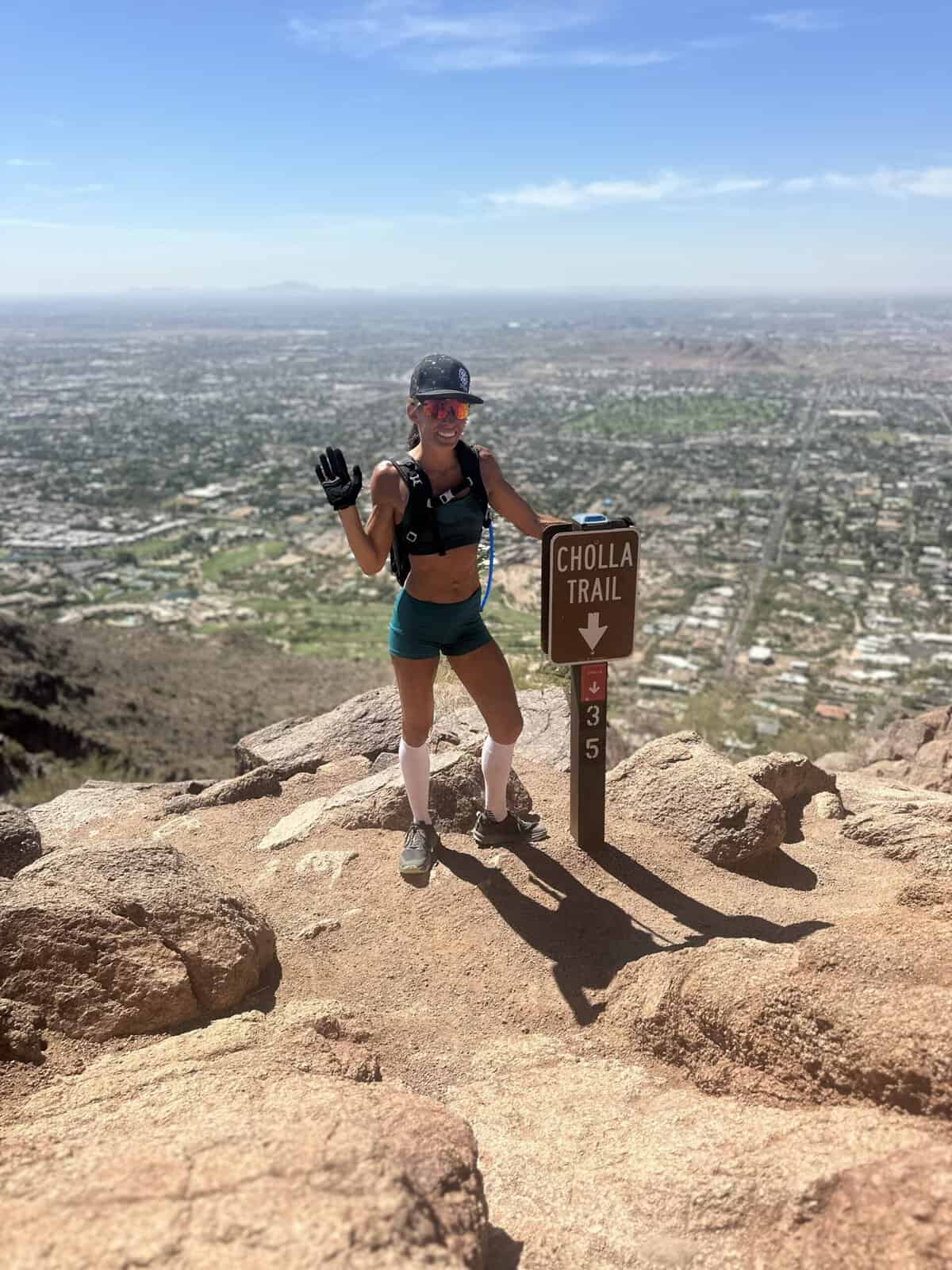
There are two sides to Camelback Mountain: Cholla Trail and Echo Canyon. Cholla is longer (1.5 miles) but requires less climbing on “all 4s” until the final ascent. The top of either side of the mountain requires scrambling. If you plan on running either or both sides of this wildly popular mountain, my advice would be to run the trailheads. The first quarter-mile on either side gains elevation quickly, but the terrain is wide and runnable. Beyond that, Echo becomes so rocky with boulders that poles have been installed for hikers to pull themselves up and hold on to slide themselves down. (I am not the only adult who couldn’t resist the urge to straddle the pole and try to take a slide down the banister. For the love of your undercarriage, don’t do that.)
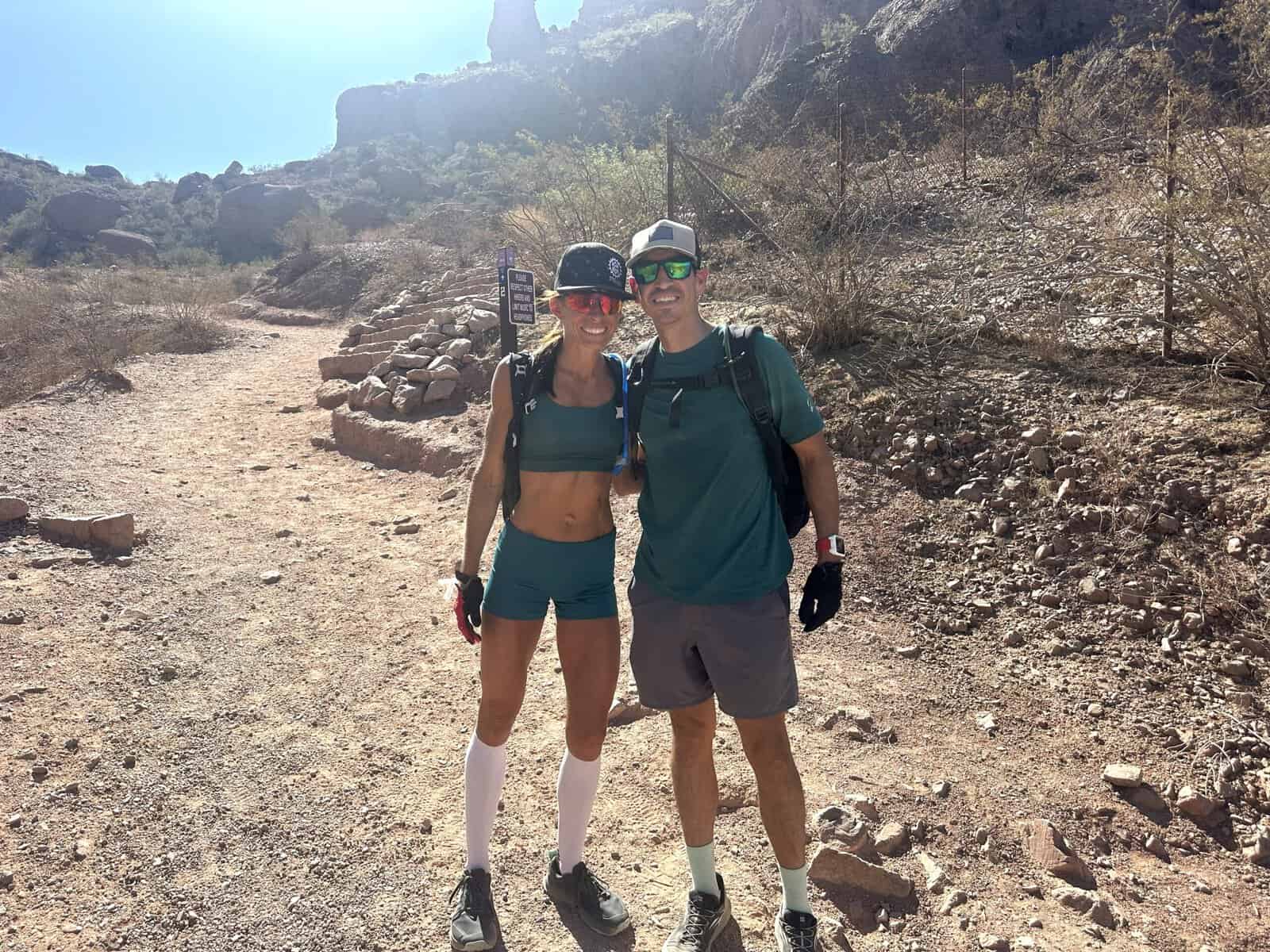
On the Cholla side, the terrain just gets rocky enough that hiking briskly will beat attempting a run. It’s easier to lose the trail on the Cholla side than Echo, so slow down enough to make sure you’re on course. (Another lesson I learned so you don’t have to.) Look for reflective blue markers to stay the path up Cholla Trail. On Echo Canyon, count trail markers; they’re numbered: 1-36.
Besides running the trailheads, there’s a stretch of flat ground on Cholla Trail where a helipad sits. That area of the trail is a good place to run, in the likely chance that there’s no helicopter. The only other running you may do on Camelback Mountain is the descent down Echo Canyon. There are steep drops, big rocks, and loose dirt that can easily cause a slip. Daredevils trust their shoes, core, and footing. They run down the rocks with seeming fearlessness. I watched in awe as I cautiously scooted myself down the mountain, one tricep dip after butt-scoot at a time.
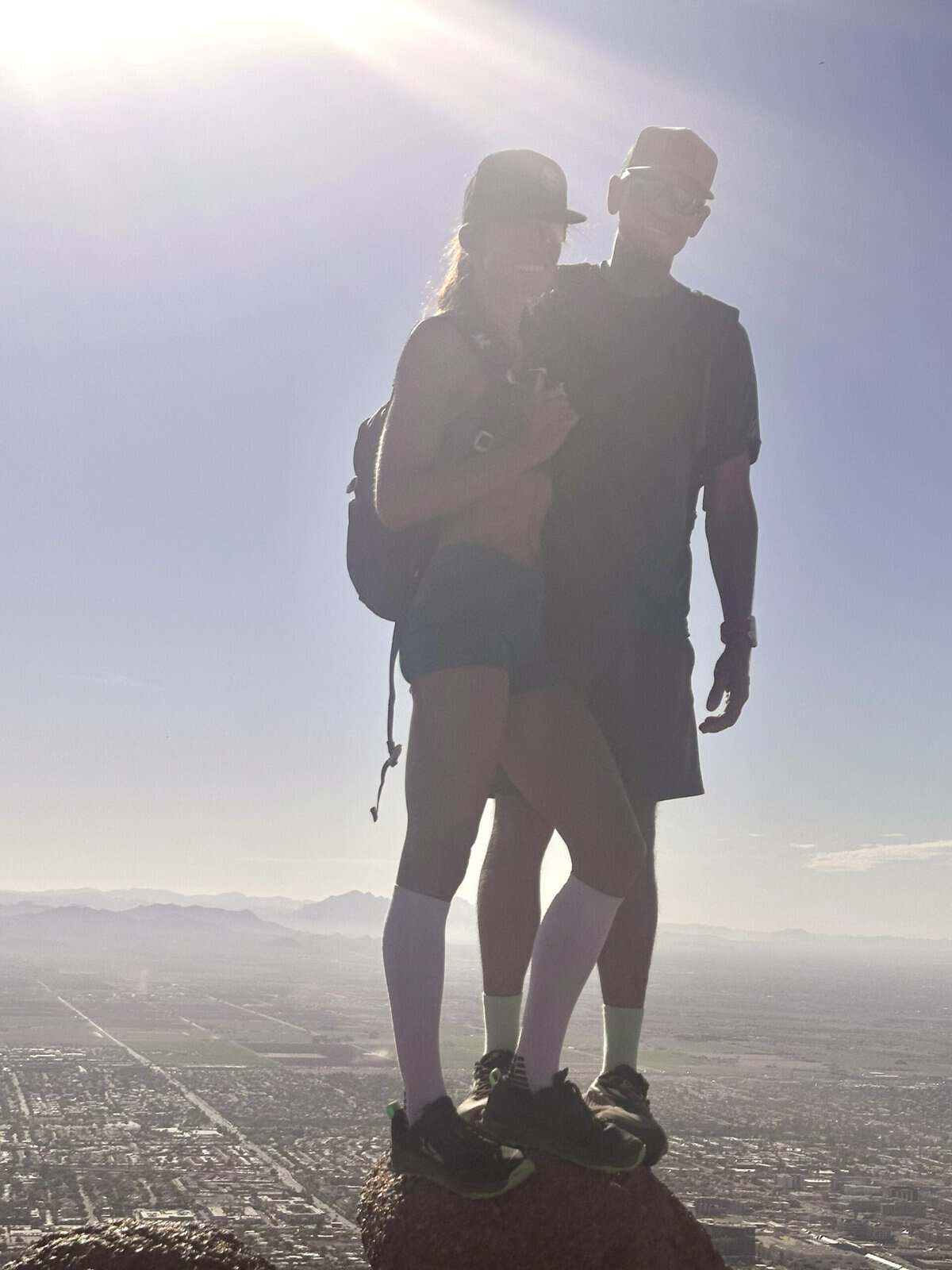
If you pack enough water, the best way to run-hike Camelback Mountain is to yo-yo it. Yo-yo’ing Camelback Mountain means starting at the Cholla trailhead, ascending to the summit, descending down Echo Canyon, turning around at the Echo Canyon trailhead and ascending to the summit, then descending down to Cholla trailhead. (Or do this in reverse; it’s still a yo-yo.) The 5.4-mile trek will take experienced trail runners two and a half hours, or roughly the same time it takes the average person to hike Echo Canyon. The key is to pack enough water. I brought 1.5 liters. It was just the right amount of fluid for a sunny spring day.
Rest Five: Hilton Scottsdale Resort & Villas
Scottsdale, AZ
6333 North Scottsdale Road, Scottsdale, AZ 85250
We spent our last two nights at The Villas at Hilton Scottsdale Resort. It was the only stay of our trip where we heard absolutely no one around us. This is what separated our two bedroom premium Villa from a hotel room: pindrop quietness, 1,600 square feet, two private bedrooms plus a queen sleeper-sofa, a dining table for six, chef’s kitchen, washer and dryer, and spacious lounge with fireplace. I’d call it a residential experience for the weary traveler. The minimalist design with desirable functionality made this the quintessential resting spot for active travelers seeking space, comfort, and somewhere to wash loads of hiking and running gear. You get all of this, plus a private gated entry, semi-private pool and jacuzzi plus daily hosted poolside barista coffee, breakfast, and sunset bites and drinks (alcoholic or otherwise). The best part of all is that it costs less per night than a standard guest room at the luxury resort at the base of Camelback Mountain. (The price of a villa at that property is double there vs. here. We checked.)
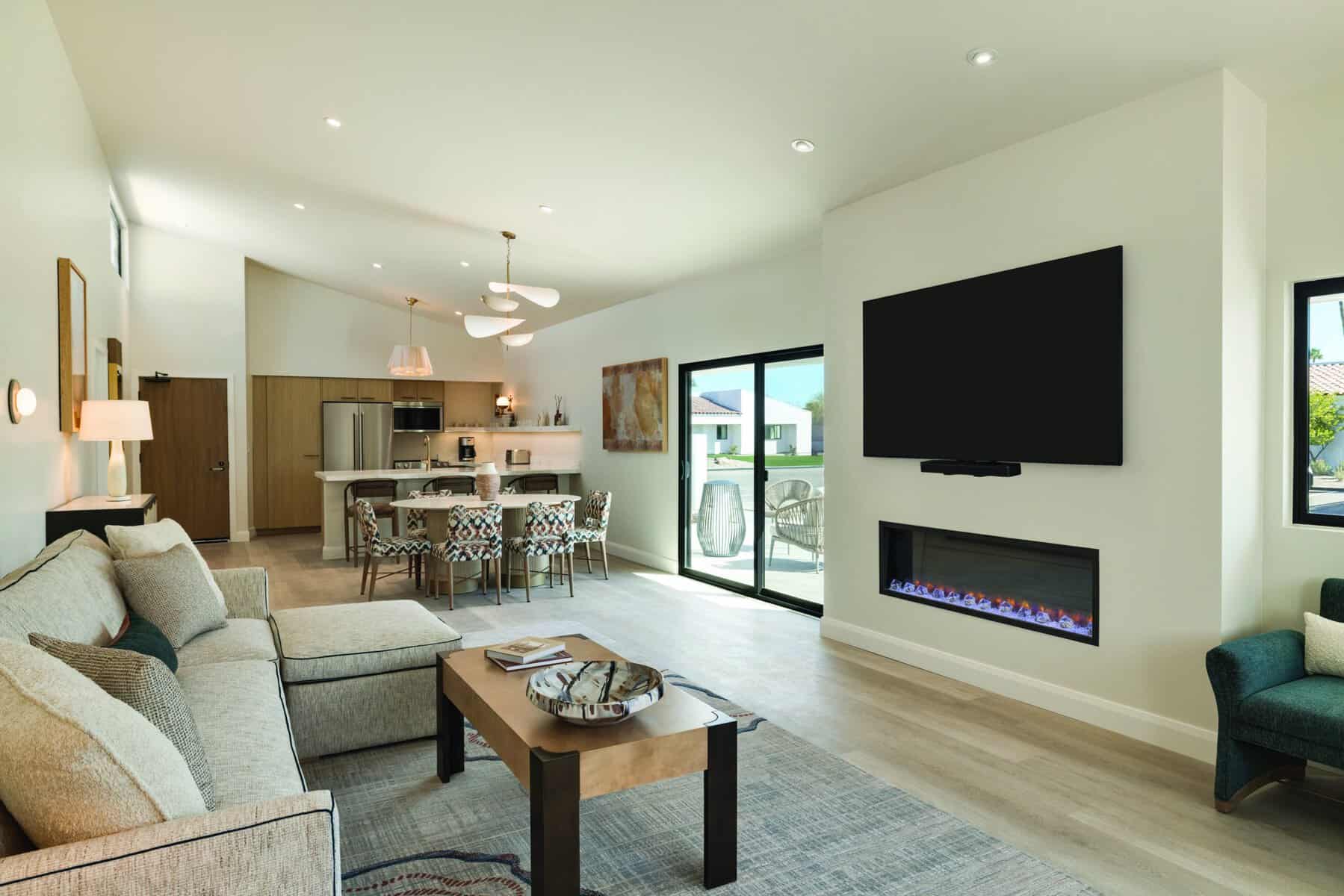
For that reason, it was worth the 1.5 mile jog from Hilton Scottsdale Resort & Villas to Camelback Mountain (or you could take the complimentary luxury-line SUV that transports guests anywhere within a 3-mile radius of Hilton Scottsdale Resort & Villas). A little hike to take to get to the mountain was worth all the extra space and privacy we got, affordably, by making this our resting spot.
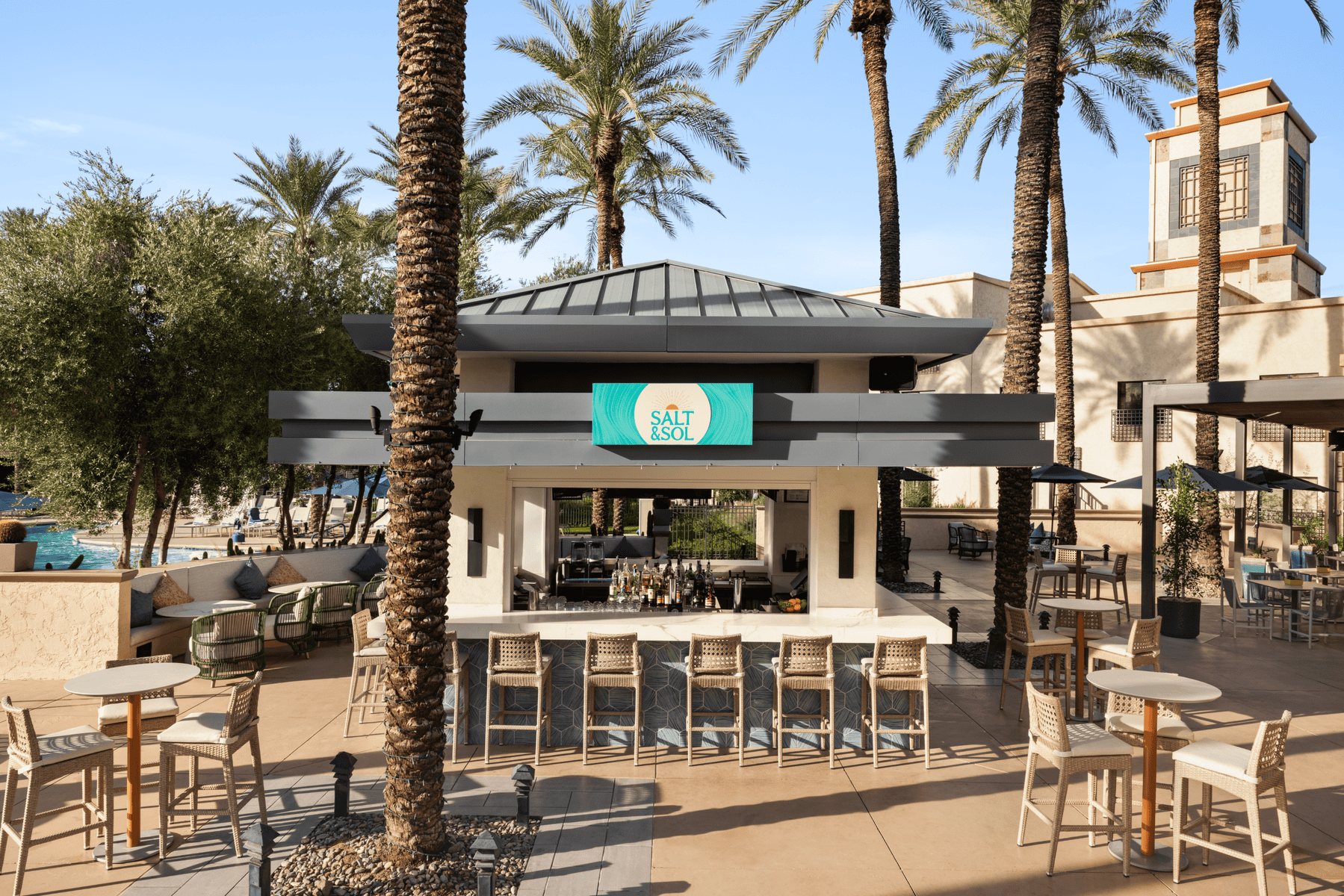
Salt & Sol at Hilton Scottsdale Resort & Villas is the Christine Baranski of this story: the best supporting role that made everything else better. Salt & Sol is the resort’s brand new Mediterranean-inspired restaurant. Nutrition gurus will love the rainbow-colored entrees, packed with fiber and protein, plus good-for-you fat, like nuts and seeds. The grain bowl, with quinoa, toasted chickpeas, steamed broccolini, beets and extra virgin olive oil was among my favorite meals on the trip. I skipped the salad dressing, but added two skewers of chicken for extra protein. There was enough plant-based protein on the salad that I ended up saving the chicken for later and consuming it after another go up Camelback Mountain the next day. (One time just wasn’t enough. Some locals hike it every day.)
Another win for Salt & Sol is the outdoor seating. With zero humidity and sunsets that would make a grown man cry, it is a shame to waste the views sitting indoors in a restaurant. Service is no-fuss with friendly wait staff in a pool hut, taking your order when you walk-up and besides that, leaving you to enjoy the peace. On Thursdays through Sundays, Salt & Sol offers live music beginning just after sundown. Our performer had a voice like an angel, and sang everything from “Valerie” by Amy Winehouse to “Gypsy” by Fleetwood Mac. I cannot imagine a more pleasant way to spend an evening in Scottsdale than poolside dining and entertainment at Salt & Sol.
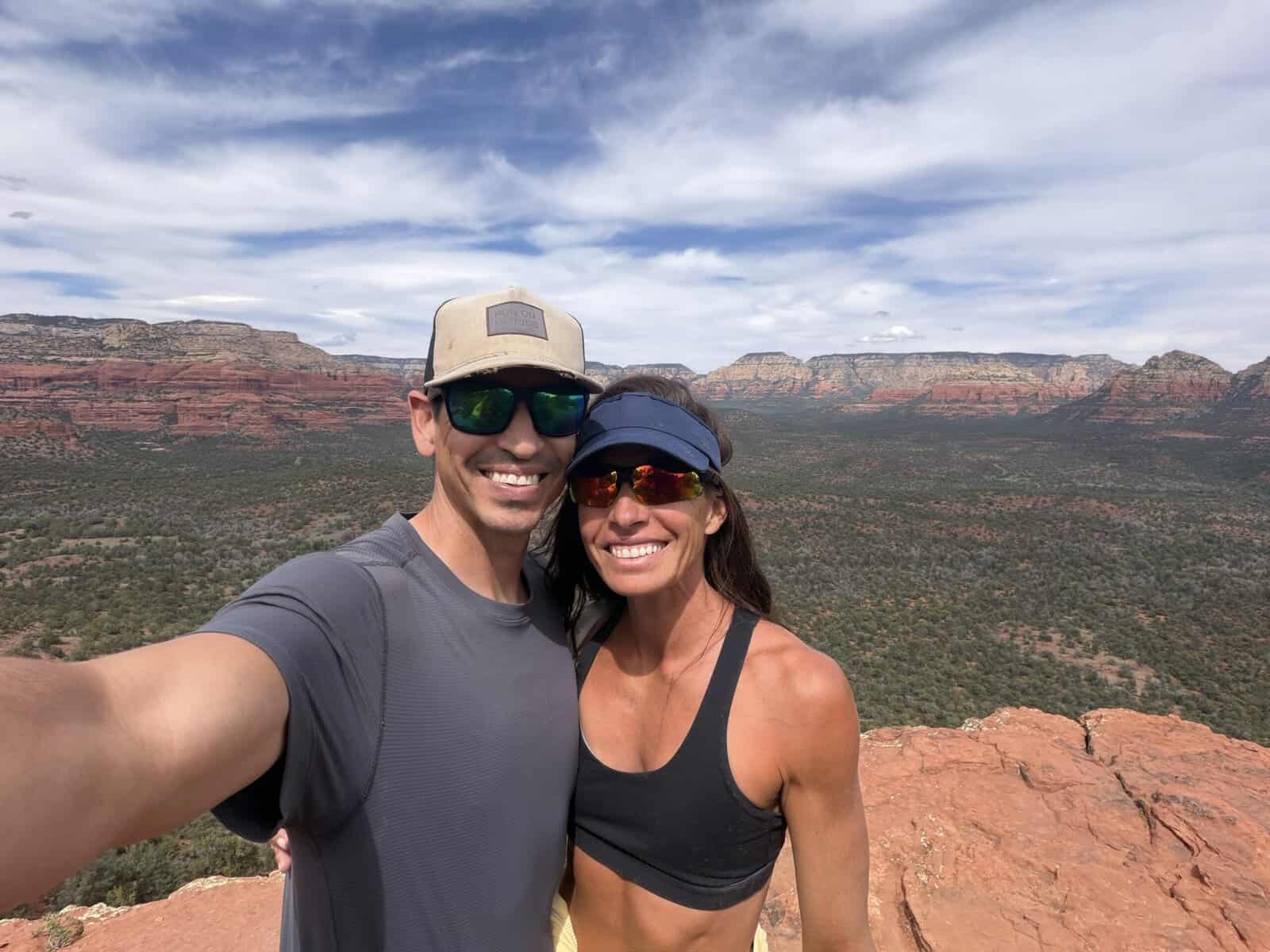
After six breathtaking trail runs (seven counting the encore trip up Camelback Mountain) and five sensational resting spots, it was time to head back home to Austin, TX. In the Austin-area, my husband and I can often be found running River Place Trail, San Gabriel Trail, Garey Park equestrian trails and competing in Tejas Trail trail running events. We hope our joy is infectious and inspires more trail running, less day spas, and affordable travel for those who see veritable wellness.
___________________________________________________________________________________________________________________________
Cover Photo courtesy Brook Benten
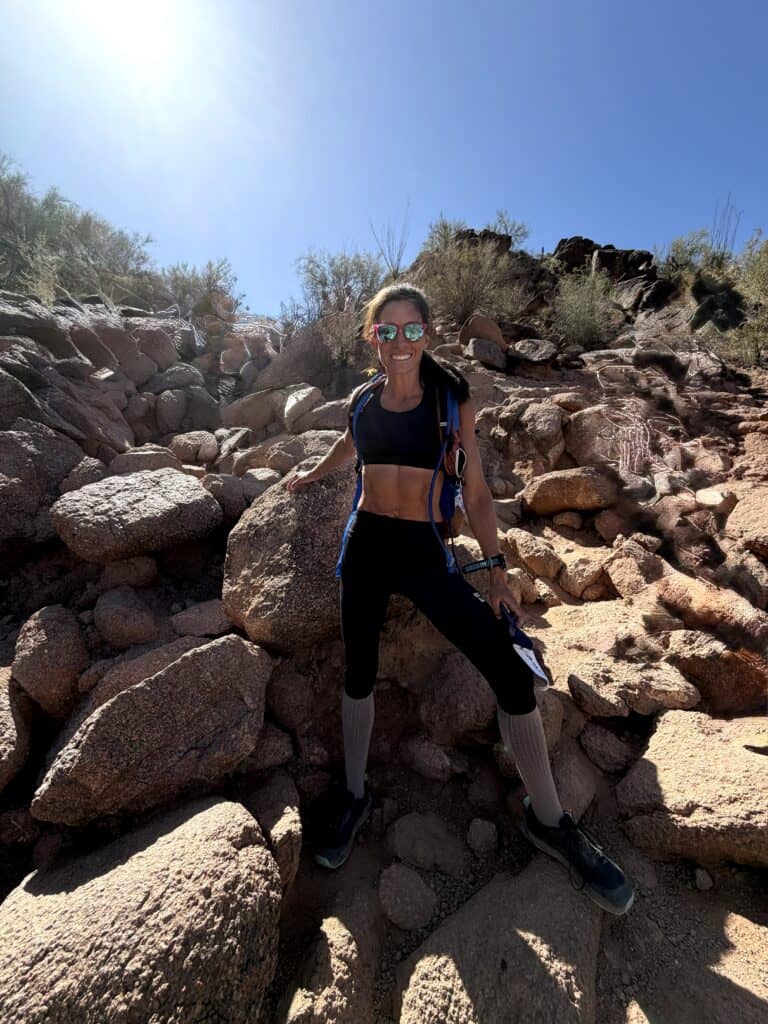
Brook Benten, M.Ed., ACSM-EP is a little bit of everything: triathlon ambassador (SuperTri), Mom (pronounced “MOM!”), and author of three books. When she’s not personal training, running trails, open water swimming, or teaching Stand-Up Paddleboard classes at Life Time Austin Arboretum, she’s nudging her family to join her on outdoor adventures. Brook is powered by the sunshine, so this press trip to Arizona fit like a pair of broken-in Hokas.