


Share
Founder Juan Tejeda discusses the history, culture, and lasting impact of Tejano Conjunto Music in Texas.
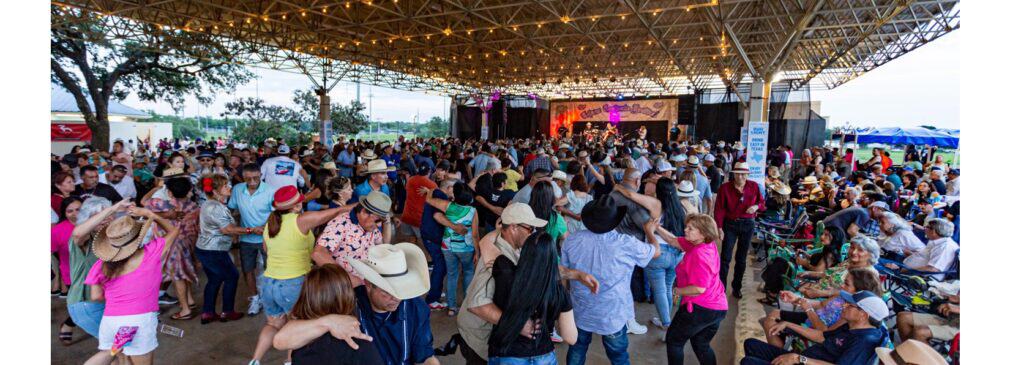
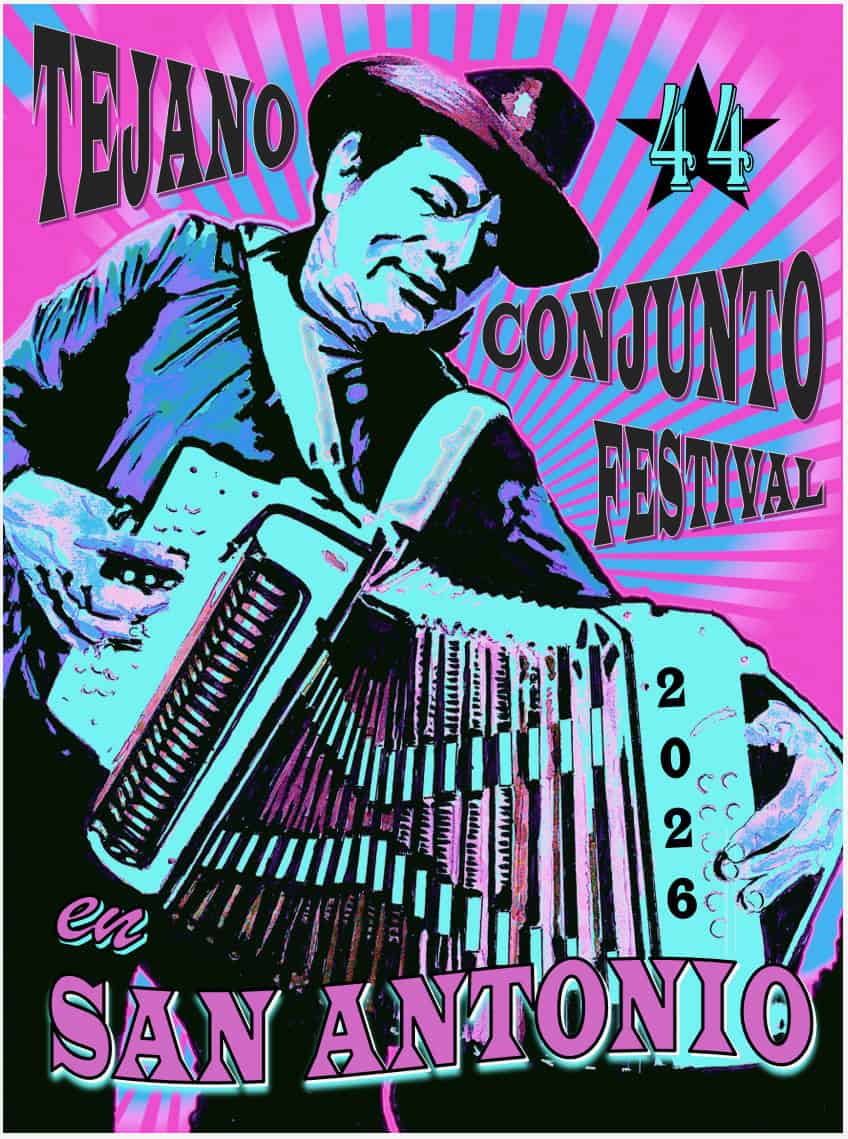
Produced and presented by The Guadalupe Cultural Arts Center, the 44th Tejano Conjunto Festival will take place in San Antonio from May 14-17. Kicking off with a seniors dance May 14 at the Royal Palace Ballroom on Military Drive, the four day festival will feature food vendors, live performances, dancing, and cultural events honoring the rich traditions of Tejano music and Tejano culture from the state of Texas.
Known for its unique and distinctly regional sound rooted in Texas, Tejano music is a musical style that blends Mexican folk traditions with European influences such as polka and waltz rhythms introduced by German immigrants to South Texas many decades ago. The term “Tejano” also commonly refers to Texans of Mexican descent, reflecting both a cultural and geographic identity.
Featuring instruments like the accordion and bajo sexto, Tejano and conjunto music emerged from working class Mexican American communities and evolved into one of the most recognizable cultural art forms of the Lone Star State. Over the decades, the genre has incorporated elements of country, blues, rock and jazz while continuing to celebrate the cultural heritage, storytelling, and traditions of Mexican Americans in Texas.

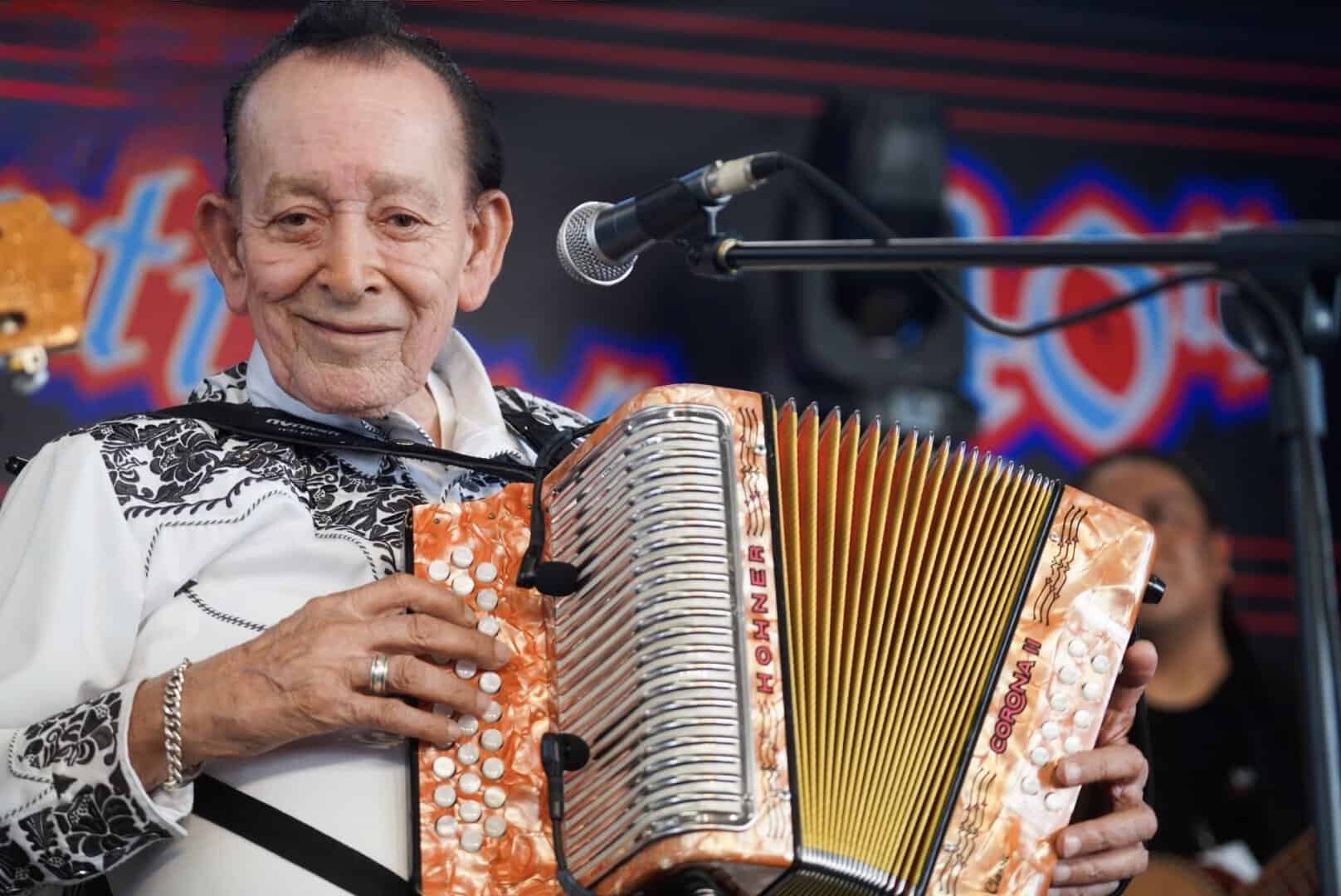
For this year’s festival, a special tribute to Flaco Jiménez will take place. A native of San Antonio, Jiménez is known for his influence on generations of musicians through his decades-long career in Tejano and Conjunto music. Jiménez also helped bridge the gap between traditional Mexican American music and mainstream American genres such as country, rock, and blues through collaborations with artists such as Bob Dylan, Ry Cooder, and Dwight Yoakam.
Speaking more on the festival’s history and what to expect at this year’s event is founder, educator, and musician Juan Tejeda who founded the festival in 1982. Pertaining to its inception, festival founder Juan Tejeda said the event was created with a clear cultural purpose. “We wanted to create and develop a festival that was dedicated to this original style of Tejano music that we gave to the world,” Tejeda said, noting its enduring legacy. He added that the festival has since become “the oldest and longest-running, showcasing the musical style of Tejano Conjunto.”
Elaborating on Tejano music’s existence, Tejeda reflects on its intricate musical history, “There were obviously a lot of other musical festivals around that had been in existence, but again, none dedicated to Tejano Conjunto music which is this original American musical ensemble and style of music that we, as Tejanos, or Texas Mexicans, created around the turn of the 20th century in the early 1900s,” Tejeda explained. Further adding, “So this tradition is a little over 100 years old. It’s an original form of music that we created that’s a fusion and synthesis as we borrowed the button accordion from the German European settlers that came to Texas and Northern Mexico. Once we added the Spanish Mexican bajo sexto 12-string guitar to the accordion, as it’s kind of its principal companion instrument, it became the beginning of a new American original ensemble because they had never had the pairing of a button accordion and a bajo sexto guitar.”
Tejeda added that early recordings in the 1920s helped document the style’s development, with further evolution occurring through the years. By the mid-20th century, ensembles expanded to include the acoustic upright bass, followed by the electric bass after music became electrified in the 1950s. The addition of the trap drum set ultimately completed what he described as the traditional four-piece conjunto ensemble. By the 1950s and 1960s, Tejeda said, the genre had reached its mature form, establishing the distinctive sound and instrumentation that continue to define Tejano Conjunto music today. Reflecting on his personal experiences, Tejeda discussed the stereotypes historically associated with Tejano Conjunto music recalling that “conjunto music and playing the button accordion was… much maligned and it was considered sort of low-class cantina music,” noting that such perceptions were common during his upbringing. Tejeda also shared that he himself internalized some of that stigma. “I remember when I was 11, 12 years old, I was playing with a conjunto band. I was playing drums, and was making a little money to help out my parents and always felt kind of ashamed of it,” he said. He attributed these feelings to social attitudes at the time, adding that “schools were very racist in a lot of ways against Mexican culture and Mexican people,” which, he said, contributed to a sense that “our culture, language, music, and food” were viewed as inferior.
His view has evolved over time through study and reflection on the history of Mexican American communities. Tejeda now understands these dynamics, “Later on, I did realize. . . after I studied the history of our people and how we’ve been colonized,” he said, describing what he understood was a systemic bias within schools that affected cultural self-perception and awareness. Despite these challenges, he emphasized cultural resilience. “They made us feel inferior in a lot of ways in our culture and our food,” he said. “They tried to erase it, but our culture is very strong and we have persisted and we resisted.”
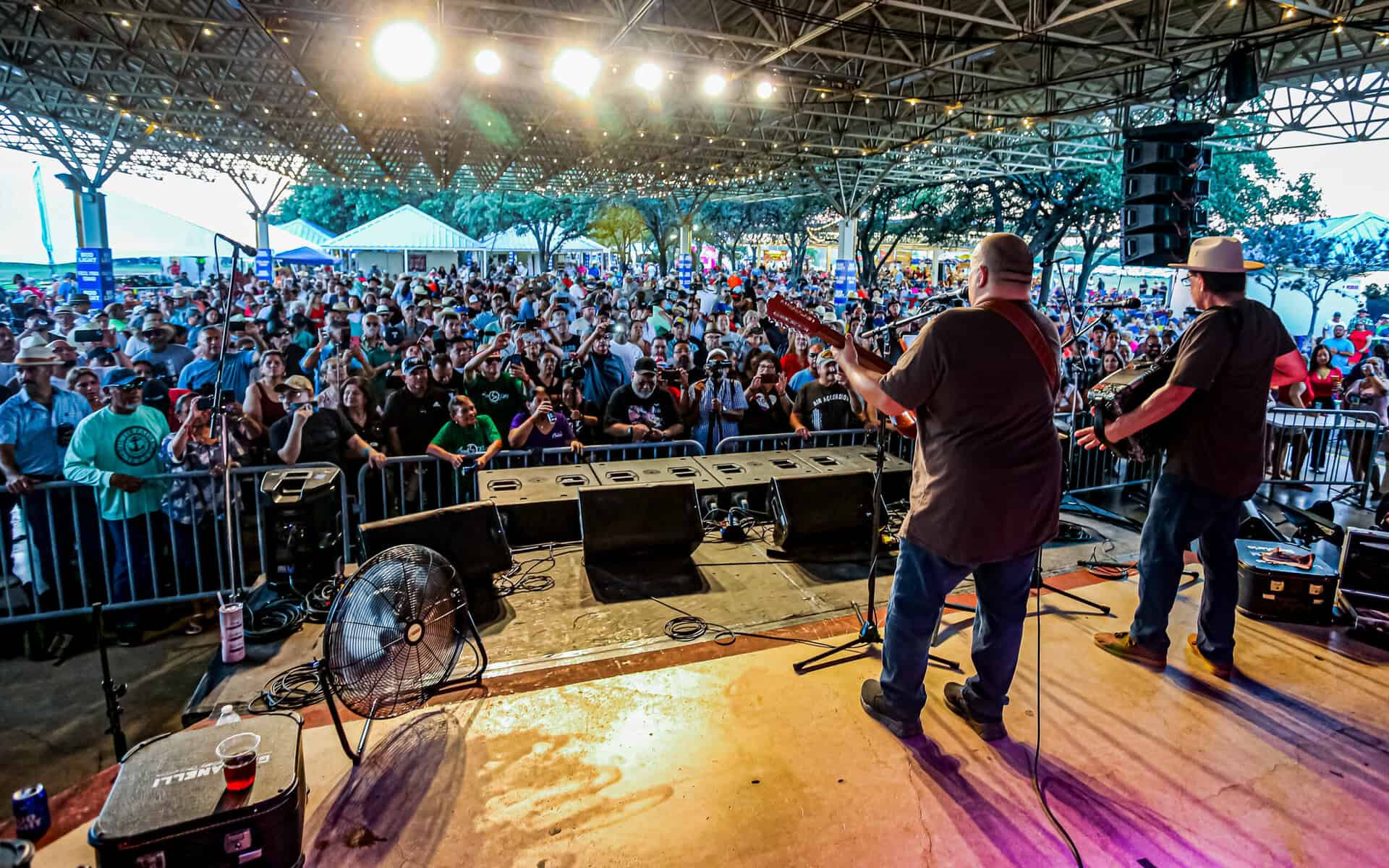
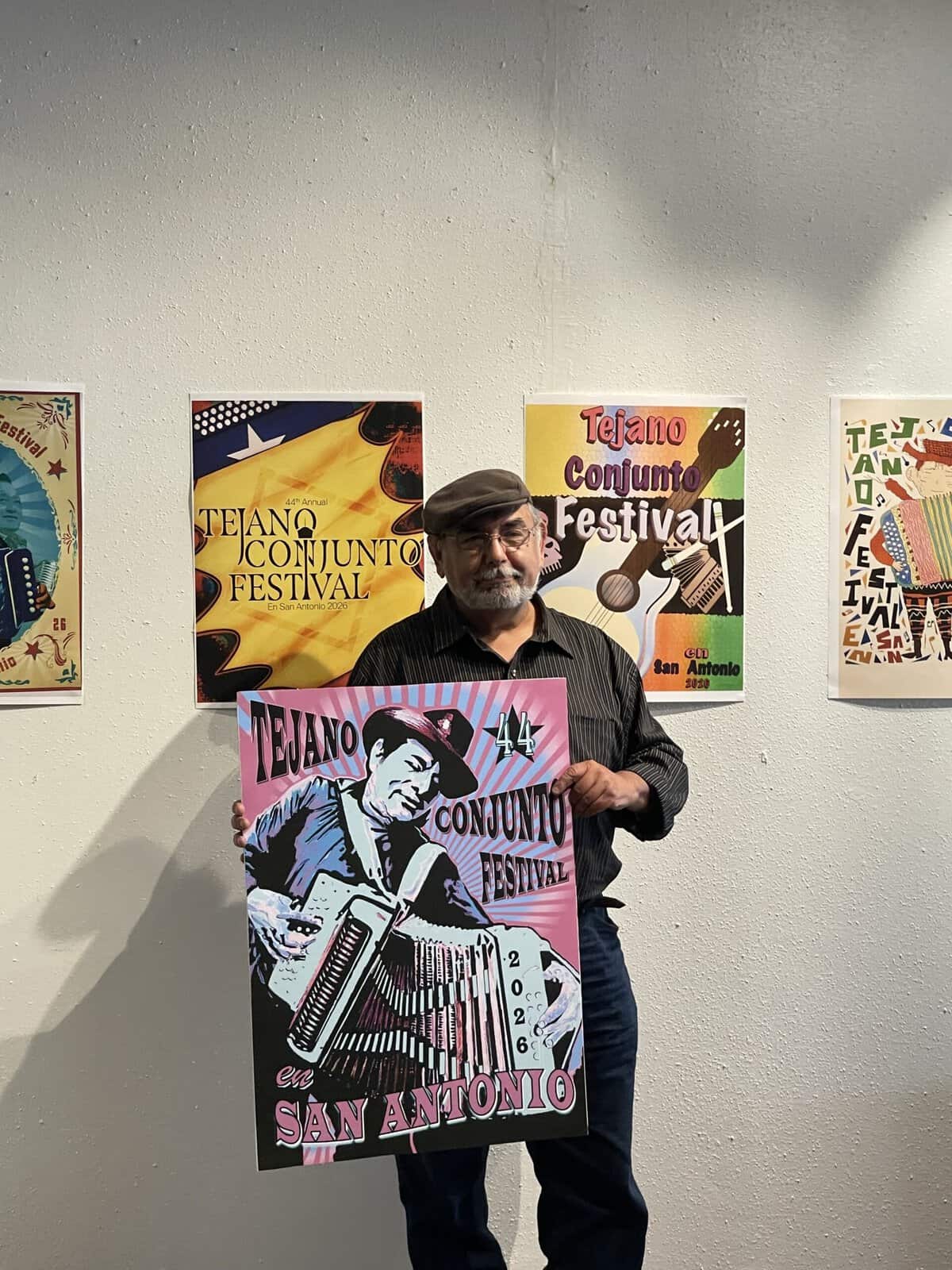
Regarding this year’s festival and overall takeaways, Tejeda noted it’s a cultural educational experience as well. “We make it more than just a music festival that presents bands. We were always very keen about adding educational components to the festival,” he said. “For instance, we have a poster contest for middle, high school, and college age students. These important educational aspects showcase young students that are learning the tradition and learning how to play accordion and bajo sexto, while creating young conjunto ensembles. And this year once again, we’re featuring various conjunto ensembles from high school schools down in the valley and more. We also developed the program magazine where we have included articles over the years on the history of our music and other types of music like Norteno music from Mexico. The festival will also feature accordion raffles, food booths, and local vendors. The festival ends Sunday with a special tribute to Flaco. Los Tex-Maniacs along with international musicians are coming to pay tribute to Flaco who was just a very down-to-earth, humble kind of guy. Not only did he represent our music positively, but he was a great representative of our people.”
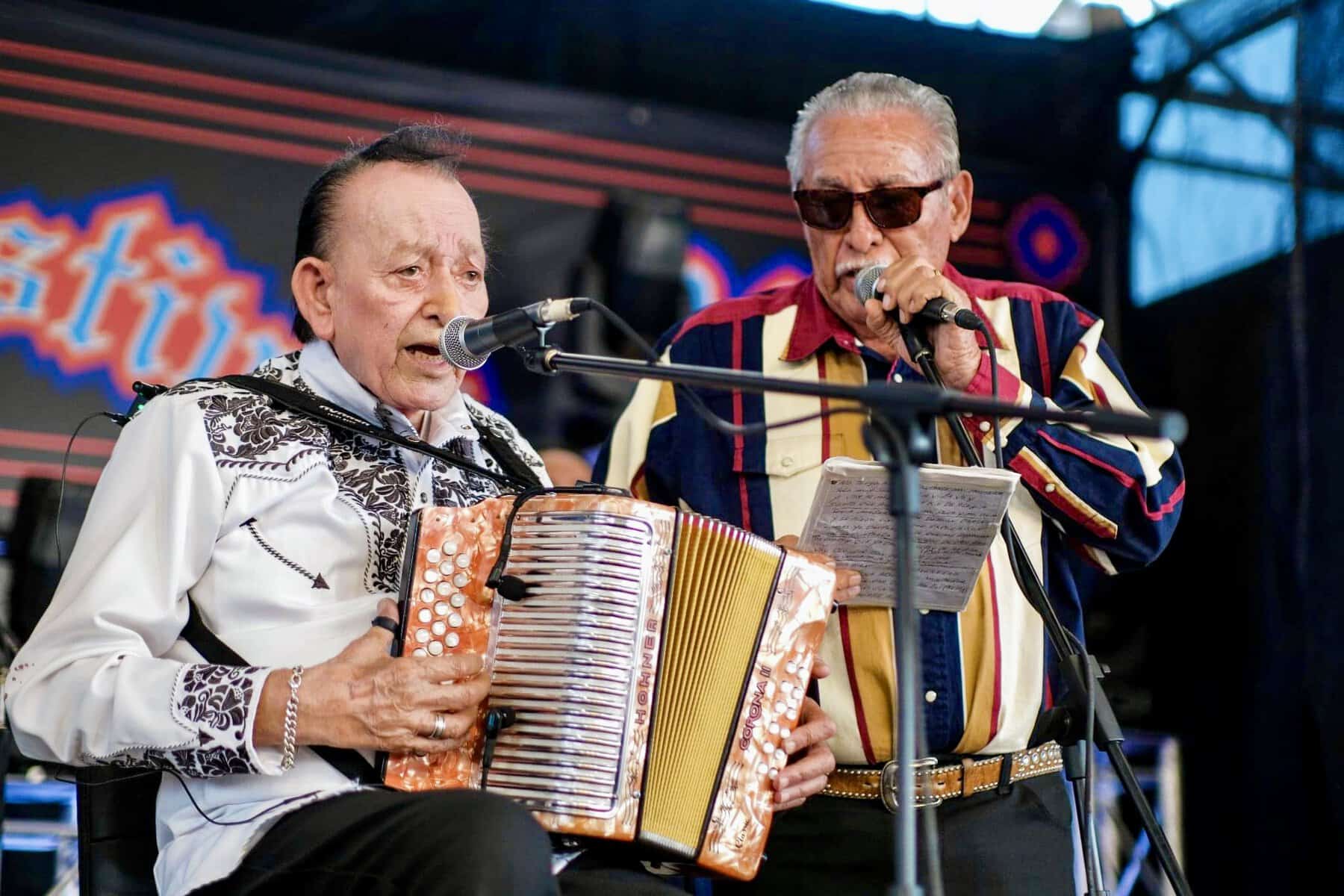
An accomplished educator, Tejeda earned a B.A. in Chicano Studies from the University of Texas at Austin and a Master of Arts in Bicultural Studies from the University of Texas at San Antonio. He worked for many years as the Chicano Music Program Director at the Guadalupe Cultural Arts Center, where he helped develop programs focused on preserving Mexican American music and culture. He is also a writer and co-edited “Puro Conjunto: An Album in Words and Pictures/Writings, Posters, and Photographs from the Tejano Conjunto Festival en San Antonio, 1982–1998” (2001). The book was published through the Center for Mexican American Studies at the University of Texas at Austin and the Guadalupe Cultural Arts Center, and distributed by the University of Texas Press.
Pertaining to San Antonio and its significance for the Mexican American community, Tejeda described the city as a long-standing cultural center shaped by its demographics and history. “It has always had a majority Mexican and Mexican American population. In all aspects of culture from the missions to the music, many people have said that San Antonio is the Tejano music capital of the world because of all of the bands that proliferate here. We have everything such as orchestras, conjunto ensembles, mariachis, grupos, and individuals performing. And again, because it is and has always been a majority Tejano, Mexican-American, Mexican indigenous town and the great history surrounding it, naturally, it would be a very important cultural center for our people. Definitely in terms of music, here’s where the Tejano Music Awards started as well. All of these things are from San Antonio, and It has always been a place that served as an incubator for creatives such as musicians and for Chicano artists and poets. We have a big literary scene here, and some people have said that in general it is the Chicano cultural capital of the world. So San Antonio is a very important cultural center of the Mexican, indigenous Mexican, Mexican-American, Chicano and Tejano people, and naturally music being the most popular of all of the art forms has played a major role.”
Learn more about the festival and find tickets here.
____________________________________________________________________________________________________________________
Cover photo courtesy Laura H. Aplin, Tejano Conjunto Festival
Originally from San Antonio, Jenny Castro has a passion for writing, travel, and discovering new topics. She loves Tex-Mex food, Tejano music and George Strait. Check her out on Instagram to keep up with her work and latest adventures.