



Share
Dublin is the largest city in Ireland, with Galway following a few spots behind as the 5th largest. So it stands to reason that there is plenty to do in both!
During this leg of our Ireland trip, my family and I were completely on our own. We stumbled across many unplanned gems as we improvised our way through our last few days in Ireland. Take notes if there’s anything that catches your attention so you can be a bit more organized and structured than we were.
Eyre Square – Galway
Many streets in Eyre Square are decorated with multicultural flags as a sign of gratitude
to international travelers. Video J’vette Helsel
My family woke up bright and early and piled into a rental car, saying farewell to our tour group and Dromoland castle. It was a long and winding drive down narrow roads, but eventually we dropped our bags off at the hotel and headed into town.
Like most cities, Galway is split up into residential areas, corporate blocks, and a downtown area. Located near the coast, Eyre Square is the perfect downtown epicenter for arts, restaurants, pubs and shopping.
Street magicians and street musicians were a common sight as we perused the offerings of various shops and restaurants. We happened to come at an unexpectedly good time –- the Galway International Arts Festival was well underway, making the streets even more lively. Though we couldn’t stick around to see any performances, we did enjoy the art installations and the street vendors brought in for the event.
Mary Mullen’s Public House and Courtyard – Galway
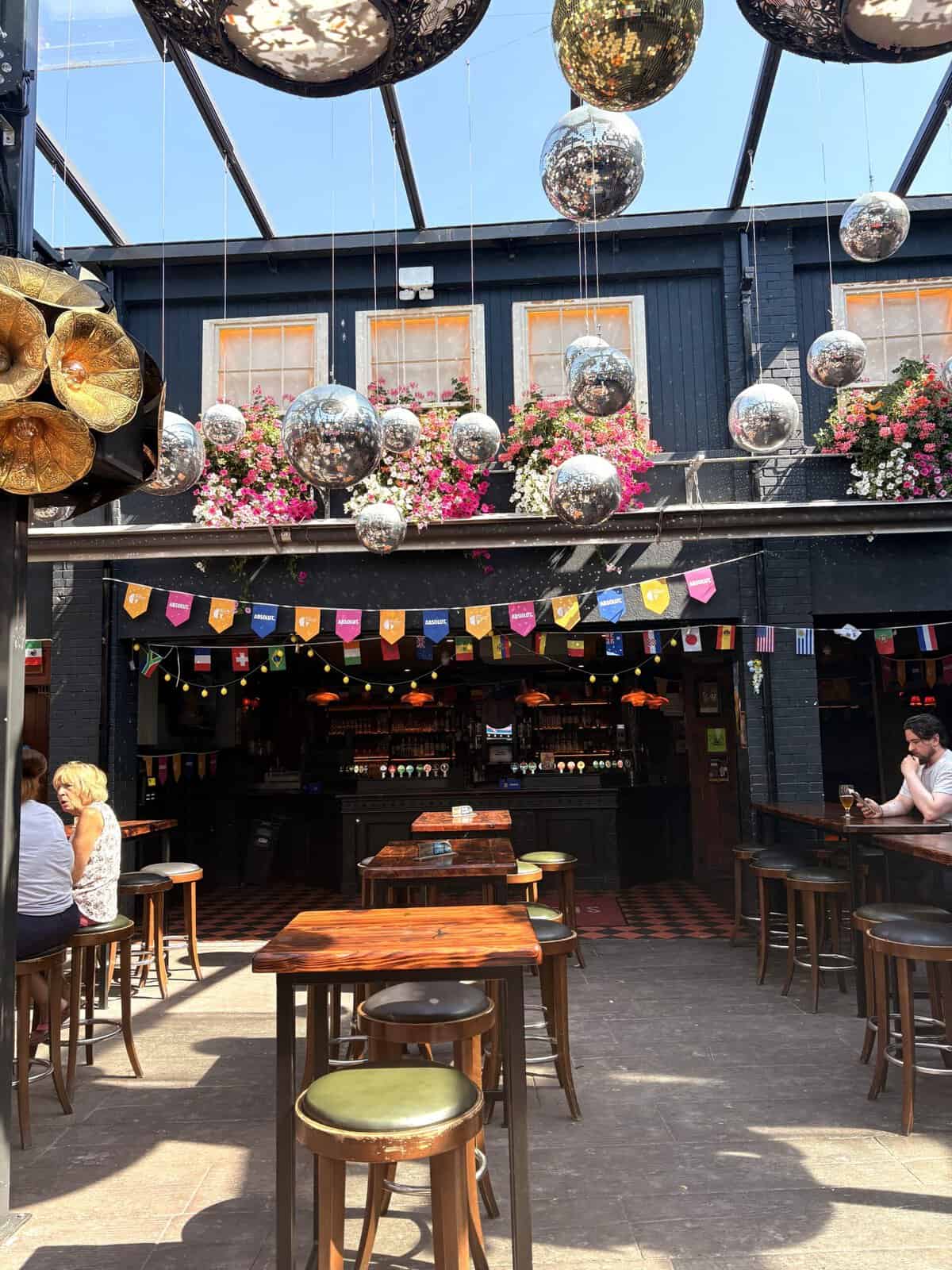
All of our crew had worked up a voracious appetite, so we started scanning for a promising spot just a few streets away from the arts festival. We were initially hesitant on Mary Mullen’s as we were starting to get worn thin by the same food options at every pub. It was a blessing when we opened the menu to find a large variety of foods in addition to a robust drink menu.
Breakfast, Irish classics, bar food, and even ramen were among the menu’s offerings. I personally make it a point to try ramen at nearly every restaurant I come across that offers it, so there was no hesitation on my order. I was fully expecting to have an average ramen meal since the restaurant didn’t specialize in such dishes, so I was quite surprised when the dish easily became one of the best ramen bowls I’d ever tried.
The rest of my family wasn’t let down either. From sandwiches to smash burgers, no one walked away from the meal with a trace of disappointment. After finishing our plates we briefly walked over to finish our drinks in the courtyard –- yet another World Cup match playing on the TVs. Due to the afternoon heat, we didn’t stay long, but at night or on cooler days the inner courtyard is a beautiful place to enjoy some drinks and watch a game!
Killary Sheep Farms
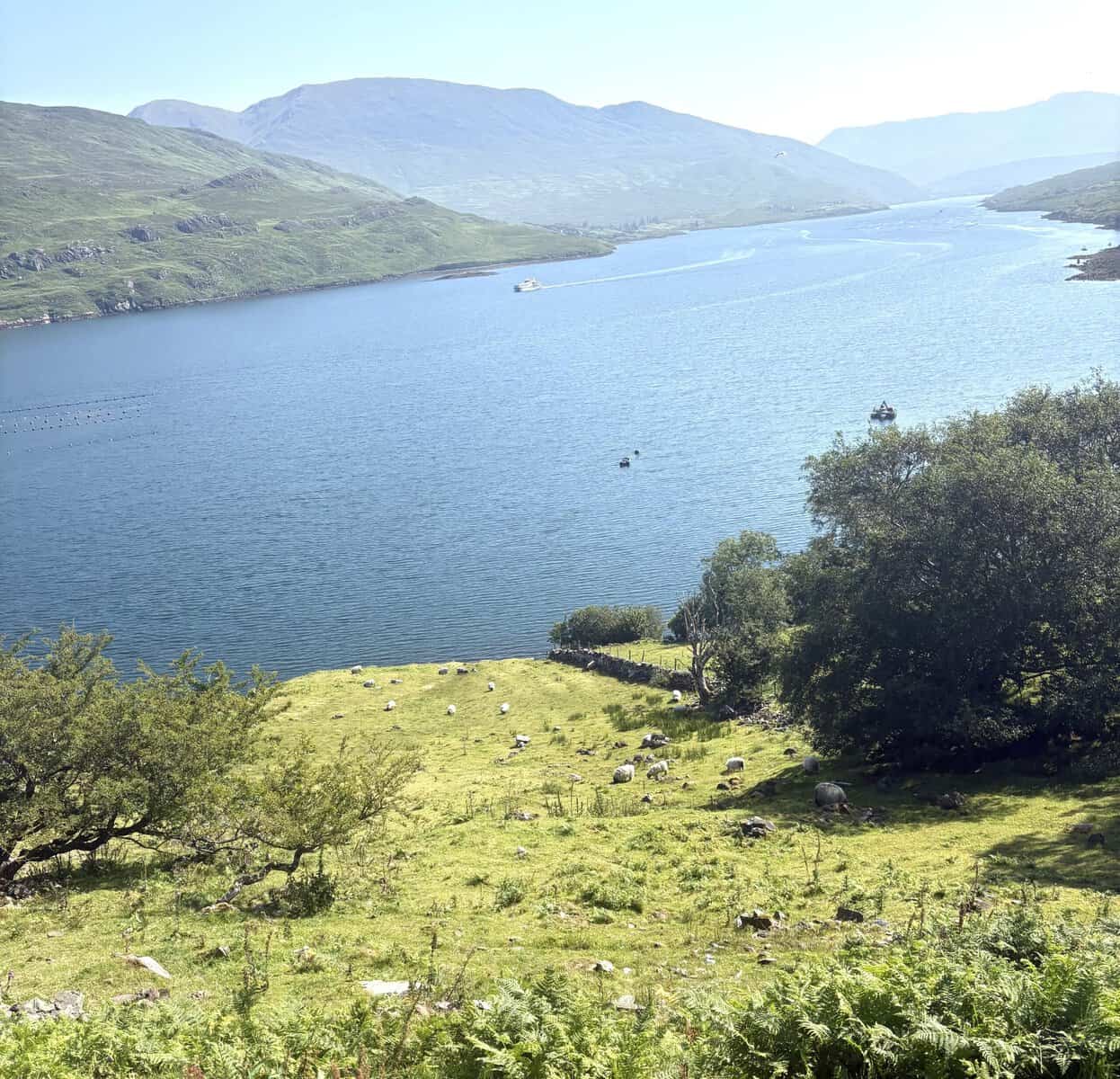
Our visit to Galway was only a one-night stay, so it was on the road again for a full day of travel. The previous night, while all sweaty in our air condition-less hotel, my mom reserved a demonstration for us at Killary Sheep Farms, a tourist spot on the Killary Fjord.
Killary Sheep Farms, not to be confused with Killarney, is a traditional mountainside sheep ranch. It offers a variety of hands-on experiences and demonstrations for sheep rearing, herding, and shearing. The drive out is particularly narrow and rural, but well worth it for those who want to see working sheep dogs in action or hold a wooly lamb.
Tour groups run about every hour during the peak tourist season (late June to mid August). Guests gather near a pen as one of the three sheepdogs, Sweep, Lassie or Fly, show off exactly what a trained herding dog can do. The Border Collies listen intently to whistle or word commands from extreme distances, resulting in a cloudy mass of running sheep. After two laps around the large demonstration fields, the sheep get herded into pens for the next part of the tour.
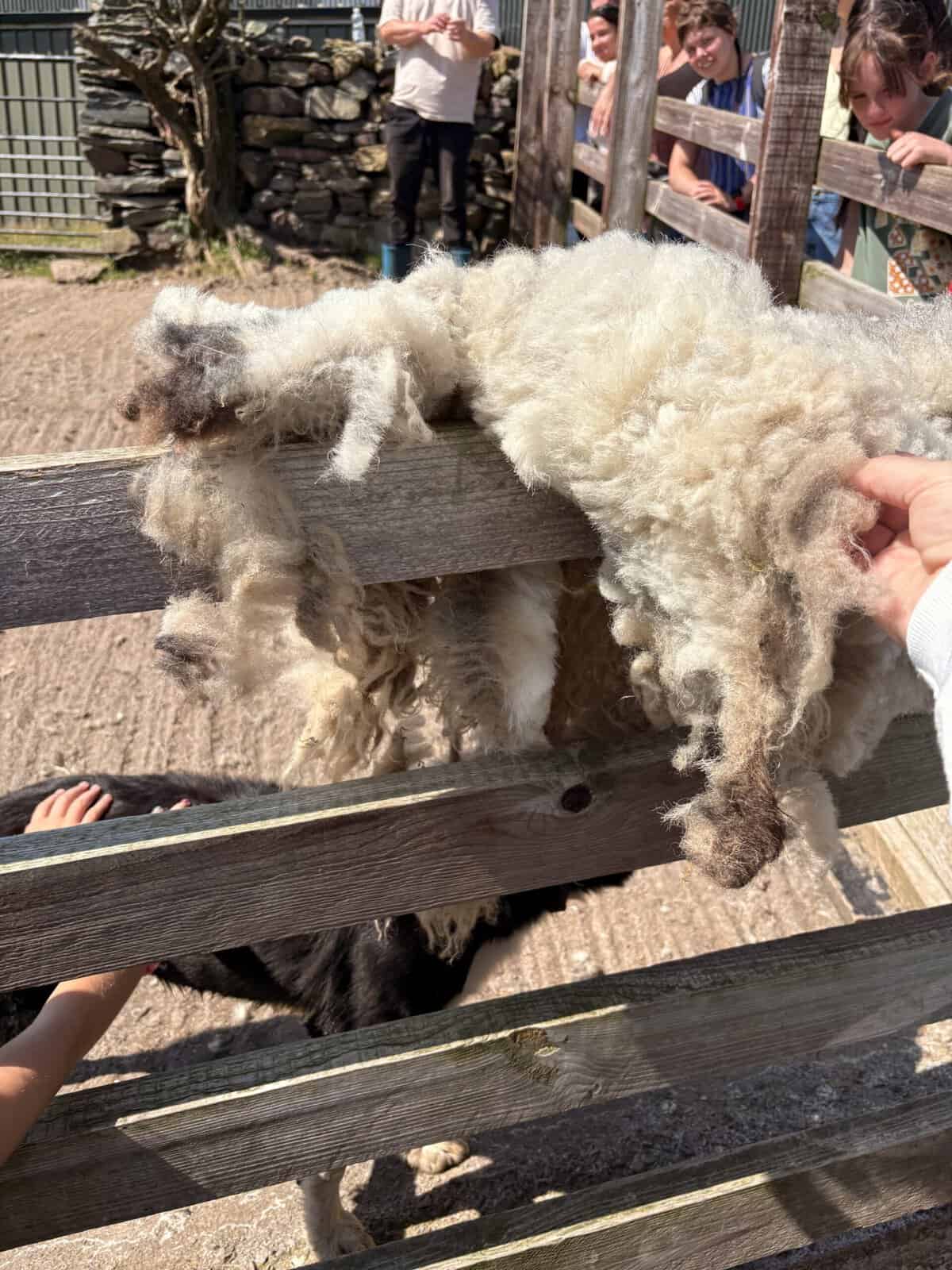
Two workers wrangle two sheep and shear them in front of the crowd, talking about the Irish’s history as sheep herders, different uses for wool, and the different sheep breeds that are reared in Ireland. After the coat is removed, it is passed around for people to feel. The most surprising discovery for me was the oily substance on the wool, Lanolin, which keeps fleece water resistant and is often used for skincare, lubricants, and medical salves.
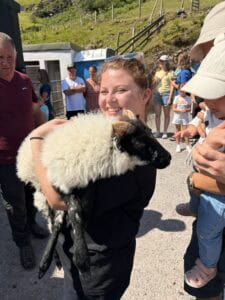
The last part of the tour was wildly exciting and very hands-on. The tour group is handed bottles of milk and instructed to make a tight circle around the entrance to a barn. In a flash, a horde of baby lambs rush out of the pen, ready to suckle from any outstretched bottle. After the feeding frenzy subsides, a few of the lambs are passed around for guests to hold for a photo op at the conclusion of the tour.
This was a last minute decision that ended up being a huge hit for us. It’s not terribly time consuming, not at all strenuous, and is much more intimate and small compared to other tour experiences. It’s a great stop for all ages, and supports the work of true Irish ranchers.
Kylemore Abbey and Victorian Walled Garden
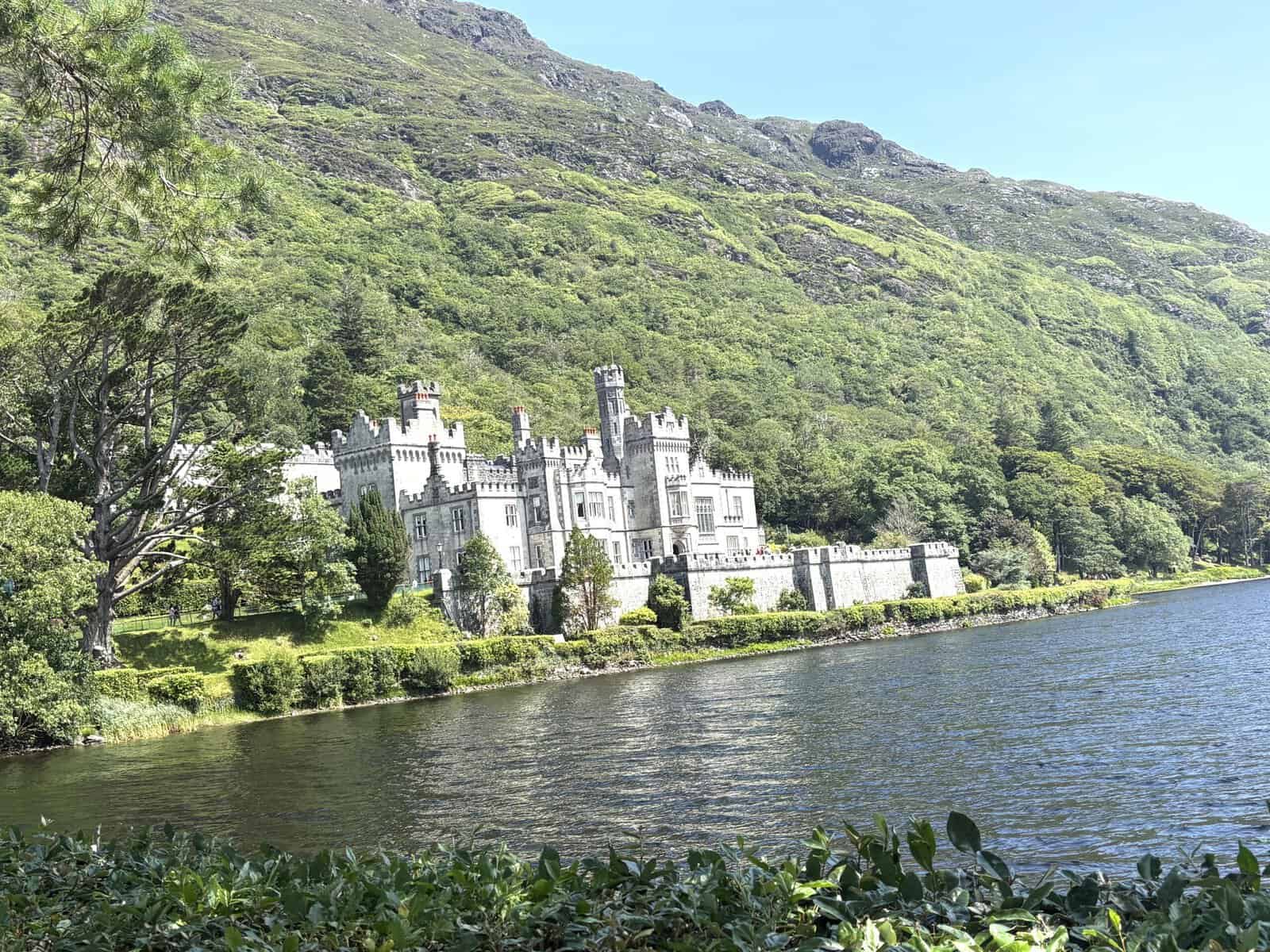
In Connemara, about 15 minutes away from Killary Sheep Farm, is Kylemore Abbey and Victorian Walled Garden. This historic lakeside monastery, nestled at the foot of a mountain, was originally built as a castle in the mid-1800’s. The grounds stretch on for about 1,000 acres and offer guests beautiful views in addition to a rich history.
Our crew only traversed the parts of the property that were free to access. To actually get into the abbey and gardens required a paid ticket and multi-hour time commitment, and we wanted to arrive in Dublin at a reasonable time.
For those who do venture further, plan to spend three to four hours traversing through Kylemore Abbey, its garden, church, and walking trails. The self-guided tour mixes modern museum-esque rooms with restored versions of the Abbey’s original state, blending information and aesthetic appeal. Employees are stationed throughout to provide extra commentary about the lives of Mitchell and Margaret Henry, the original owners of the castle.
Surprisingly, the grounds still operate as an active church. It is home to the Benedictine Nuns, with Mass held every Monday and Sunday. The group came as refugees from Belgium in the 1920s and have called Kylemore Abbey their home ever since.
Lastly, the Kylemore Abbey offers shopping and dining options. Many of the gift shop offerings are handmade Irish food, crafts, and beauty supplies –- a fun choice for anyone looking for something different than typical tourist shop products. For dining, they have a sit-down restaurant, simply called Kylemore Restaurant & Cafe, offering traditional Irish stews, sandwiches and desserts. There are also quicker options like The Kylemore Kitchen, a self-service cafe, The Garden Teahouse, and two foodtrucks, The Voyager and The Explorer. The latter of the two became our quick snack stop before hitting the road to Dublin.
The Church Cafe Bar and Restaurant — Dublin
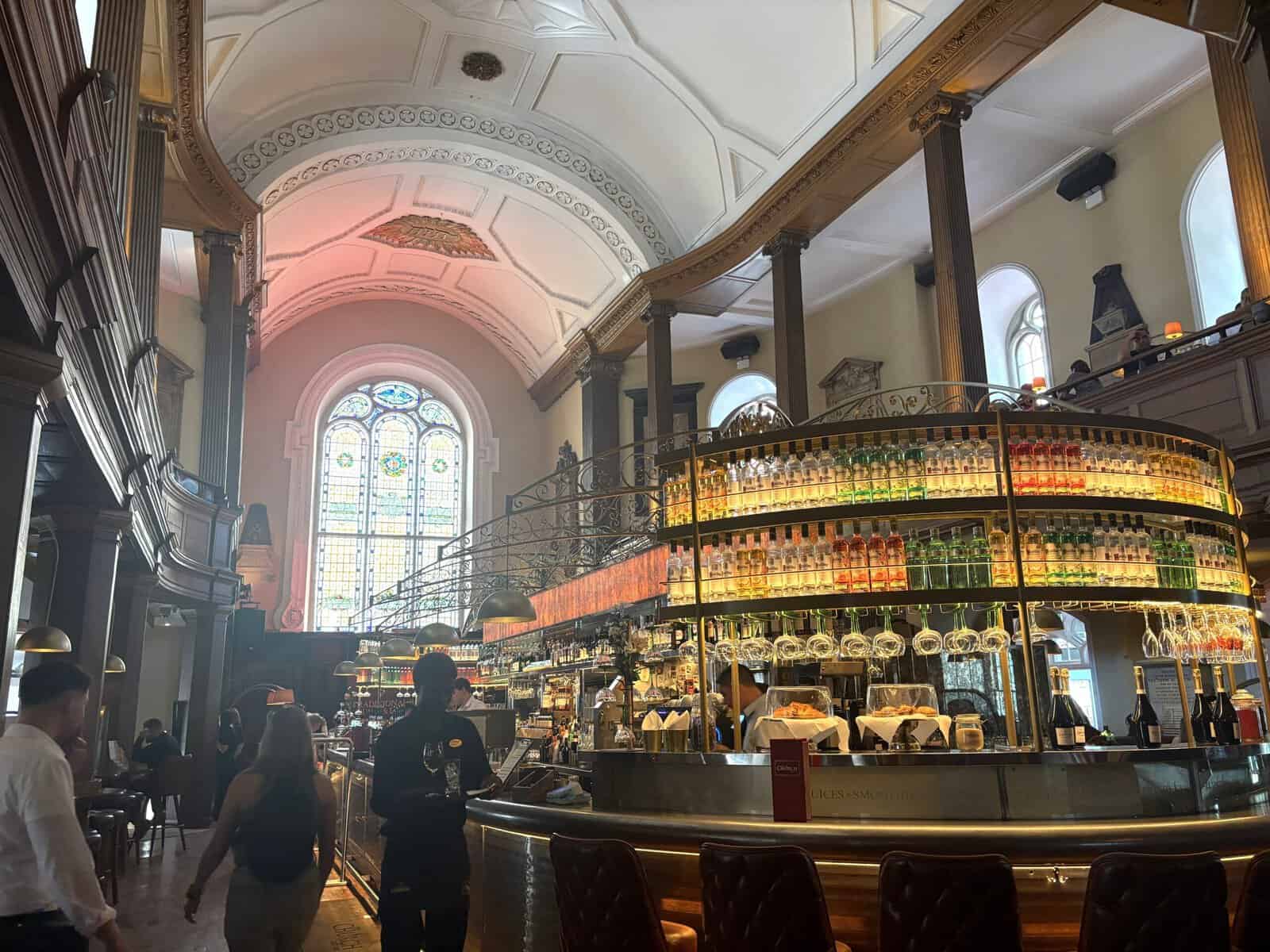
After settling in our hotel in Dublin, we hit the streets to find an exciting place for dinner, making the last minute-decision to check out The Church. Now a church might be one of the last places you’d think to go for a drink, but this one serves a lot more than wine and bread.
This large church in downtown Dublin, once a place of worship, now hosts an elegant bar down the central aisle, river dancers up on the pulpit, and private parties in the basement. Built in the 1700s as St. Mary’s Church, this location served as a typical Catholic church for centuries, even hosting the marriage of the founder of Guinness, Arthur Guinness, to his wife Olivia. After the church closed in 1986 and was deconsecrated, it was transformed into a popular tourist restaurant and pub.
Every night from 6:30 – 9 p.m., The Church offers live entertainment, usually guitarists
who are joined by Riverdancers every 20-30 minutes for a song. Video Julia Helsel
Even though it’s no longer a place of worship, many original elements like large organs and repurposed pews remain in the restored building creating a fun yet regal atmosphere. Music and dancing fills the large two-story space every evening, drawing in visitors from out of town.
And it’s not just the space that’s big. The drink and food menu had a large swath of high quality options, once again relieving us from having to settle for typical bar food. I indulged in a fresh plate of calamari and paired it with a tall raspberry mojito from the cocktail menu, splitting an order of fries with my mom. Everything came out fresh and delicious, to the point where we all tried at least one bite of someone else’s dish.
We were lucky enough to get seated without a reservation, but if you have a large party or just want to guarantee your mealtime, it’s recommended to call ahead and reserve a table. And for those who may be in Ireland for a wedding or corporate event, The Church’s lower level can be rented out for your own private party.
Guinness Storehouse – Dublin
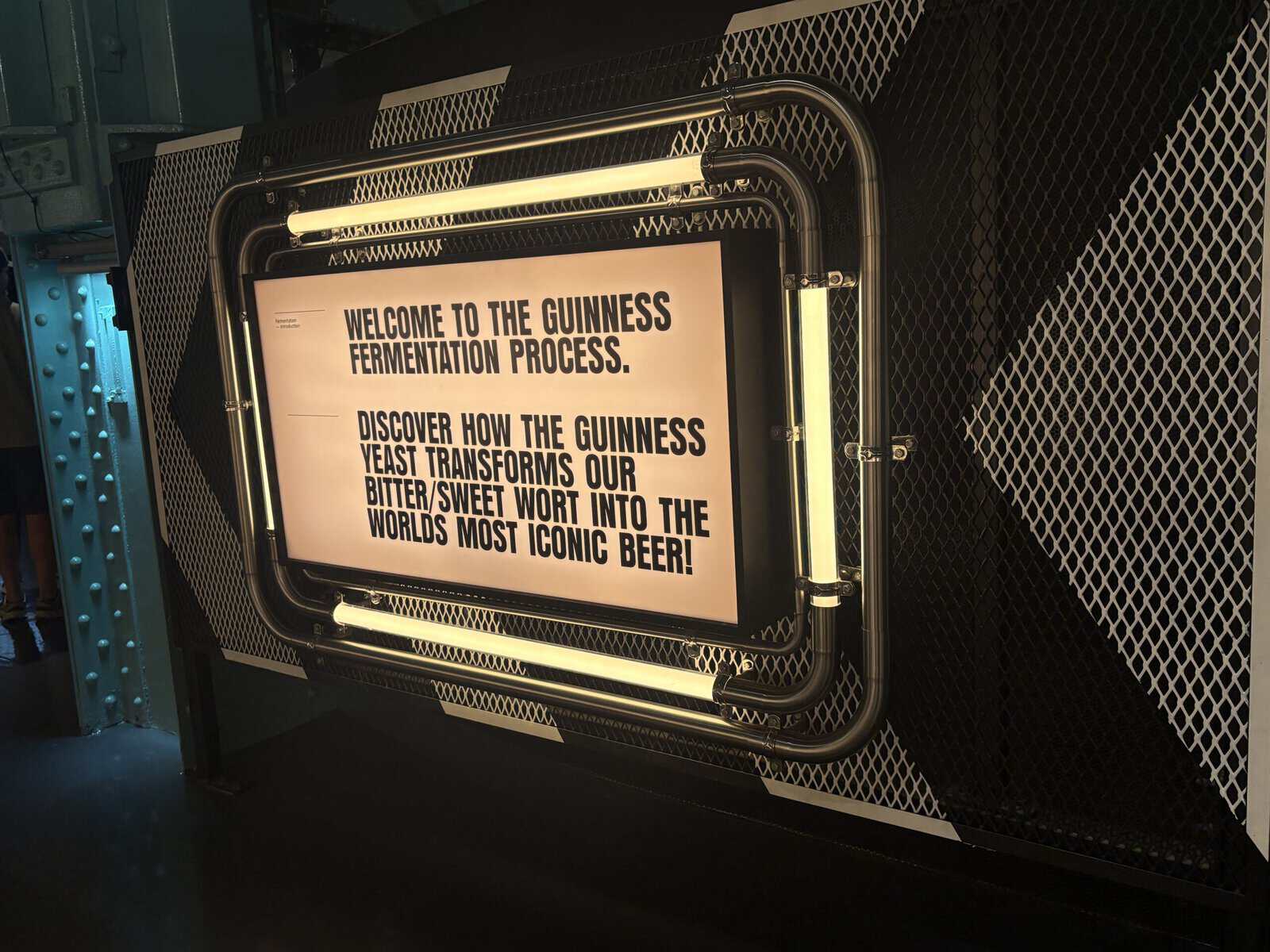
The next morning we were off to tour one of Dublin’s crowning jewels –- the Guinness Storehouse. We had to book this stop way in advance to guarantee a spot, but it was well worth it to walk around the impressive Guinness-shaped seven-story building.
Built where the original Guinness factory once stood, the Guinness storehouse is a huge tourist attraction boasting a giant gift shop, a self-guided tour, a tasting experience and several restaurant choices. Each ticket comes with a free drink at the Gravity Bar, the windowed top-story bar with an impressive aerial view of Dublin.
Once a guest presents their ticket, their group is walked into the center of the building. Visitors are treated to a quick history lesson and a look at the immortalized deed to the property set into the ground, before being let loose to explore at their own leisure. The first couple of floors explain Guinness’s unique beer making process from the ingredients, to distilling, to testing.
Above that, guests learn about the company’s marketing and how it’s survived through multiple chaotic eras of Irish history. Afterwards groups are led into a swirling tunnel followed by a white sensory room, reminiscent of something in Willy-Wonka’s chocolate factory. The room has multiple sniff stations, allowing guests to get the distinct hints of every Guinness ingredient before being handed their own sample. The next area is a re-creation of a manor room where everyone is instructed on the proper way to drink Guinness before giving a toast to Arthur Guinness and drinking their sample.
The top two floors are dedicated to restaurants or paid experiences like getting a “Stoutie”, a custom-foam Guinness with your own face on it. Unfortunately it was too early in the day for us to have multiple pints of Guinness, so we made our way up to grab our free pint from the Gravity Bar. We visited during peak tourist season, so it took awhile to get served and find a place to sit. Still, it was well worth it for the impeccable view of Dublin. The windows even have small write-ups on them commenting on notable landmarks or buildings that tourists may not be familiar with.
After finishing our beer (I gave about half to my dad as I don’t have the stomach for much Guinness unfortunately), we went down to the gift shop for our last souvenir buying spree, making sure to grab goodies for all our beer-loving buddies back home.
Jameson Distillery – Dublin
While Guinness is the beer synonymous with Ireland, Jameson is the island’s signature whiskey. After a quick lunch, we rode on a tram to Bow Street, home of the Jameson distillery.
Unlike the Guinness factory, which is self-guided and structured more like a museum mixed with a mall, the Jameson tour is a much more intimate, shorter, guided experience. An assigned tour guide takes a group of about 20 people through rooms that incorporate projection videos on the walls of the room and interactive sensory experiences. After learning the basic history of Jameson, guests huddle around tables where the different ingredients that go into whiskey are displayed, and are shown several examples of how the smell and color change during the aging process.
Then everyone of legal age who wants to drink gathers round a large tasting room to sample three different shots –- a classic Jameson, Jameson Black Barrel, and their exclusive Jameson Distillery Edition, which can only be purchased on location. The guide gives instructions on how to properly taste the whiskey and everyone makes their way through the three shots. As someone who is a very light drinker, this was my first time trying whiskey. It was expectedly more intense than anything I’d tried before, but I was grateful to get such a unique experience for my first time.
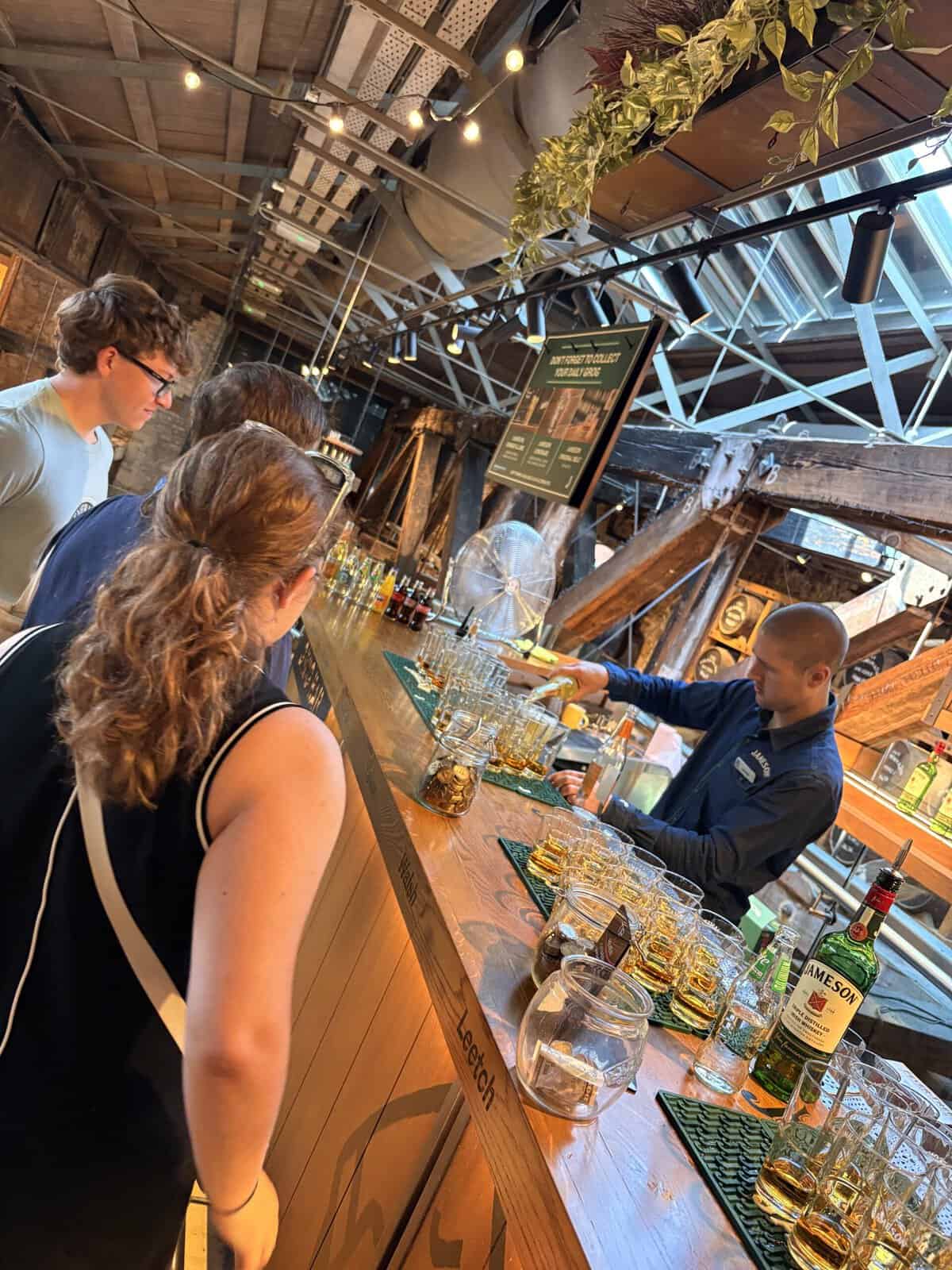
After the tour, guests are, predictably, let out into a gift shop. We then left the distillery to enjoy our last day in Ireland. We wandered to take a cursory peek at Trinity College before hitting up shops and pubs on our way to the famous statue of Molly Malone. After miles of walking, our heads hit the pillow thoroughly exhausted and ready for the flight home. Back in Texas, we were quick to miss the 75-degree breezy summer of Ireland after being met with the unpleasant slap of triple digits in DFW.
______________________________________________________________________________________________________________
Cover photo Julia Helsel
Julia Helsel is an editorial intern for Texas Lifestyle Magazine, a recent graduate of Texas A&M University and a lifelong resident of the Lone Star State. When she’s not traveling, she can be found reading, writing, or playing guitar.