


Share
Experience a luxury Botswana safari where rare African wild dogs, massive elephant herds, and world-class guides create one of Africa’s most unforgettable wildlife adventures.
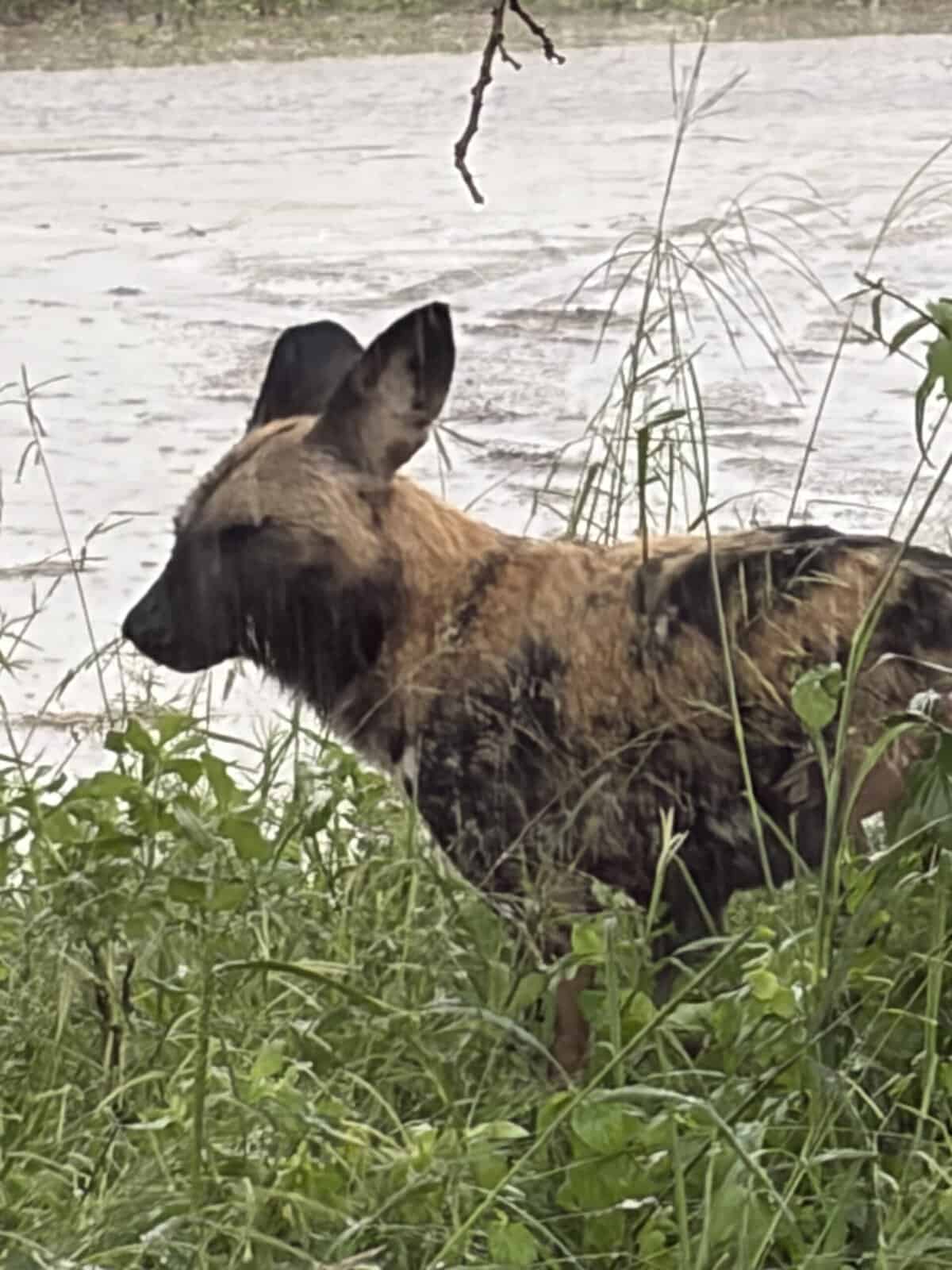
One morning at Savute Safari Lodge, rain fell steadily. My husband and I donned ponchos, climbed into the open-sided 4X4 vehicle driven by our specialist guide, Isaac Mpuchane, and bounced down muddy tracks. A world-class baobab tree stands not far from the lodge. Under it, three wild dogs waited out the rain in a bush. Finding these regionally endangered predators felt like victory enough for a stormy morning.
But we were just getting started.
As the rain lightened, the dogs emerged. They stretched, shook off water, and play-fought. Isaac recognized the preparation ritual. They were gearing up to hunt.
The dogs charged into the bushes. We followed at a respectful distance. Within minutes, we spotted them chasing impala through tall grass. The chase failed, but Isaac predicted they weren’t finished.
We looped around and parked near wildebeest with calves and several zebras. I asked Isaac if wild dogs hunt wildebeest. He said it was rare—wildebeest are formidable opponents.
Yet here came the dogs.
Four adult wildebeest met them at the perimeter and pushed back. The standoff lasted fifteen minutes. The dogs began tiring. Then the entire wildebeest herd advanced, creating a unified front. Finally, the zebras joined in—they often assist when sensing the dogs are beaten.
One minute later, the exhausted dogs vanished into the bush. My husband and I stared at each other in wonder. We’ve been married for twenty-five years—traveled the world together with our three kids—but that morning in Savute was our most magical yet.
Africa’s Most Exclusive Safari Destination
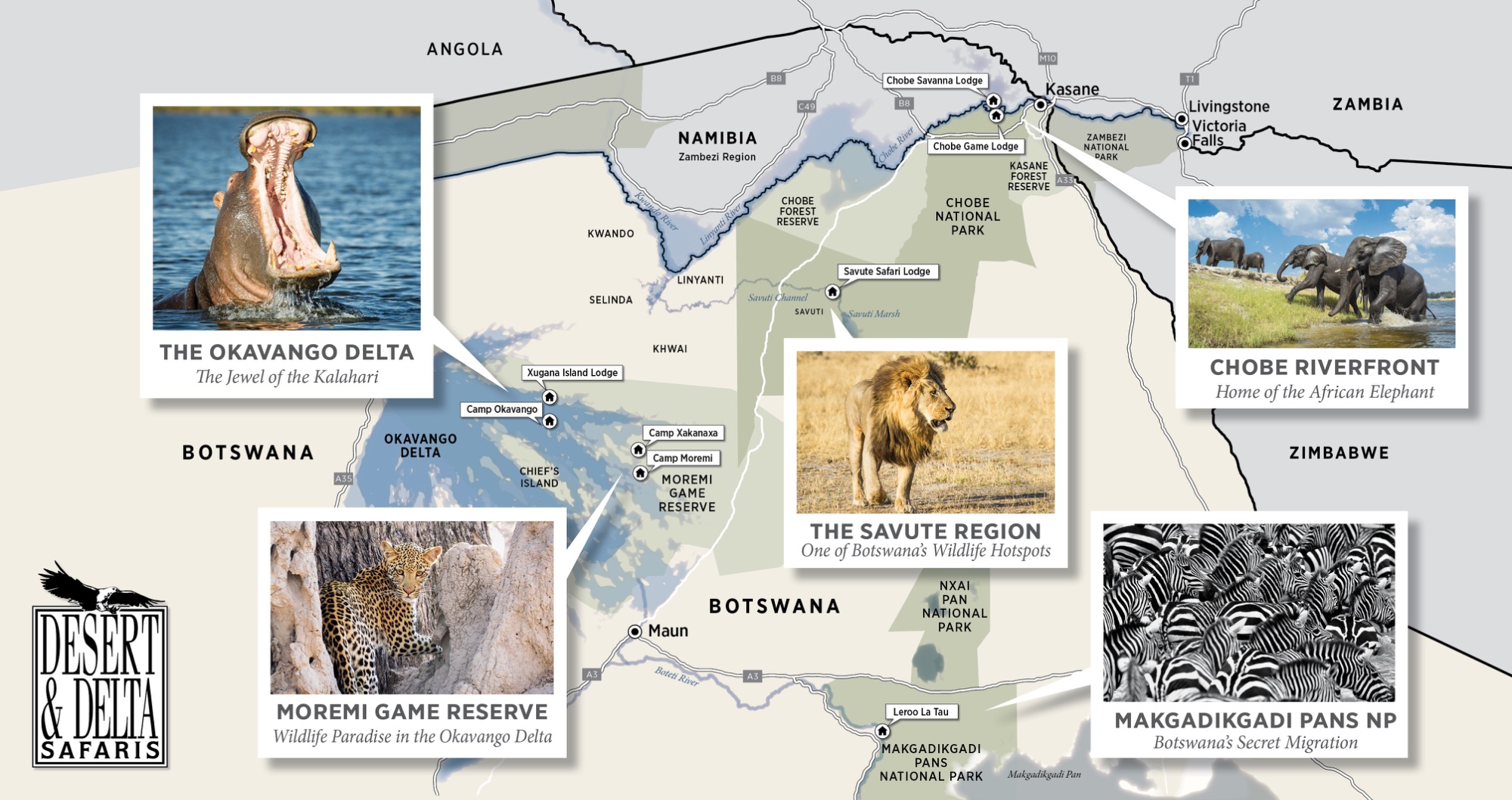
Two days before, we had flown from Texas to a remote and awe-inspiring destination: the Southern African nation of Botswana. Sandwiched between Namibia, Zimbabwe, and South Africa, this landlocked country contains vast areas of pristine wilderness where you can spend entire days without seeing another safari vehicle.
On a small bush plane, we had descended toward Savute Safari Lodge, gazing down at endless waterways, floodplains, and untouched wilderness.
Meeting Isaac Mpuchane: The Specialist Guide Advantage
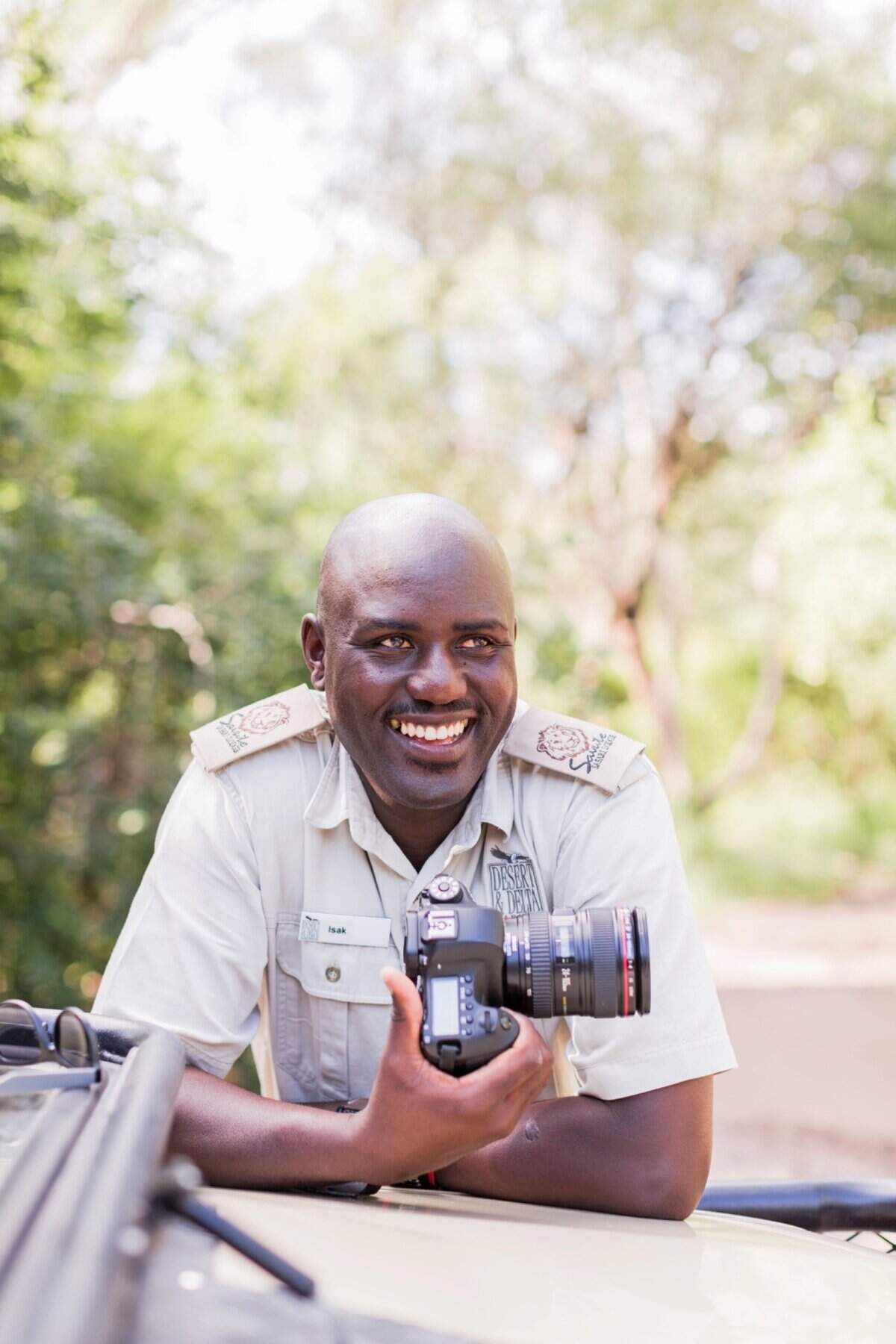
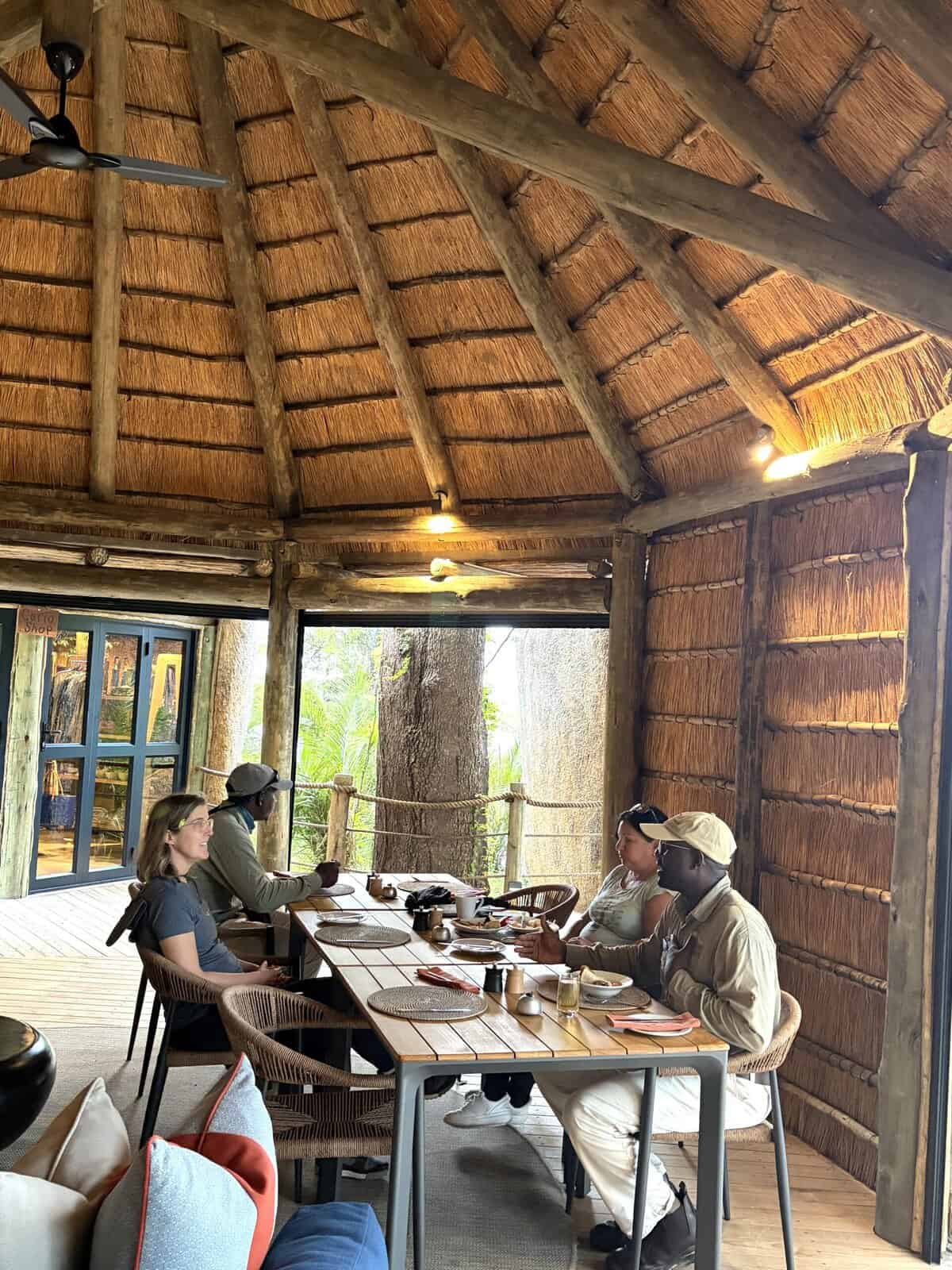
At Savute Safari Lodge, we first met Isaac Mpuchane, the specialist photographic guide who would accompany us throughout our entire Botswana journey. (Isaac’s amazing Instagram is here.) The first question he asked us was, “What are your favorite animals?” He confided later that most guests said up front that they wanted to see big cats. My husband gave him a surprise when he said he loved birds.
Instead of rotating guides at each property, Isaac traveled with us from Savute to the Okavango Delta to Chobe National Park. The continuity made an enormous difference. By day three, Isaac understood our photography interests, my obsession with obscure information about animal habits…and that while we did love birds, we also thrilled to the sights of giraffes, elephants, hippos, leopards, and—as it turned out—wild dogs.
Isaac has spent over a decade guiding through Botswana’s wildlife areas. His Canon setup rivals professional photographers, but he’s equally comfortable troubleshooting Nikon and Sony equipment. After our trip, Isaac was headed to the African Guide Academy with the Botswana Wildlife Training Institute for advanced certification. I had to grab my husband to keep him from joining—maybe someday!
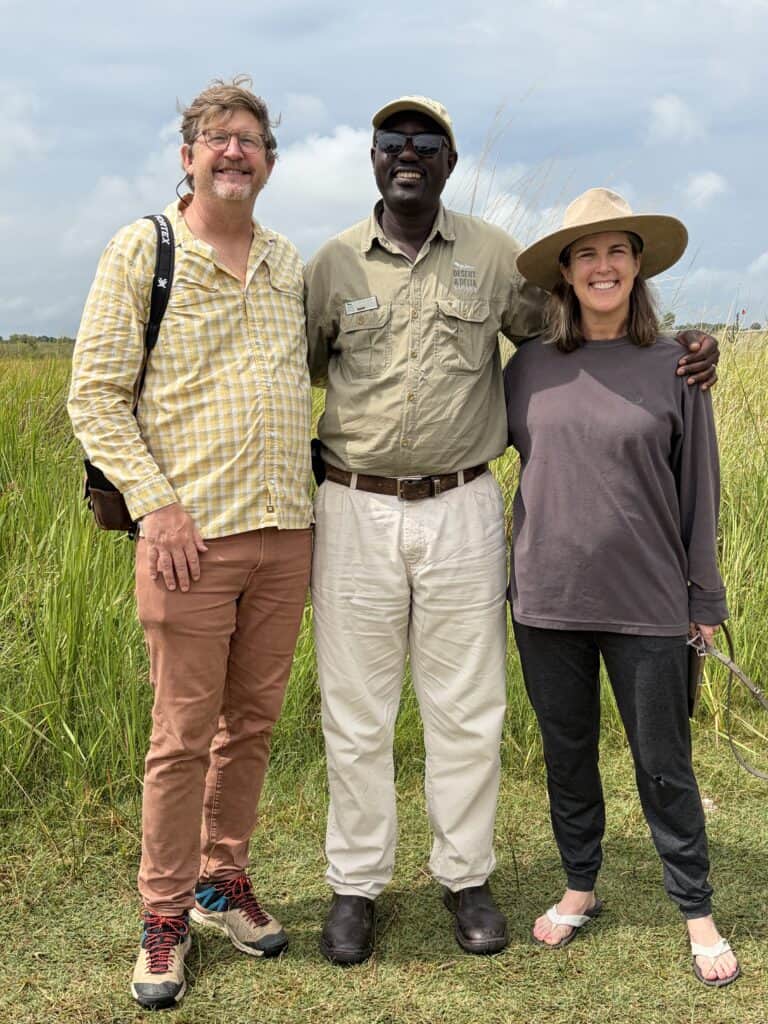
Isaac’s expertise transformed every game drive. He predicted behavior, explained ecological relationships, and positioned us for photographs we never could have captured on our own. On our final day at Savute, we stopped for a photo together in the grassland—the three of us grinning, with Isaac in his Desert & Delta uniform between my husband and me.
Savute: Where Predators Rule
Savute Safari Lodge sits in the western section of Chobe National Park, overlooking the Savute Channel. We arrived in mid-January, and the channel was flowing steadily, drawing animals to its banks.
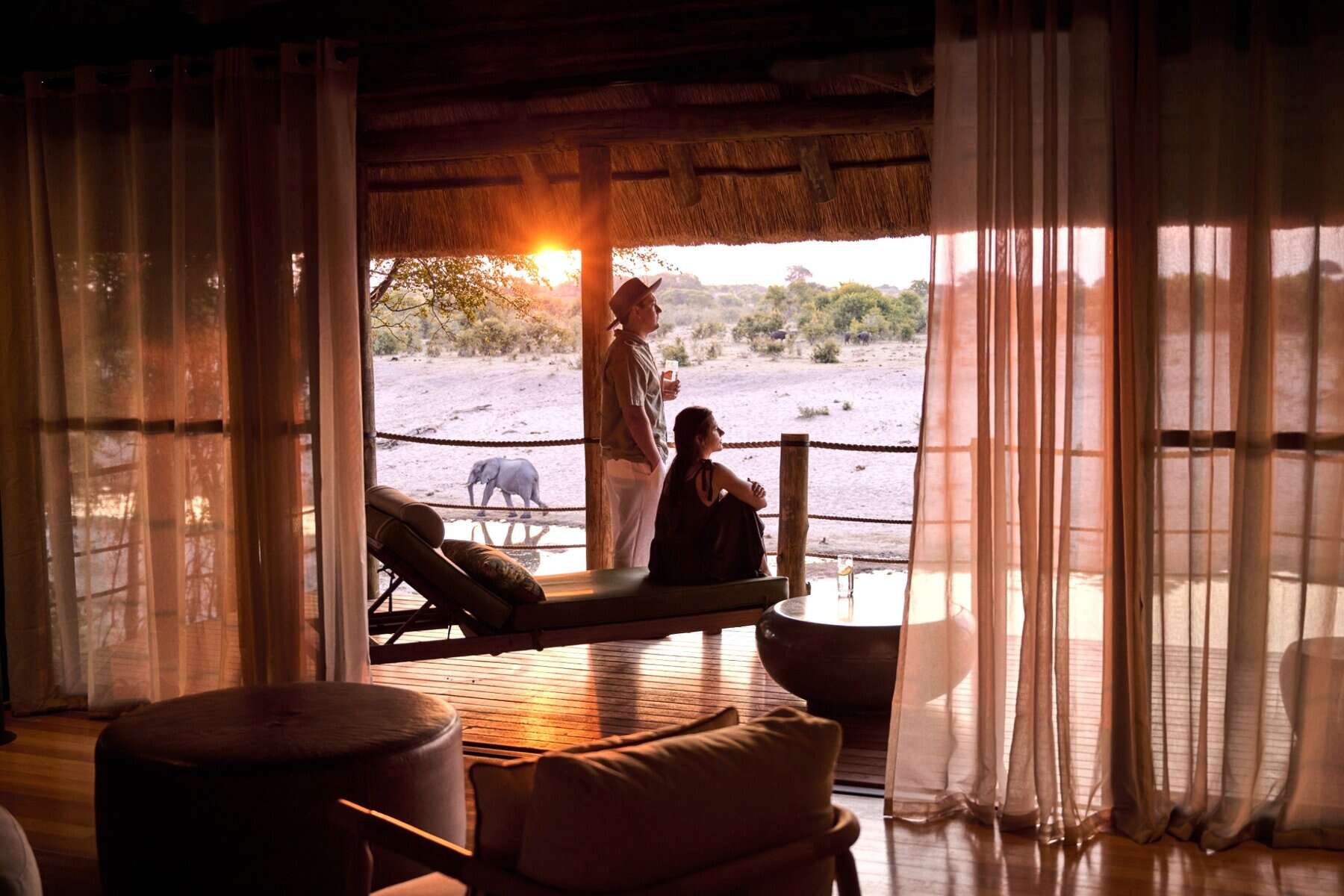
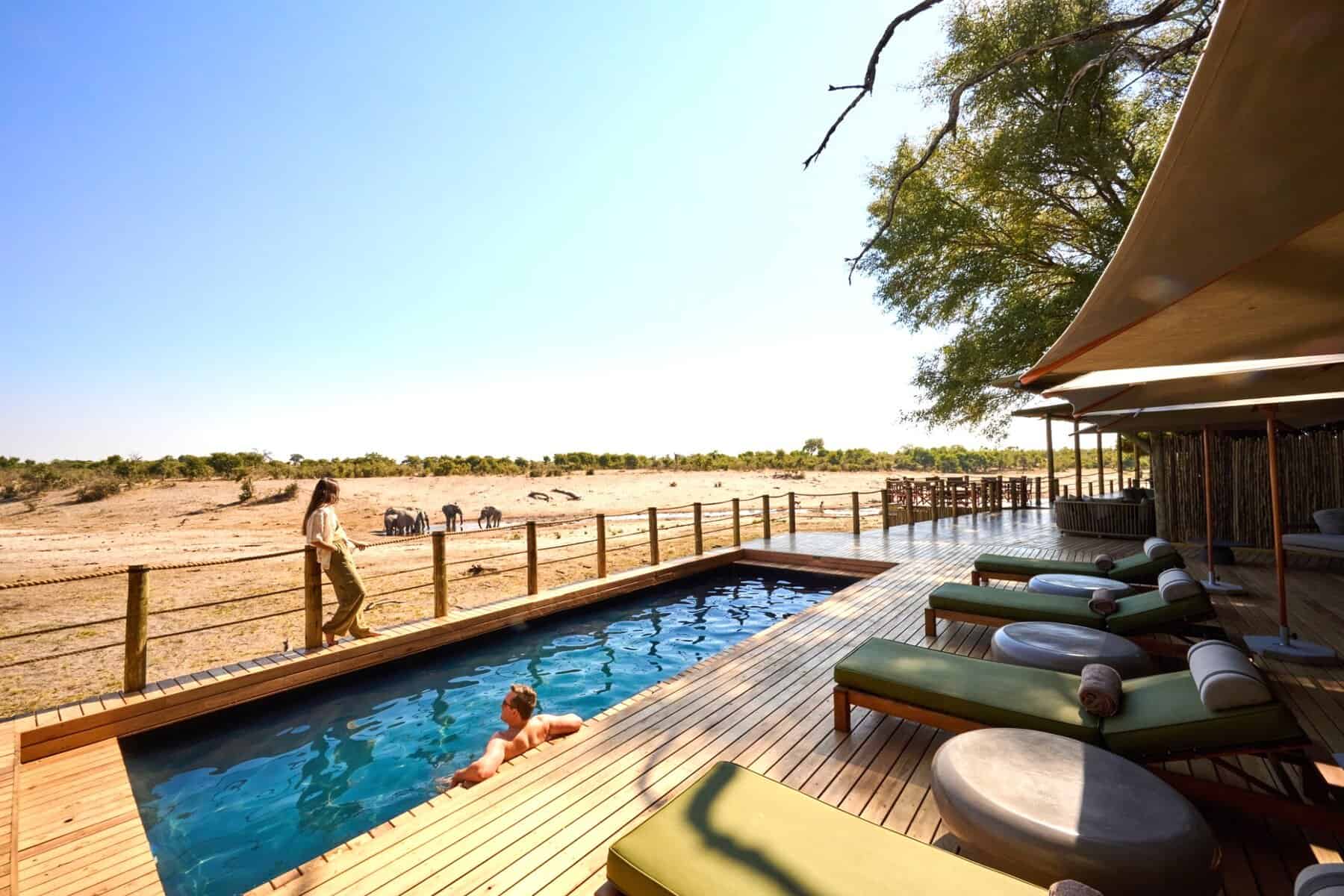
We marveled at the lodge, which debuted a complete rebuild in 2024. Twelve guestrooms—including one family suite—combine natural thatching with canvas walls. Our room’s sophisticated interior drew color inspiration from the Kalahari: earthy greens and vibrant rain hues. An expansive private viewing deck extended from the room. The private outdoor shower was another revelation. Showering under open sky while elephants drank fifty yards away felt like a dream.
The Most Dramatic Waterhole in Botswana
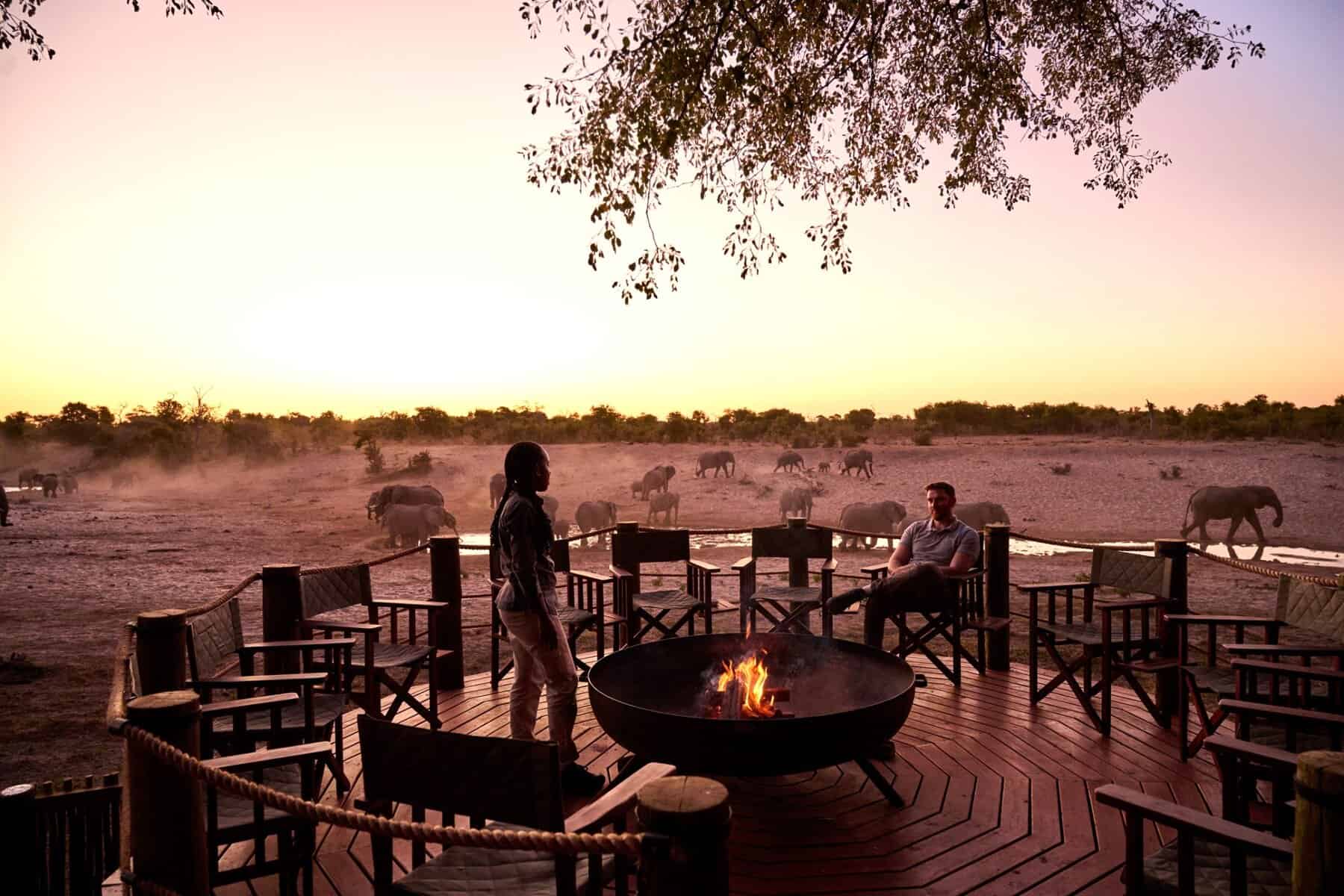
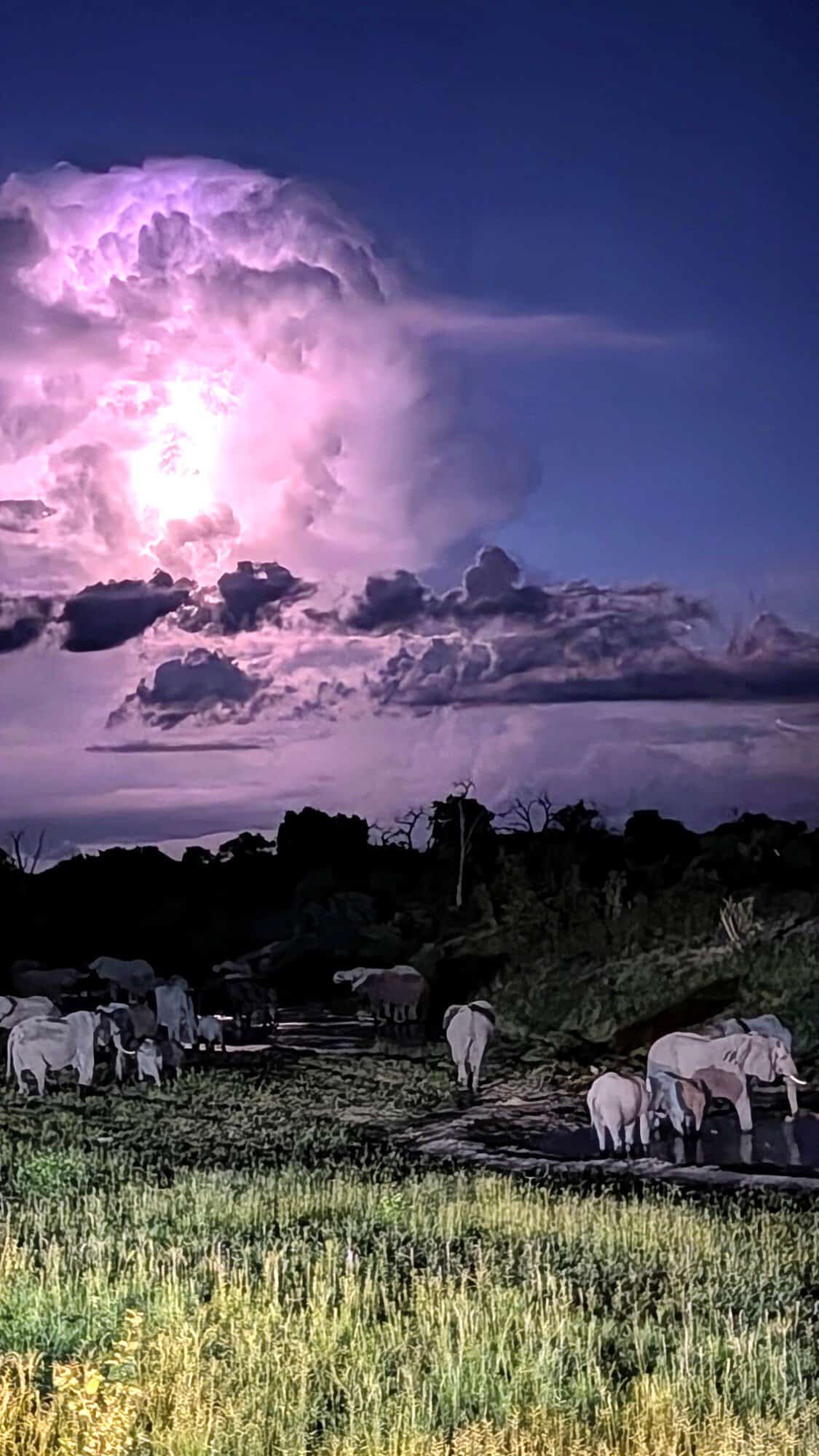
What makes Savute Safari Lodge truly special is the reimagined communal space. The main viewing area consists of an elevated deck with a central fireplace descending to a sunken hideaway that allows eye-level contact with wildlife. This waterhole, where we watched elephants arrive during golden hour, has been featured in National Geographic’s Savage Kingdom and BBC’s Planet Earth. During our three-night stay, we saw huge elephant herds approach at dusk, young ones splashing and tumbling while matriarchs kept an eye on things. And one night, during a massive storm, we ate dinner gazing at herds of elephants lit up by lightning.
Savute: Predator Capital
The Savute region is famous for predator encounters and hosts Africa’s second-largest zebra migration. Between November and April, zebras move from northern rivers to southwestern grasslands in one of the longest land-mammal migrations worldwide. The migration draws massive predator concentrations.
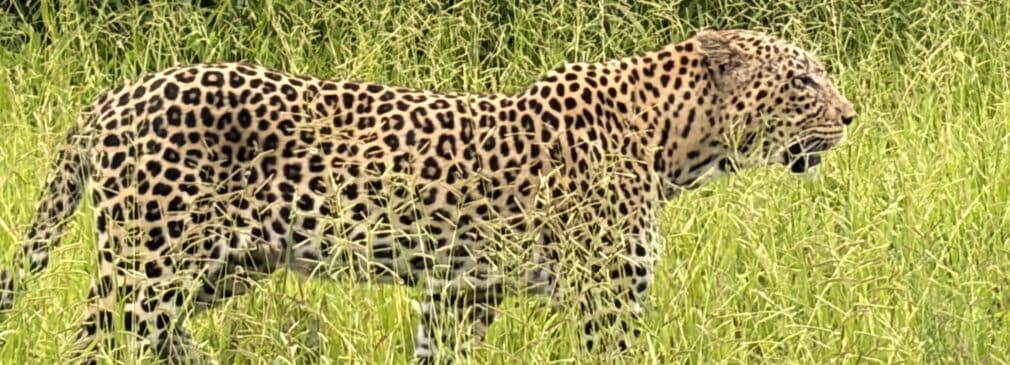
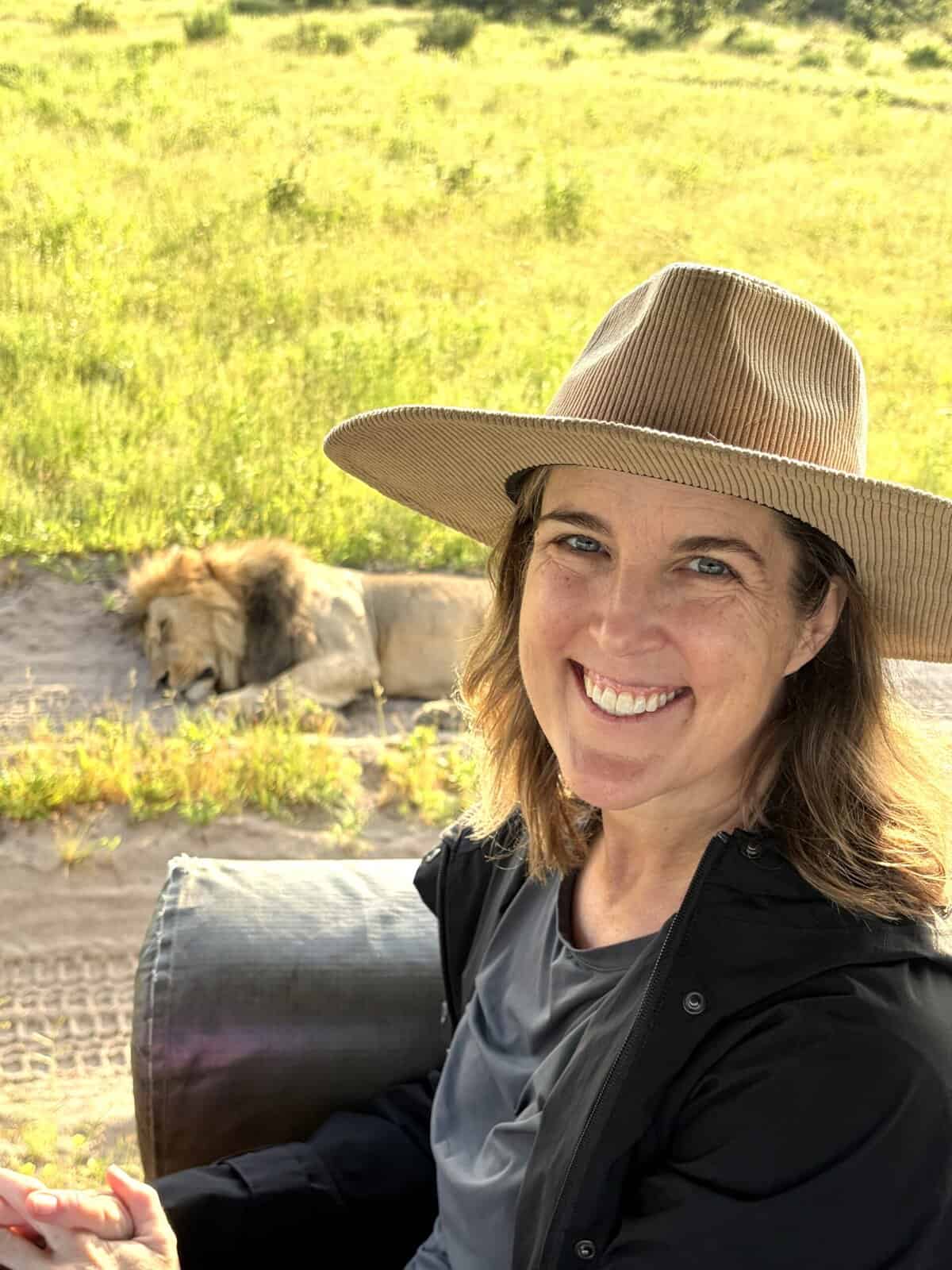
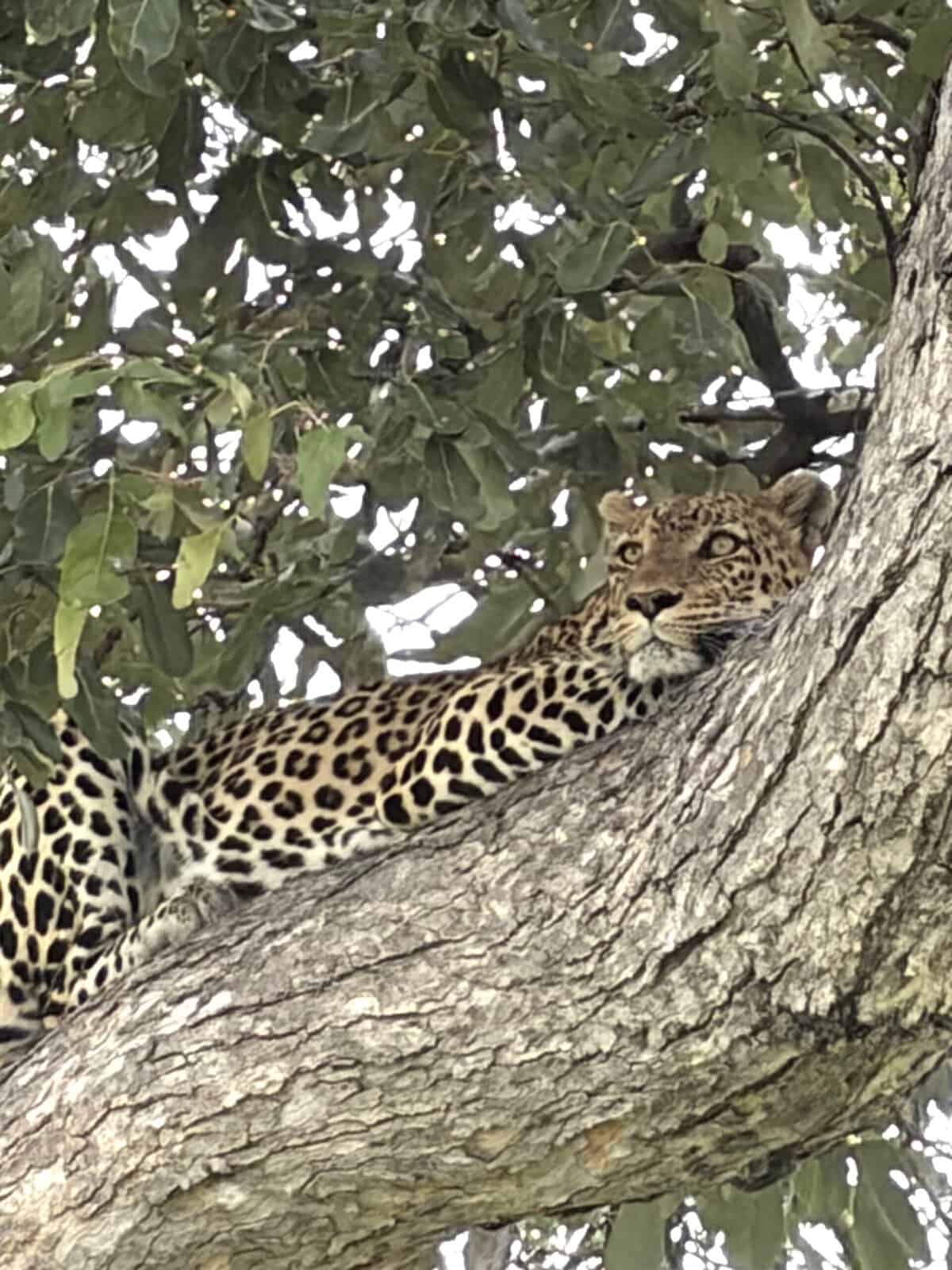
We encountered a pride of eleven lions within our first hour—lounging in afternoon shade. Isaac positioned our vehicle perfectly, anticipating the male’s movements. My husband managed to photograph the scene, capturing the relaxed pride with their impressive manes catching afternoon light. Over three days, we also saw leopards, wildebeest, giraffes, jackals, and African wild dogs.
The dogs, endangered predators, are Africa’s most efficient hunters. They are incredibly rare; many safari-goers never see them. Savute’s wildlife density provides exceptional opportunities. Hyenas also roam here in large numbers, competing with lions for prey.
Why Rainy Season Safari Surprises
Rainy season safari has a bad reputation—fewer animals, constant downpours. The reality differs dramatically. All the animals remain. The conditions simply create different, often more dramatic, opportunities.
In rainy season, it’s possible to witness extremely unique behavior that feels almost private. We were the only vehicle watching the “wild dog versus wildebeest” drama unfold.
A Typical Day at Savute
Safari rhythm follows the wildlife’s schedule. Wake-up calls came at 5:30 a.m., followed by light breakfast at 6:00. Morning game drives lasted three to four hours, often incorporating visits to Savute Marsh where elephants, buffalo, and countless zebras moved across the landscape.
We returned around 11:30 for brunch and siesta. The pool became my favorite retreat, watching elephants at the waterhole while reading. Afternoon tea at 3:00 p.m. preceded our 3:30 game drive. We’d return at sunset for dinner in various indoor and outdoor locations.
No Connection, Complete Immersion
Savute’s deliberate disconnection was surprisingly liberating. WiFi exists only in rooms via satellite. No telephone service except emergency satellite phone. This forced digital detox meant noticing details: afternoon light quality, elephants rumbling to each other, buffalo moving in coordinated groups.
After evening drives, we gathered at the fire pit overlooking the channel. Guests shared sightings and swapped safari stories. The waterhole remained active after dark—we often spotted elephants drinking by firelight.
Solar panels provide 24-hour power, demonstrating Botswana’s eco-tourism commitment. Many guests around the lodge agreed: Between the dramatic waterhole views, sophisticated design, and incredible wildlife density, Savute is one of a kind.
The Okavango Delta: Water Safari Paradise
But after three days, we boarded a bush flight to Xugana Island Lodge in the heart of the Okavango Delta. The largest intact inland delta in the world, the Okavango varies from 5,800 square miles during dry periods to 8,500 square miles when flood waters arrive from Angola’s highlands.
Xugana sits on a private concession overlooking Xugana Lagoon, considered one of the most spectacular permanent water sites in the entire Delta. Our luxury tent featured a private viewing deck facing the lagoon, indoor and outdoor showers, and eco-friendly amenities.
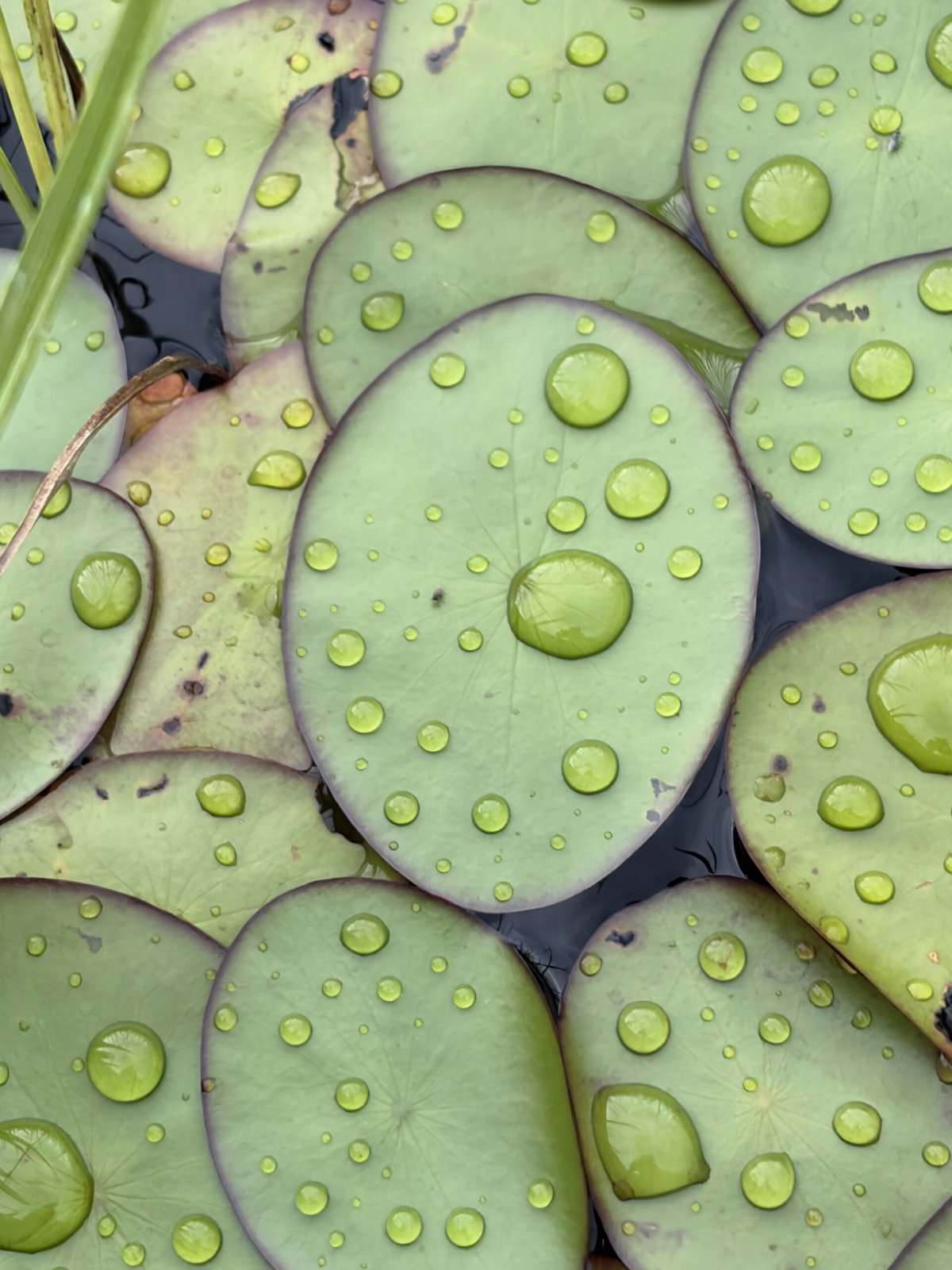
Water safari differs completely from land safari. Gliding silently through crystal-clear channels lined with papyrus reeds in a mokoro—the traditional dugout canoe—we became part of the Delta’s rhythm. We saw painted reed frogs, African jacanas walking on lily pads, and a Nile crocodile sunning on a bank. The lily pads themselves were works of art—massive round leaves catching water droplets that reflected morning light like scattered jewels.
Isaac’s knowledge extended beyond mammals to birds, reptiles, and plant species. On motorboat excursions, he positioned us perfectly for elephants crossing channels and buffalo herds drinking at lagoon edges. We spent mornings in mokoros, afternoons in the pool, and evenings on motorboat safaris, watching hippos surface just yards away.
Chobe: Elephant Headquarters and the Chobe Angels
Our final destination was Chobe Game Lodge, the only permanent lodge situated within Chobe National Park itself. All 44 rooms face the Chobe River, where we watched elephants, buffalo, and antelope come to drink while sitting on our private balcony.
Chobe is home to Africa’s largest concentration of elephants. Another unique feature is the Chobe Angels, Africa’s first all-female guiding team. Chobe Game Lodge also holds Hollywood history. Elizabeth Taylor and Richard Burton married here in 1975 on the banks of the Chobe River.
We dined in multiple locations: the riverside boma under stars, the formal dining room, and private dinners on viewing decks.
The Specialist Guide Difference
Botswana’s model prioritizes experiencing wilderness over collecting animal checklists. The low-volume approach means intimate encounters and unhurried drives, so having the luxury of a specialist guide made our trip extraordinary.
Planning Your Botswana Safari
Most itineraries combine multiple camps via bush flights. Camps fill quickly, particularly during peak season from May through October, so contacting an expert to help you plan your trip is highly recommended. Specialist photographic guides like Isaac can be arranged through premier safari operators like Desert & Delta Safaris. Budget at least seven nights to experience multiple ecosystems. Dry season offers concentrated wildlife around water sources. Green season brings dramatic storms and the zebra migration at Savute.
What to Pack for a Safari Adventure
Packing for Botswana requires strategy. Bush flights require soft-sided luggage with strict weight restrictions. I used the Domingo Duffel Bag—its interior compartments stored everything without bulk.
I brought hiking boots for day and elevated my dinner game with the snazzy Megan Pullover Dress from La Peony and Soléi Sea Vivie sandals. For chilly morning game drives, I wore a Tuckernuck cashmere cardigan. Don’t forget sunscreen, high quality sunglasses—my favorites are FORK brand—and a flat-brim hat.
After game drives, you may want to relax by the pool, so pack a bathing suit and cover up. Power banks are essential—I had to buy a South African adapter along my journey to power my phone. And Becca Blond, a fellow journalist on the trip (now a great friend), had the Google Pixel Pro 10 phone, which created images that made the rest of us want to leave our cameras at home.
Why Botswana Remains a Secret
Botswana has deliberately maintained its wilderness integrity through strict conservation policies and limited tourism infrastructure. The result is pristine ecosystems, low tourist density, and extraordinary wildlife experiences. On my final bush flight from Chobe to Kasane, I looked down at the Chobe River winding through untouched wilderness. Elephant herds moved along its banks unimpeded by roads and buildings—just the small camps we’d stayed in. Botswana shares itself with those willing to meet it on its own terms, making this nation Africa’s best-kept secret.
____________________________________________________________________________________________________________________
Cover Photo Timothy Meckel.
Amanda Eyre Ward is a New York Times bestselling novelist and travel writer whose work appears in Travel + Leisure, Bon Appétit, and Food & Wine. She lives with her family in Austin, Texas. Her new novel, Arrivals and Departures, will be published by Random House in June.